
Is a 10 Yard Dumpster Big Enough for Your Project?
A 10 yard dumpster is the smallest standard size a roll-off provider offers, and it’s the right call more often than people expect. It’s best suited for homeowners tackling a single room, a garage corner, or a modest pile of yard debris projects where sizing up to something bigger usually just means paying for space you’ll never fill. For Lawton properties with a tight driveway or a smaller, contained project, its compact footprint and lower cost make it the practical starting point.
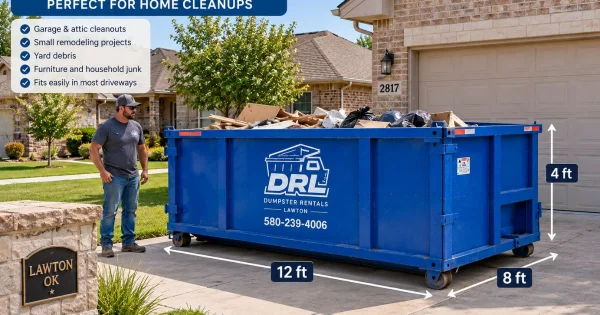
Quick answer: A 10 yard dumpster holds about three to four pickup truck loads of debris and fits in tight driveways and alleys where larger containers can’t go. It works well for single-room cleanouts, small yard debris, and light renovation work, but it’s usually the wrong choice for whole-house cleanouts or anything involving a lot of heavy material like concrete or roofing.
How Much Does a 10 Yard Dumpster Actually Hold?
At roughly 12 feet long, a 10 yard container is one of the most compact standard roll-off options available, which is part of why it’s a common choice for properties with limited space to work with. In practical terms, it holds about three to four full pickup truck loads of debris enough for a genuinely small project, but not much more.
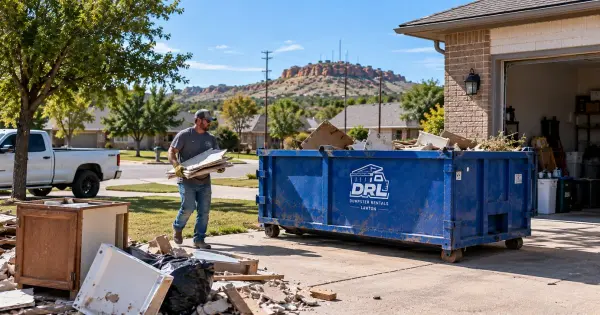
Because the container is small, it fills up on volume fast if the debris is bulky, even if it’s lightweight. A single room’s worth of furniture and boxes can look like it barely fits, even though the actual weight is nowhere near the container’s limit.
Best Uses for a 10-Yard Container
- Small home cleanouts a single room, closet, or storage area
- Garage cleanouts, assuming the garage isn’t packed floor to ceiling
- Single-room renovation debris, like a small bathroom tear-out
- Light yard debris trimmings, small branches, a modest amount of leaves
- Small deck or fence removal projects
- Properties with a tight driveway, narrow alley, or limited off-street parking
What Fits Inside This Size?
Most standard household and light renovation debris fits without issue, including furniture, boxed household items, small appliances, carpet and padding from a single room, drywall scraps, and general clutter. Yard debris such as small branches, leaves, and grass clippings may also be suitable, as long as the material is allowed and the volume stays within the container’s capacity. For guidance on waste and disposal rules, check the EPA’s guidance on construction and demolition materials before loading unusual materials.
What May Not Fit or May Fill the Weight Allowance Fast
Volume isn’t the only thing that fills a dumpster. Dense material concrete, brick, dirt, roofing shingles can hit a 10-yard’s weight allowance long before the container looks full. A relatively small pile of broken concrete or a modest bundle of shingles can weigh more than an entire room’s worth of furniture and boxes.
For projects involving these heavier materials specifically, a 10-yard is often not the right size even if the visual volume seems small our concrete debris disposal guide and roofing debris weight guide go into more detail on why weight, not size, becomes the limiting factor with these materials.
Weight Considerations
Weight allowances for a 10-yard container are generally on the lower end compared to larger sizes, since the container itself is smaller. Exact weight limits vary by provider, so it’s worth confirming the specific allowance when you book rather than assuming a number. As a general guide, industry weight allowances for this size commonly fall somewhere in the range of one to a few tons, though this can vary.
The practical takeaway: for light, bulky debris like furniture and boxes, weight is rarely the issue. For anything dense, it’s worth mentioning to your provider before booking so the size recommendation accounts for it.
How to Load This Container Efficiently
Because a 10-yard container is compact, how you load it matters more than it would with a larger size. Breaking down furniture removing legs from tables, disassembling bed frames frees up real space compared to tossing items in whole. Flattening cardboard boxes rather than leaving them assembled does the same thing on a smaller scale.
Loading heavier, denser items first and building lighter, bulkier items on top tends to use the available space more efficiently than loading randomly as items come out of the house. This also helps keep the load stable, which matters more in a smaller container where there’s less room for things to shift.
Rental Period and Scheduling for Small Projects
Small projects that fit a 10 yard dumpster often move faster than larger renovations, which means the container may not need to sit on-site as long. Rental periods and scheduling flexibility can vary by provider, so it’s worth asking whether a shorter rental window is available if your project a weekend garage cleanout, for example is likely to wrap up quickly.
For projects with an uncertain timeline, confirming what happens if you need the container a few extra days avoids any surprises partway through the project.
A 10-Yard Dumpster vs. Hauling It Yourself
For a project genuinely small enough to fit in the back of a truck a single trip or two renting a dumpster may not make sense. But most projects that feel like “just a truckload” turn out to be closer to three or four truckloads once everything is actually sorted and hauled out, at which point a 10-yard dumpster becomes the more time-efficient option.
The other factor worth considering is disposal itself. Hauling debris yourself means finding a disposal facility, paying per-load fees, and making repeated trips, while a dumpster rental consolidates all of that into a single delivery and pickup. For anything beyond a genuinely small, one-trip job, the time saved often outweighs the cost difference.
What Affects the Cost of a 10 Yard Dumpster
As the smallest standard size, a 10-yard dumpster is typically the most affordable option among standard container sizes, though exact pricing depends on your specific project, location, and rental period. Factors like rental duration, the type of debris, and how far the container needs to be delivered can all affect the final price. Our cost factors guide breaks down what typically drives pricing up or down, and our pricing guide covers what to expect before requesting a quote.
Real Project Examples
| Project | Typically Fits a 10-Yard? |
|---|---|
| Single bedroom cleanout | Yes |
| Garage cleanout (moderate clutter) | Usually yes |
| Small bathroom tear-out (no tile) | Usually yes |
| Whole-house cleanout | No — too small |
| Full roofing tear-off | No — weight limit reached fast |
| Concrete driveway removal | No — weight limit reached fast |
| Light yard trimming | Yes |
10-Yard vs. 15-Yard: Which One Fits Your Project?
A 15-yard container is roughly 14 to 16 feet long, giving meaningfully more room than a 10-yard without a dramatic jump in footprint. If your project is right on the edge a single room that’s more cluttered than expected, or a garage that’s fuller than it looks the 15-yard is usually the safer choice. Our 15-yard dumpster guide covers what that size handles in more detail.
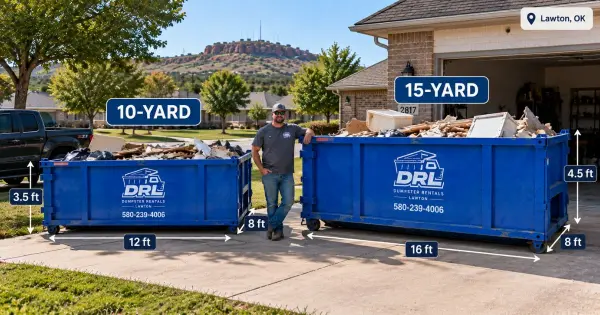
The general rule: if you’re genuinely unsure between a 10 and a 15, sizing up tends to cost less overall than running out of room and needing a second delivery.
When a Smaller Container Is Not Enough
A 10-yard is the wrong choice for whole-house cleanouts, multi-room renovations, full roofing tear-offs, or any project involving a significant amount of concrete, brick, or dirt. It’s also usually too small for combined projects clearing a garage and doing yard cleanup at the same time, for example even if each piece individually seems small.
Choosing the Right Size for Lawton Properties
The 10-yard’s compact footprint makes it a practical fit for some of Lawton’s older neighborhoods, where driveways and alleys tend to be narrower than newer developments. It can be a practical choice for renters and property managers near Fort Sill handling a smaller move-out cleanup, where a full-size container isn’t necessary and driveway space may be limited.
Frequently Asked Questions
How many pickup truck loads does a 10-yard dumpster hold?
Roughly three to four full pickup truck loads, depending on how the material is loaded and how bulky it is.
Will a 10-yard dumpster fit in a narrow driveway?
Yes at roughly 12 feet long, it can fit spaces where a larger container may not be practical.
Can I put concrete or roofing debris in a 10-yard dumpster?
In small amounts, sometimes, but these materials are dense enough that they tend to reach a 10-yard’s weight allowance quickly. For a full driveway or roof, a larger size is usually the better fit.
Is a 10 yard dumpster enough for a garage cleanout?
Often yes, for a moderately cluttered garage. A garage that’s packed floor to ceiling, or one being cleared alongside a yard cleanup, may need a 15-yard instead.
What’s the weight limit on a 10-yard dumpster?
This can vary by provider. Confirming the exact weight allowance when you book is the most reliable way to know what applies to your specific rental.
Ready to Choose Your Dumpster Size?
If your project fits the profile above, a 10 yard dumpster is likely your most cost-effective option. Get a quote or check availability by describing your project, and we’ll confirm whether a 10-yard is the right fit or recommend a better size. Not sure yet? See our full dumpster sizes guide to compare all available sizes, or check our pricing guide for what affects your quote.