Roofing Debris Weight: How Much Does a Roof Tear-Off Weight
Roofing Debris Weight: A Contractor’s Sizing Guide
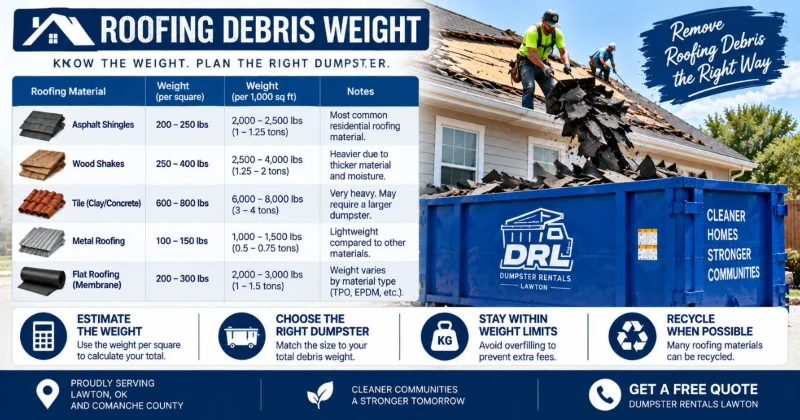
Roofing projects can create much more waste weight than the debris pile suggests. A dumpster may look only partly full while the shingles inside are already getting close to the container’s weight limit. This is especially important when a roof has multiple layers, heavy materials, or additional debris such as gutters, flashing, and damaged decking.
For contractors in Lawton, Oklahoma, estimating the roofing debris weight before ordering a dumpster can help prevent an undersized container, unexpected weight charges, or a mid-project container swap.
What Is Roofing Debris Weight?
Roofing debris weight is the total weight of the material removed during a roof tear-off. The final weight depends on several factors:
- Roof size
- Type of roofing material
- Number of shingle layers
- Underlayment and felt
- Flashing and metal components
- Gutters and fascia
- Damaged decking or other material being removed
- Moisture and other debris mixed into the load
The most common residential roofing material is asphalt shingles, but not every roof produces the same type or amount of waste.
A contractor should estimate both volume and weight before selecting a dumpster. Volume tells you how much space the debris may take, while weight determines whether the container can legally and safely carry the load.
How Much Does Asphalt Shingle Debris Weight?
Asphalt shingles are heavier than many types of ordinary renovation debris. A large pile of shingles can therefore reach a dumpster’s weight limit before the container looks full.
The exact weight varies by shingle type, manufacturer, roof design, and the number of layers removed. Because of that variation, contractors should use the actual roofing material specifications when available instead of relying on one universal weight figure.
The size of the roof also matters. A 1,500-square-foot roof and a 3,000-square-foot roof can produce very different tear-off loads even when they use the same type of shingles.
For a more accurate estimate, start with the roof area and determine how many layers are being removed.
How to Estimate Roofing Debris Weight
A simple planning approach is:
Roof area × estimated material weight per square foot × number of layers = approximate tear-off weight
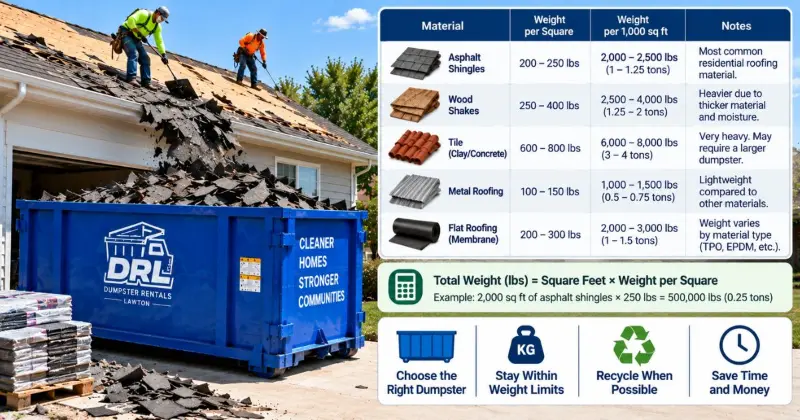
For example, suppose a contractor is removing one layer from a roof measuring 2,000 square feet.
The contractor would first determine the estimated weight per square foot for the specific shingles being removed. That figure can then be multiplied by the roof area.
If two layers are being removed, the estimated shingle portion of the load will be roughly twice the single-layer estimate, although the actual final weight can vary.
This calculation is only a planning estimate. Roofs may contain additional materials, and the final dumpster weight can differ from the estimate.
For contractors who want another way to check their calculation, the shingle weight calculator from Dumpsters.com can be used as a cross-check based on roof size and layer count.
Single-Layer vs. Multi-Layer Tear-Offs
The number of roofing layers can have a major effect on the final load.
A single-layer tear-off is easier to estimate because there is only one layer of shingles being removed. Older roofs can sometimes have multiple layers, which means significantly more material is going into the dumpster.
Two layers do not mean the dumpster will necessarily be twice as full in every situation, but the total roofing material weight can increase substantially.
Before ordering a container, confirm:
- How many shingle layers are being removed
- Approximate roof square footage
- Type of roofing material
- Whether underlayment is also being removed
- Whether gutters, flashing, decking, or fascia are included
This information gives the dumpster provider a much better basis for recommending a size.
How Roof Size Changes the Total Weight
Roof size is one of the first numbers a contractor should establish.
A small residential roof may produce a manageable tear-off load, while a larger home can create several times more debris. Roof geometry can also affect the amount of material removed because the actual roof surface can be larger than the home’s footprint.
For example, a home with multiple roof sections, dormers, valleys, and steep slopes may have considerably more roofing surface than a simple rectangular structure.
That is why contractors should use the actual roof area rather than estimating debris based only on the home’s floor area.
Choosing a Dumpster Based on Roofing Debris Weight
Dumpster selection should be based on both the amount of space you need and the weight the container can legally carry.
One common mistake is choosing a dumpster only by its yard size. A larger container gives you more room, but it does not mean you can load unlimited amounts of heavy roofing material.
For a typical residential asphalt-shingle tear-off, a 20-yard dumpster may be a good fit when the roof size, number of layers, and expected weight stay within the provider’s limits.
Larger roofs, multiple shingle layers, or projects with additional roofing materials may require a 30-yard dumpster, a higher weight allowance, or a different disposal plan.
The best choice depends on the actual roofing project. Before ordering, provide the roof size, roofing material, number of layers, and any additional debris so the dumpster size can be matched to the expected load.
20-Yard vs. 30-Yard Dumpster for Roofing
20-Yard Dumpster
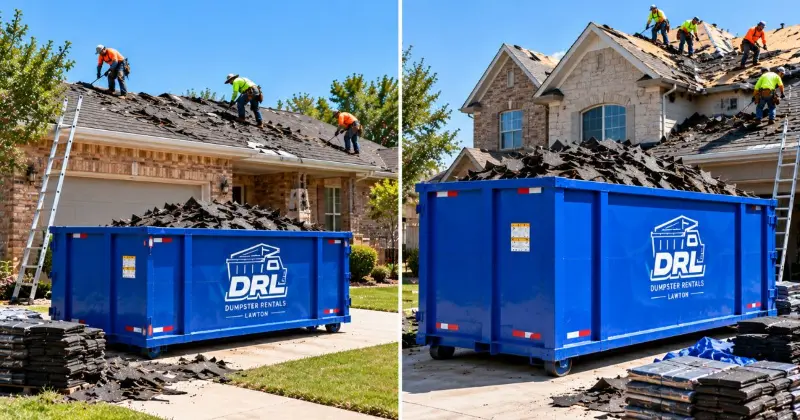
A 20-yard dumpster can be a practical option for many standard residential roof tear-offs when the amount and weight of debris remain within the provider’s limits.
It may be a good fit when:
- The roof is moderate in size
- One layer of asphalt shingles is being removed
- The load contains limited additional debris
- The expected weight stays within the container allowance
30-Yard Dumpster
A 30-yard dumpster provides more space, making it useful for larger roofing projects or jobs where additional renovation debris will be included.
Dumpster size is only one part of the final price. Other dumpster rental cost factors can include weight, rental period, debris type, and delivery requirements.
It may make sense when:
- The roof is larger
- Multiple layers are being removed
- Gutters and other materials are included
- Roofing is combined with another remodeling project
- A larger volume of debris is expected
However, more container space does not remove the need to stay within the allowed weight. Always confirm the provider’s weight limit before loading heavy roofing material.
What Other Materials Add to the Load?
Roofing debris is not always limited to shingles.
A tear-off can also include:
- Roofing felt
- Underlayment
- Flashing
- Metal edging
- Gutters
- Fascia
- Damaged decking
- Nails and fasteners
- Small pieces of wood
- Other construction debris
These materials can increase either the weight or volume of the load.
If a contractor is replacing gutters at the same time as the roof, that should be mentioned when ordering the dumpster. The same applies to decking replacement or other work happening during the project.
Separating recyclable metal may also make sense when a project produces enough scrap material to justify separate recycling.
Metal Roofing and Tile Roofing Weight
Not every roofing project involves asphalt shingles.
Metal roofing can behave differently during disposal because panels are bulky and may have sharp edges. They should be handled carefully during loading.
Tile roofing requires even more attention to weight. Clay and concrete tiles are much heavier than typical asphalt shingles, so a dumpster can reach its weight allowance without appearing completely full — similar to the weight issues covered in our concrete debris disposal guide.
For tile roof tear-offs, contractors should provide the dumpster company with the material type, roof size, and expected amount before delivery.
The same 20-yard or 30-yard recommendation used for an asphalt-shingle project should not automatically be applied to a tile roof.
Dumpster Placement for Roofing Jobs
Where the dumpster sits can affect how efficiently the crew removes roofing debris.
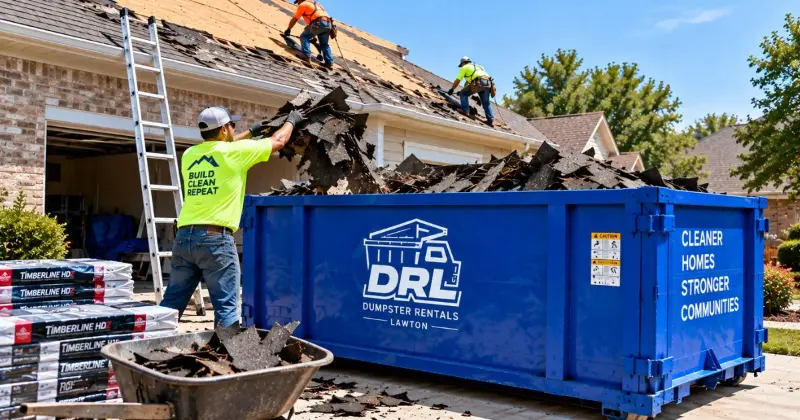
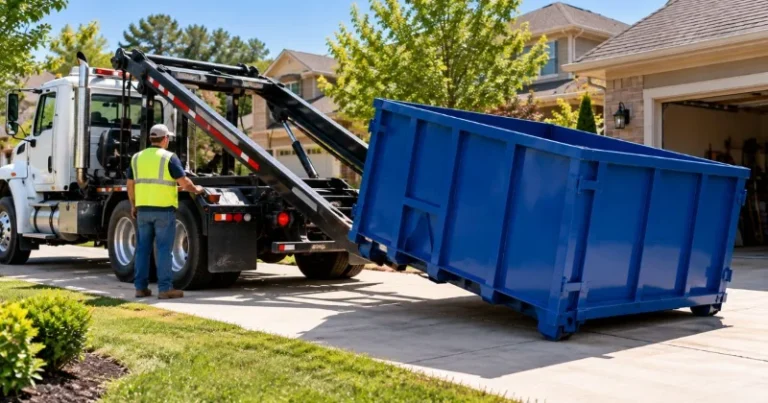
For many residential roofing jobs, the driveway is a practical location because it provides a relatively direct path between the work area and the container — our driveway prep checklist covers how to get the surface ready before delivery.
Contractors should consider:
- Distance from the roof access point
- Space needed for the delivery truck
- Overhead clearance
- Driveway width
- Access for the roofing crew
- Safe placement away from doors and walkways
If a debris chute is being used, placing the dumpster where the chute can reach it can reduce the amount of manual carrying.
The goal is to place the container close enough to make loading efficient while still allowing safe access and delivery.
Protecting the Property During a Tear-Off
Roofing tear-offs create more than large pieces of shingles.
Small shingle fragments, nails, granules, underlayment, and other debris can spread around the work area.
Contractors can reduce cleanup problems by using appropriate ground protection and keeping the work area organized.
Before delivery, consider whether the driveway or other placement surface needs protection from the dumpster or delivery equipment.
After the tear-off, the crew should also inspect the area for loose nails and small pieces of roofing debris.
Coordinating Dumpster Delivery and Pickup
Roofing projects can move quickly. A standard residential tear-off may happen within a short work window, so having the dumpster available when the crew starts can prevent unnecessary delays.
For a roofing project in Lawton, see our roofing dumpster rental in Lawton page for more information about the service. For contractors managing several roofing projects, delivery and pickup timing becomes even more important.
Before scheduling the container, confirm:
- Expected project start date
- Approximate tear-off duration
- Number of roof layers
- Estimated debris amount
- Required dumpster size
- Pickup timing
- Any possible weather delays
Oklahoma weather can affect roofing schedules, so contractors may also want some flexibility when arranging delivery and pickup.
Oklahoma Roofing Disposal Requirements
Roofing debris should be disposed of through an appropriate permitted facility.
The Oklahoma Department of Environmental Quality states that old shingles must be properly disposed of at a landfill or recycler permitted by DEQ. DEQ also warns about illegal shingle dumping and recommends that responsible roofers keep disposal receipts.
Oklahoma DEQ regulations also define roofing material broadly. The definition includes materials such as asphalt, fiberglass, composite, or wood shingles, along with decking, flashing, fasteners, insulation, and related packaging.
For Lawton roofing projects, contractors should confirm that the disposal facility or dumpster provider accepts the specific roofing material being removed.
What About Older Roofing Materials and Asbestos?
Older roofing materials require additional caution if asbestos may be present.
Not every old roof contains asbestos, and asbestos cannot reliably be identified simply by looking at the material. If there is a concern that roofing material may contain asbestos, the material should be evaluated appropriately before work begins.
EPA’s current guidance explains that asbestos rules can depend on the type of material, the project, the building, and the work being performed. State and local requirements may also apply.
For a typical homeowner roofing project, do not assume that federal asbestos NESHAP requirements automatically apply. EPA specifically states that federal regulations regarding renovations or demolitions of asbestos-containing materials do not apply to a homeowner’s renovation of their home, although state or local rules may still apply.
If asbestos-containing material is suspected, stop and get the proper professional guidance before placing it into a standard dumpster.
Frequently Asked Questions
Why is roofing debris so heavy?
Roofing shingles are dense compared with many other construction materials. A dumpster can therefore become overweight even when there is still visible space inside the container.
How does the number of shingle layers affect dumpster size?
More layers mean more roofing material is being removed from the same roof area. A multi-layer tear-off can therefore produce a much heavier load than a single-layer tear-off.
Is a 20-yard dumpster enough for a roof tear-off?
It can be enough for many residential projects, but the answer depends on roof size, material, number of layers, additional debris, and the dumpster’s weight allowance. A larger roof or multi-layer tear-off may require a 30-yard container or another disposal plan.
Can I put gutters and shingles in the same dumpster?
It depends on the provider’s accepted-material rules. Gutters and roofing debris may be combined on some projects, but additional materials can increase the total weight and volume. Tell the dumpster provider what materials will be loaded before delivery.
Does tile roofing require a different dumpster calculation?
Yes. Tile is much heavier than typical asphalt shingles, so volume alone is not enough to estimate the load. Contractors should discuss the roof size, tile type, and expected tonnage before ordering.
What happens if a roofing dumpster becomes overweight?
The result depends on the dumpster provider’s terms. The project may involve additional weight charges, a container swap, or another disposal arrangement. Confirm the weight allowance and pricing terms before the project begins.
Where should roofing shingles be disposed of in Oklahoma?
Oklahoma DEQ says old shingles should be taken to a DEQ-permitted landfill or recycler. For official information, see the Oklahoma DEQ roofing material disposal guidance. Contractors should use an appropriate permitted facility rather than dumping roofing material illegally.
Contractor Checklist Before Ordering a Roofing Dumpster
Before booking a container, have these details ready:
- Roof square footage
- Roofing material
- Number of layers
- Estimated debris weight
- Dumpster size needed
- Additional materials being removed
- Job location
- Preferred delivery date
- Expected pickup date
- Any special disposal concerns
Having this information ready makes it easier to choose a container based on both space and weight.
Final Takeaway
Roofing debris weight is one of the most important factors contractors should consider before ordering a dumpster. A roof can produce a surprisingly heavy load, especially when multiple shingle layers, tile, gutters, decking, or other materials are included.
The best approach is to estimate the roof area, identify the roofing material and number of layers, calculate the expected debris weight, and then compare that estimate with the dumpster’s weight allowance.
For roofing projects in Lawton, planning around the actual material and expected load can help reduce the chance of an undersized container, unexpected weight charges, or delays during the tear-off.