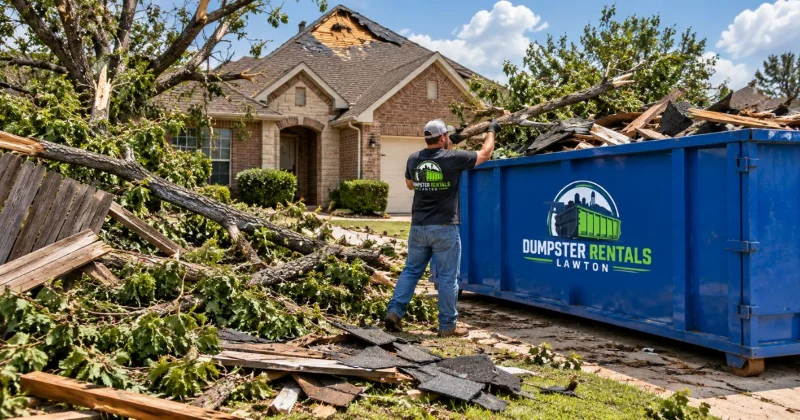
Post-Storm Debris Removal in Lawton, OK | Dumpster Guide
Planning Post-Storm Debris Removal in Lawton
For homeowners in Lawton and across Comanche County, Oklahoma, severe storms can leave behind downed tree limbs, damaged fencing, roofing materials, and other debris that needs to be cleared before repairs can begin. Knowing how to plan for post-storm debris removal ahead of time can make the cleanup process easier when storm damage occurs.
Post-storm debris removal often involves more than simply filling a dumpster. The type and amount of debris can affect the container size, weight, placement, and timing of the cleanup.
What Storm Debris Typically Looks Like
Storm-related debris tends to fall into a few predictable categories: downed tree limbs and branches, damaged roofing materials, broken fencing, and general yard debris knocked loose by high winds. In more severe cases, structural damage to outbuildings, sheds, or carports adds heavier construction-type debris to the mix. Each of these has a different weight-to-volume ratio, which matters when it comes to sizing a dumpster for cleanup.
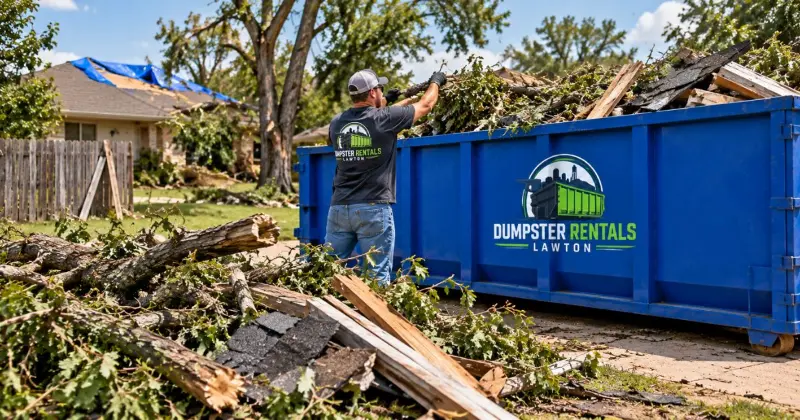
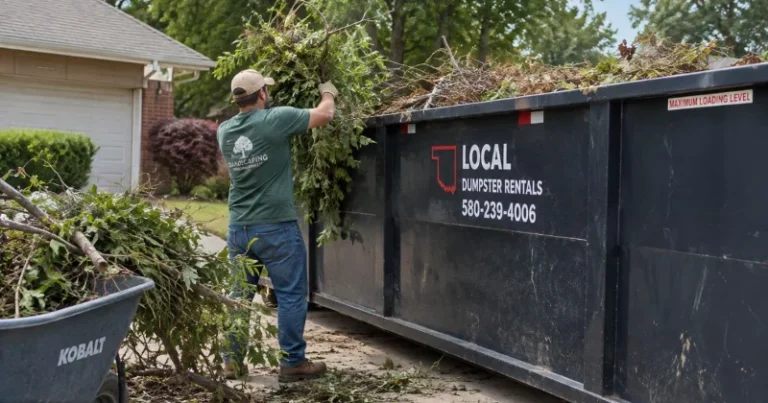
Tree limbs and branches are bulky but comparatively light, meaning they tend to fill a container’s visual space well before they threaten a weight allowance. Roofing debris, by contrast, is deceptively heavy for the amount of space it takes up. A relatively small pile of storm-damaged shingles can weigh more than an equivalent volume of branches, which is worth keeping in mind when estimating size for post-storm debris removal.
Sizing for Storm Cleanup
For a typical storm event — downed limbs and some fence or outbuilding damage — a 20-yard roll-off container is usually the right starting point, offering enough capacity for a moderate cleanup without overcommitting to a larger size that may not get filled. For more widespread damage affecting multiple trees, larger sections of fencing, or a damaged roof, a 30-yard container or multiple containers may be necessary depending on the total scope.
Because storm damage severity is hard to predict in advance, it’s often more practical to have a general sense of container sizes ready for post-storm debris removal rather than trying to plan precisely before a storm hits. Once the damage is visible, a quick call describing what’s down trees, fencing, roofing, or a combination is usually enough to land on an appropriate size without needing to estimate cubic yards manually.
Why Delivery Speed Matters for Post-Storm Debris Removal
Storm debris left sitting for extended periods can create secondary problems blocked driveways, tripping hazards, or debris that can become a nesting spot for pests. Post-storm debris removal can help clear these hazards once it is safe to begin cleanup. Same-day or next-day delivery is often available for storm-related cleanup specifically because of this urgency, and getting a container on-site quickly allows cleanup to begin as soon as it’s safe to do so, rather than waiting on a standard scheduling window.
It’s worth noting that during widespread storm events affecting a broader area, demand for dumpster rentals tends to spike across the whole region, which can affect availability. Calling as soon as it’s safe to assess damage, rather than waiting, generally improves the odds of getting fast delivery during a busy stretch.
Insurance Documentation Before Cleanup Begins
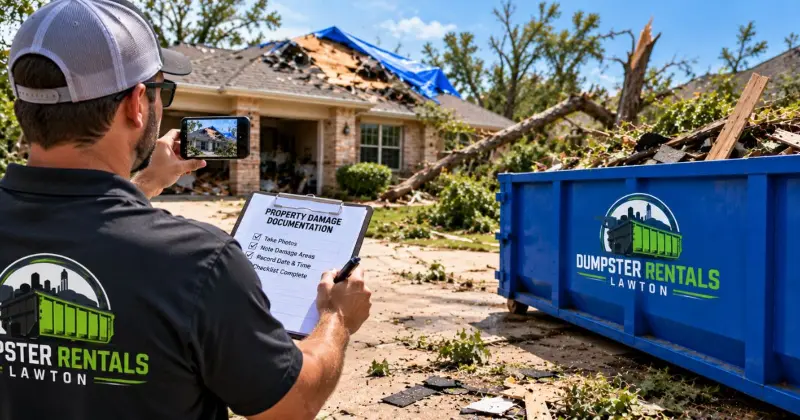
For storm damage that may involve an insurance claim, documenting the damage with photos before debris removal begins is an important step that’s easy to overlook in the rush to clean up. Insurance adjusters typically need to see the damage as it occurred, and once debris is cleared, that documentation opportunity is gone. Taking a few minutes to photograph downed trees, damaged fencing, or roof damage from multiple angles before loading anything into a dumpster can make a real difference if a claim needs to be filed later. For additional storm cleanup guidance, see the official FEMA resources.
Placement Considerations During Storm Cleanup
Storm damage sometimes affects the areas where a dumpster would normally be placed, such as a driveway blocked by a fallen tree or debris scattered across the yard. In these situations, discussing placement options directly rather than assuming a standard driveway delivery will work smoothly helps avoid a wasted trip or delayed delivery. Street placement may become necessary in some cases, which could require a permit depending on the specific location and duration.
Coordinating Cleanup With Tree Removal Services
For storm damage involving large fallen trees, a tree removal service is often needed to cut and section the tree before it can be loaded into a dumpster at all. Coordinating the timing between tree removal and dumpster delivery matters here — having the container arrive after the tree service has already cut everything into manageable sections tends to work more smoothly than having a dumpster sit empty while waiting on a separate crew, or having debris pile up in the yard with nowhere to go while the container is still in transit.
Some tree removal companies work directly with dumpster providers on timing for exactly this reason, so it’s worth asking during the initial call whether same-day coordination between the two is possible, particularly when a large tree is blocking access to part of the property.
Handling Debris From Damaged Outbuildings
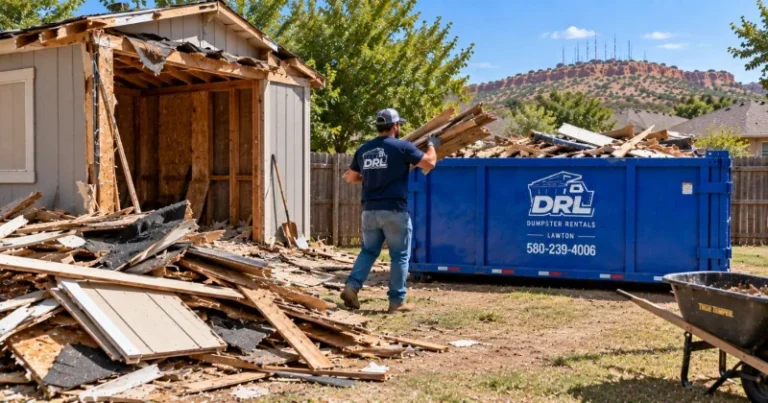
Sheds, carports, and detached garages are common casualties of high winds in this part of Oklahoma, and the debris from a damaged outbuilding is often different in character from tree or roofing debris — more likely to include metal siding, wood framing, and sometimes broken concrete from a foundation or slab. This kind of mixed structural debris tends to be heavier per cubic yard than typical storm debris, which is worth mentioning specifically when requesting a size recommendation, since it can shift the right container size up from what tree and roofing damage alone would suggest.
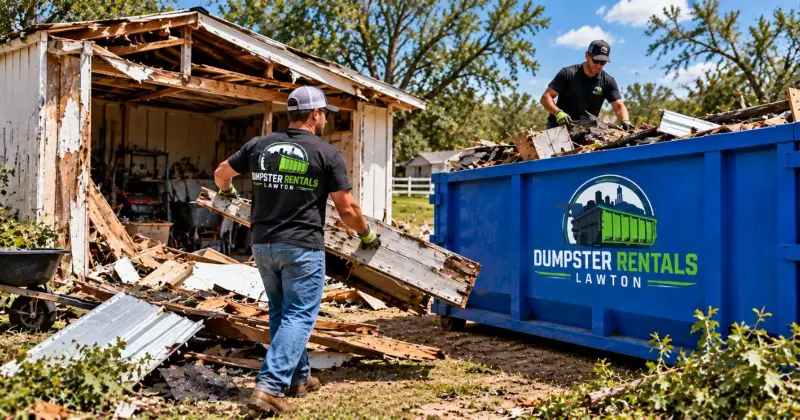
If a damaged outbuilding also contained stored items — tools, lawn equipment, seasonal storage — those add to the total volume as well, and salvaging anything still usable before the disposal phase begins helps avoid losing items that survived the storm intact even if the structure around them didn’t.
What Happens If Damage Is More Extensive Than Expected
It’s common for the initial assessment of storm damage to underestimate the actual cleanup scope, especially when damage is spread across a large yard or affects multiple structures. If a container fills up faster than expected during a major cleanup, swapping for a larger size or scheduling an additional pickup are both reasonable options, and neither should be seen as a planning failure — storm damage is inherently unpredictable, and even a careful initial estimate can turn out to be conservative once the actual debris is in front of you.
Frequently Asked Questions
How quickly can a dumpster be delivered after a storm?
Same-day or next-day delivery is often possible, though availability can tighten during widespread storm events affecting a larger area. Calling as soon as it’s safe to do so generally improves the chances of fast delivery.
Should I take photos before or after loading storm debris into a dumpster?
Before. Once debris is loaded and hauled away, the opportunity to document damage for insurance purposes is gone, so photographing the damage first is an important step if a claim might be filed.
Can roofing debris and tree limbs go in the same dumpster?
Yes, mixed storm debris is generally fine in a standard roll-off container. The main consideration is weight, since roofing material adds weight faster than an equivalent volume of branches, which can matter for sizing if both are present in significant quantity.
Being Ready Before the Next Storm
Storm season in Oklahoma is a matter of when, not if, and having a general sense of how dumpster sizing and delivery work ahead of time means one less thing to figure out during an already stressful cleanup. For more detail on how sizing works across different project types, see the dumpster sizes guide, or check the permit guide if street placement might be necessary.