Yard Waste Disposal vs. Household Junk: Dumpster Guide
Yard Waste Disposal vs. Household Junk: What’s the Difference?
Yard waste and household junk may both end up in a dumpster, but they behave very differently once loaded. Yard waste disposal often involves bulky but lightweight materials such as branches, leaves, and grass clippings, while household junk can contain heavier items such as furniture, appliances, and other dense materials.
Understanding the difference helps homeowners and contractors choose a dumpster based on the factor that will likely matter first: volume or weight.
Comparing Yard Waste Disposal and Household Junk in a Dumpster
Not all debris behaves the same way once it is loaded into a dumpster. Yard waste disposal differs from household junk in weight, volume, and disposal handling. Treating the two categories as exactly the same when estimating a container can lead to an inaccurate size choice.
Quick Answer: Yard waste is usually bulky but relatively light, so it can fill a dumpster’s visible space quickly without adding as much weight. Household junk varies much more. Furniture, appliances, and other dense items can add significant weight even when there is still room in the container. Mixed projects should be sized around whichever factor is likely to be reached first: volume or weight.
Defining the Two Categories
Yard waste generally includes branches, leaves, grass clippings, shrub trimmings, and other landscaping debris from outdoor maintenance or larger yard cleanup projects.
Household junk covers a much wider range of materials, including furniture, boxes, general clutter, broken appliances, and items removed during a home cleanout.
Yard waste and household junk may both be accepted in a standard roll-off dumpster, but accepted materials can vary by dumpster provider and disposal facility. Always confirm the material rules before loading the container.
Yard Waste vs. Household Junk: Quick Comparison
| Factor | Yard Waste | Household Junk |
|---|---|---|
| Typical materials | Branches, leaves, grass, shrub trimmings | Furniture, boxes, appliances, household clutter |
| Main concern | Volume | Weight and volume |
| Typical weight | Usually lighter | Can range from light to heavy |
| Space usage | Loose branches can create air gaps | Items can stack and compact differently |
| Sizing approach | Estimate the amount of loose debris | Consider volume plus heavier items |
| Common projects | Tree trimming, brush cleanup, landscaping | Garage, room, or whole-house cleanouts |
| Special considerations | Storm debris, large branches, stumps | Appliances, electronics, furniture, recyclable items |
How Yard Waste Fills a Container
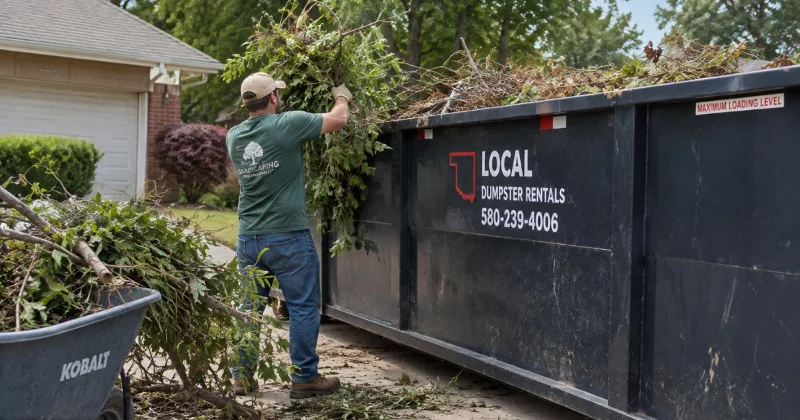
Yard waste, especially branches and larger trimmings, tends to be bulky and irregularly shaped. Loose branches can create air gaps, so the dumpster may look full before the load reaches its weight allowance.
For this reason, available space is often a bigger concern than weight for a typical yard cleanup.
This is different from heavy materials such as concrete or roofing debris, where weight can become the limiting factor much sooner.
When planning a yard cleanup, estimate the amount of branches, leaves, brush, and other material that will be removed rather than judging the project only by the size of the property.
How Household Junk Fills a Container Differently
Household junk has a much wider range of weights.
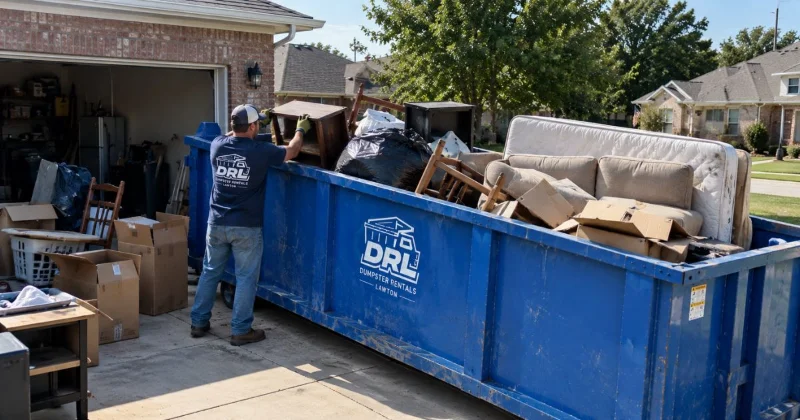
Furniture with wood or metal frames can add substantial weight. Boxes, clothing, and general household clutter are usually lighter and easier to compress.
Because household junk is a mixture of many different materials, it is harder to predict its weight from volume alone.
A garage cleanout containing cardboard and old clothing will behave very differently from a cleanout containing heavy furniture, appliances, and other dense items.
Combining Both Types in a Single Project
Many property cleanouts involve both yard waste and household junk.
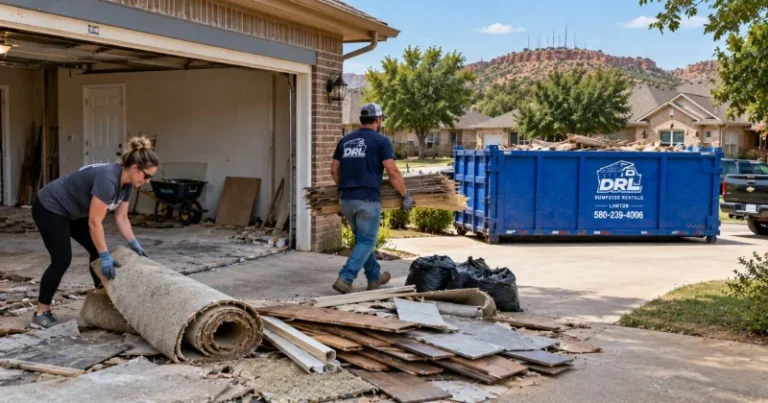
For example, a homeowner may clean out a garage while also removing overgrown branches and landscaping debris from the yard.
In a mixed project, yard waste will usually contribute more to the dumpster’s volume, while heavier household items can contribute more to the total weight.
Before ordering a dumpster, describe both parts of the project. Mention the approximate amount of yard debris as well as the larger household items being removed.
This gives the provider better information for recommending an appropriate container size.
Sizing Guidance for Yard Waste Projects
For yard waste disposal projects, dumpster sizing is usually driven more by volume than weight.
A moderate cleanup involving branches, shrub trimmings, and other landscaping debris may fit in a 10- or 15-yard container.
Larger projects, such as clearing heavily overgrown areas or removing debris from several trees, may require a 20-yard dumpster or larger because loose branches can take up substantial space.
The best size depends on how much material is actually being removed. A small property can sometimes produce a large amount of yard debris after major trimming or tree work.
Seasonal Patterns in Yard Waste Volume
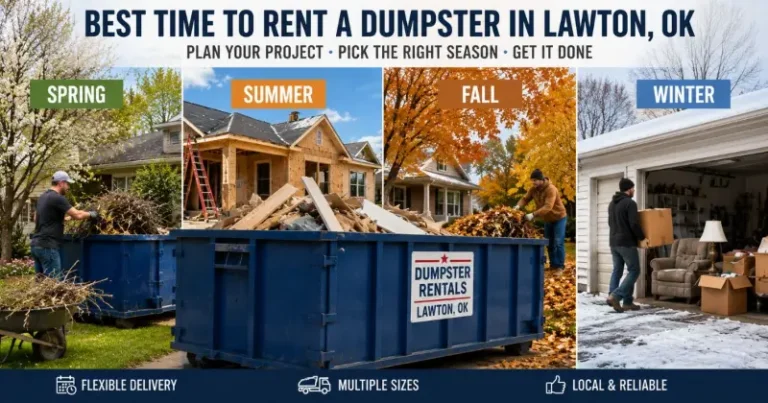
Yard waste volume in Lawton can change throughout the year.
Spring and fall can produce larger amounts of landscaping debris as plants grow and leaves fall. Summer may produce a steadier flow of grass clippings, branches, and trimming waste, while winter is often quieter unless storm damage or major landscaping work creates additional debris.
Planning a large cleanup during a high-volume season means allowing for the amount of material that may accumulate.
When Household Junk Volume Catches People Off Guard
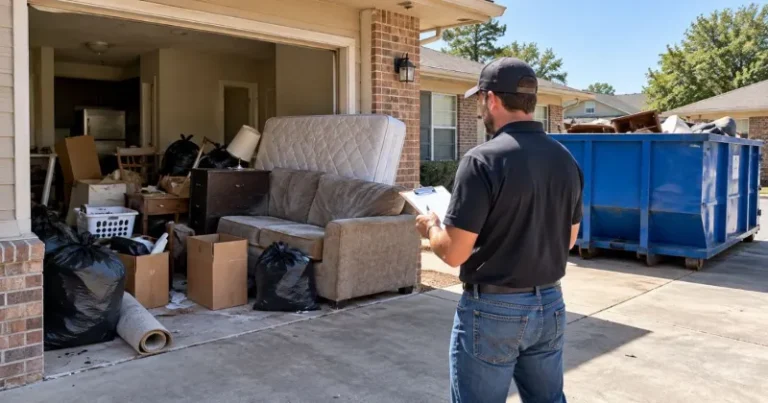
Household junk can be difficult to estimate because much of it is hidden inside closets, garages, storage rooms, sheds, and other areas.
A cleanout that appears to involve only one room can become much larger once everything is removed and sorted.
This is one reason homeowners should avoid choosing a dumpster based only on a quick visual inspection.
Before the container arrives, walk through each area being cleaned and estimate how much material will actually be removed.
Composting as an Alternative to Dumpster Disposal
Not all yard waste needs to go into a dumpster.
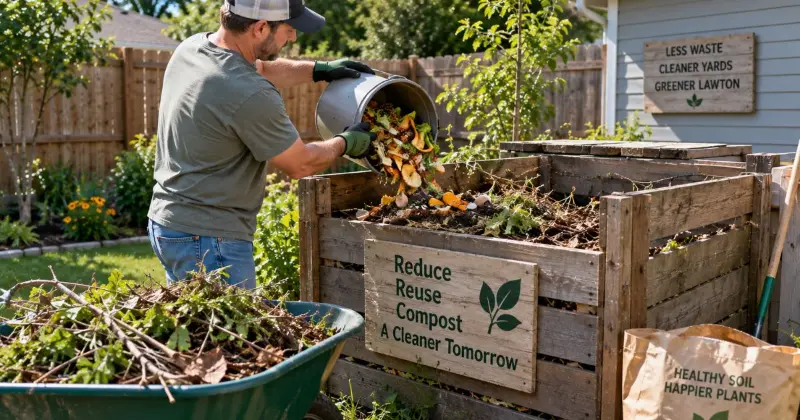
Grass clippings can often be left on the lawn after mowing, where they break down and return nutrients to the soil. The EPA provides guidance on managing yard trimmings and composting.
Leaves and smaller branches may also be composted when homeowners have enough space and the right setup.
For a large yard cleanup, handling all the material on-site may not be practical. However, keeping some leaves, grass, and small organic material out of the dumpster can reduce the total volume that needs to be hauled away.
This may also help a homeowner choose a smaller container when the remaining debris fits within its capacity.
Recycling and Donation Options for Household Junk
Household junk should not automatically go straight into a dumpster.
Furniture that is still usable may be donated or sold. Working small appliances and household goods may also have another use.
Scrap metal from old appliances, furniture frames, and other items may be recyclable depending on the material and local facility requirements.
Electronics deserve special attention because some electronic items may require dedicated recycling rather than ordinary disposal.
Sorting items into keep, donate, recycle, and dispose categories before the dumpster arrives can reduce the amount of material that actually needs to be thrown away.
How Storm Damage Changes the Yard Waste Equation
Storm damage can create far more yard debris than a normal landscaping project.
High winds can bring down large branches or entire trees, creating material that is much bulkier than routine grass clippings or shrub trimmings.
Storm debris can also contain larger pieces of wood and, in some cases, root material.
Because storm cleanup can produce a sudden increase in volume, homeowners should describe the condition of the property when requesting a dumpster.
Mention whether the project involves a few fallen branches, a large tree, or extensive storm cleanup. That information can help determine whether a standard yard cleanup container is sufficient.
Frequently Asked Questions
Can grass clippings go in a standard dumpster?
Grass clippings may be accepted by some dumpster providers, but material rules vary. Confirm with the provider before loading large amounts of grass or other organic waste.
Does yard waste need to be bagged before going into a dumpster?
Loose yard debris does not necessarily need to be bagged, but loading requirements can vary by provider. Loose branches and trimmings are often easier to load directly into a roll-off container.
Will mixing yard waste with household junk cause any disposal issues?
Yard waste and household junk may be combined when the dumpster provider accepts both materials. The main concern is estimating the total volume and weight correctly.
Heavy household items can increase the load’s weight, while branches and other yard debris can quickly consume available space.
Can I put tree stumps or root balls in a standard dumpster?
Stumps and root balls may require special handling, especially when they are large or contain substantial soil.
Their dense weight and awkward shape can take up more space than expected. Before loading them, tell the dumpster provider the approximate size and quantity so they can confirm whether the material is accepted.
What should I do with usable household items before renting a dumpster?
Separate usable furniture, appliances, household goods, and other items before the cleanup begins. Items that can be donated, sold, or recycled do not need to take up valuable dumpster space.
Is yard waste heavier after a storm?
Storm debris can be heavier and bulkier than routine yard trimmings because it may include large branches, sections of trees, and soil-covered root material.
For storm cleanup, describe the debris clearly when requesting a dumpster so the container can be sized for the actual project.
Getting the Sizing Right for Mixed Projects
Understanding the difference between yard waste and household junk makes dumpster planning easier.
Yard waste disposal generally creates a volume problem because branches and other landscaping debris take up a lot of space. Household junk can create a weight problem when the load contains furniture, appliances, or other heavy items.
For a project involving both, estimate the amount of each type of material separately before choosing a container.
For more information about container capacity, see the dumpster sizes guide. If your project involves a home or property cleanout, you can also review the cleanup dumpster rental page for more specific guidance.
The clearer the description of your project, the easier it is to choose a dumpster that provides enough space without paying for unnecessary capacity.