Kitchen Bathroom Remodel Waste: What You Need to Know
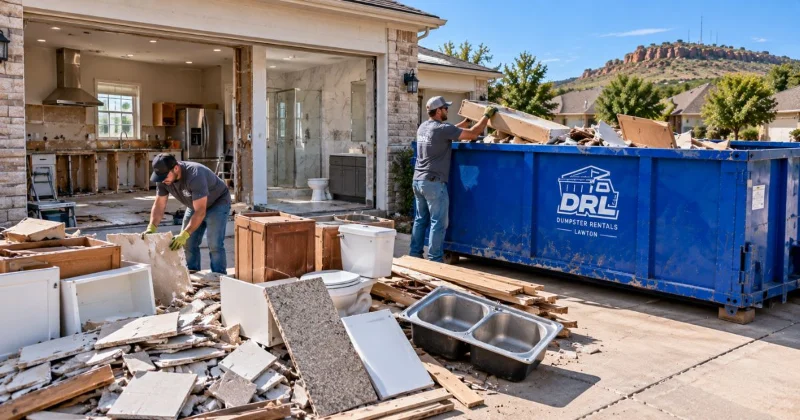
Kitchen bathroom remodel waste is some of the most varied debris from a home renovation project, combining cabinetry, tile, drywall, plumbing fixtures, and flooring into a single cleanup effort. Planning for these materials specifically helps avoid common problems that can come from treating remodel debris like a standard household cleanout.
What Kitchen Remodels Typically Generate
A full kitchen remodel usually produces old cabinets, countertops, flooring, and sometimes drywall if walls are being reconfigured — all part of the kitchen bathroom remodel waste stream contractors plan around. Countertops in particular vary widely in weight depending on material, with stone or quartz surfaces adding substantially more weight than laminate. Appliances being replaced add another layer, especially if refrigerant removal is needed for refrigerators or freezers before disposal.
What Bathroom Remodels Typically Generate
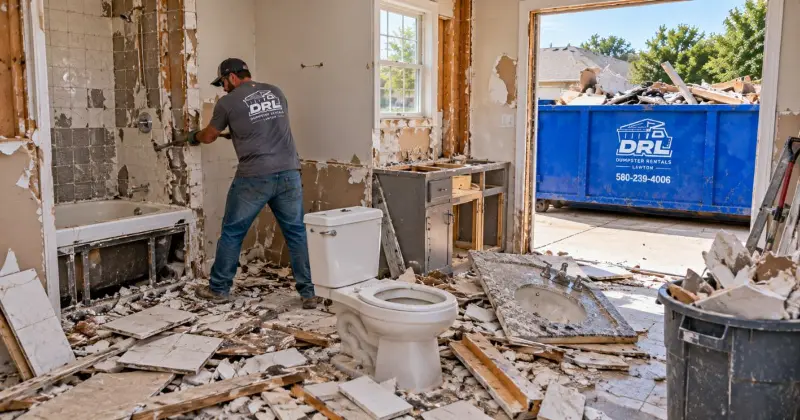
Bathroom remodels tend to produce tile, old fixtures like tubs, toilets, and vanities, along with drywall affected by plumbing changes. Tile debris is notably heavy for its volume, similar to concrete in how quickly it can affect a weight allowance even in a moderate quantity.
Disconnecting Plumbing and Electrical Before Demolition
Before any cabinets, tile, or fixtures come out, water supply lines need to be shut off and, in most cases, capped to prevent leaks once fixtures are disconnected. For electrical work — under-cabinet lighting, garbage disposals, bathroom exhaust fans — circuits should be identified and shut off at the breaker before any demolition begins nearby. Homeowners tackling their own demolition sometimes underestimate how much of this prep work needs to happen before the fun part of tearing out old material can safely start.
For anything beyond shutting off a supply valve, involving a licensed plumber or electrician for the disconnection step is generally worth the cost, both for safety and to avoid damaging supply lines or wiring that will be reused in the new installation. This is especially true in older homes where plumbing and electrical layouts may not match what current code or the new design assumes.
What to Do With Reusable Cabinets and Fixtures
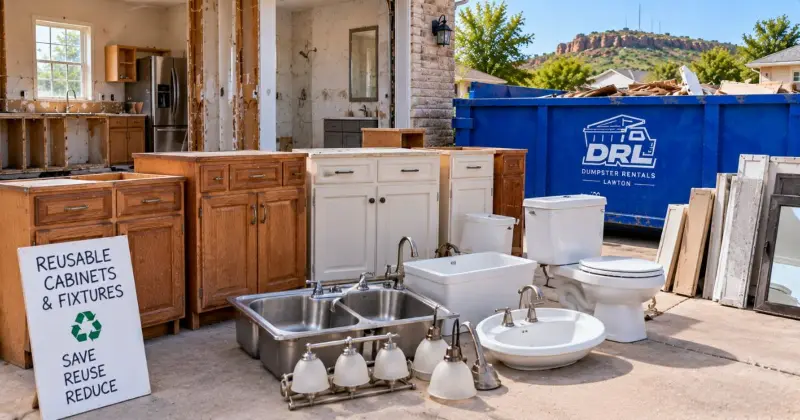
Not everything coming out of a kitchen or bathroom remodel needs to go straight into a dumpster. Cabinets in good structural condition, even if dated in style, along with usable fixtures like vanities, mirrors, and light fixtures, often have donation value. Lawton-Ft. Sill Habitat for Humanity’s ReStore accepts complete, functional cabinet sets and other renovation materials, which keeps usable material out of the landfill while supporting a local cause. For kitchen and bathroom remodels in Lawton, separating reusable materials before demolition can make cleanup easier and reduce the amount of debris going into the dumpster.
Countertops in good condition, particularly stone or solid surface materials, can sometimes be resold or donated as well, though their weight and size make transport more of a factor than with cabinets. Checking with a local Restore or salvage buyer before demolition begins, rather than after everything is already piled for disposal, makes it easier to actually follow through on donating rather than defaulting to the dumpster for convenience. Planning for kitchen bathroom remodel waste before demolition also makes it easier to separate reusable materials from debris that needs disposal.
Permits and Local Requirements for Remodel Projects
Not every kitchen or bathroom remodel requires a permit, but projects involving structural changes, moved plumbing or electrical, or significant layout changes typically do under local building codes. Checking with the City of Lawton’s building permit office before demolition begins avoids the complication of unpermitted work surfacing later, particularly if the home is sold before the next remodel.
Permit requirements don’t directly affect dumpster placement in most cases, but if street placement becomes necessary due to a short or blocked driveway, a separate right-of-way permit may apply. Confirming this ahead of time, alongside any other remodel-specific permit needs, keeps the disposal side of the whole project from becoming an unexpected holdup later.
Kitchen Bathroom Remodel Waste: Sizing Guidance
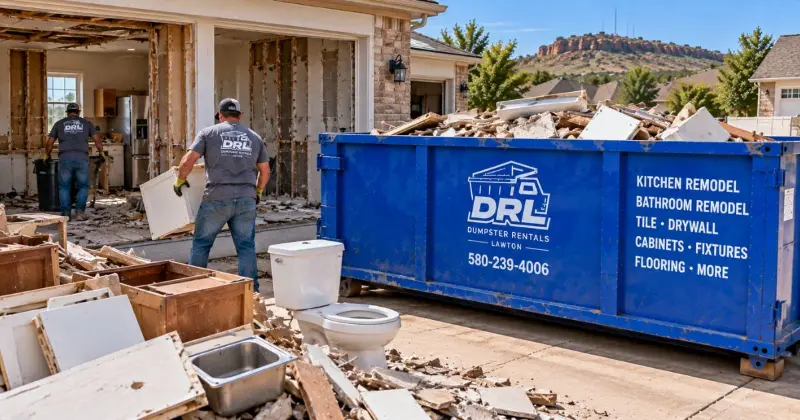
For a kitchen remodel alone, a 20-yard container is a common starting point, accounting for cabinetry, flooring, and general debris. Bathroom remodels, being smaller in scope, often fit a 15-yard container, though tile-heavy projects may need to size up due to weight rather than volume. Projects combining both rooms typically call for a 20 or 30-yard container depending on the extent of each renovation.
Timing the Dumpster Around Demolition and Installation
Most kitchen bathroom remodel waste is generated during the demolition phase, with much less debris produced once installation of new materials begins. Scheduling the dumpster rental to align with the demolition and initial cleanout phase, rather than for the full project duration, often makes more efficient use of a standard rental period.
Handling Old Appliances and Refrigerant Rules
Refrigerators, freezers, and some older window air conditioning units contain refrigerant that legally cannot simply be vented or removed without proper certification, since refrigerants are regulated under federal environmental rules. Most dumpster rental providers require refrigerant to be professionally removed and documented before an appliance is accepted, which is worth arranging ahead of demolition day rather than discovering the requirement once the old refrigerator is already sitting curbside.
Dishwashers, garbage disposals, and range hoods generally don’t carry this same restriction and can typically go directly into a standard dumpster load alongside other kitchen remodel debris. Older gas ranges are a separate consideration, since some scrap or appliance recyclers will take them specifically for the metal content, which can be a better option than disposal if the unit is otherwise beyond repair.
DIY Demolition vs. Hiring a Contractor
Demolition is often the part of a kitchen or bathroom remodel homeowners are most comfortable doing themselves, since it mainly requires basic tools and physical effort rather than specialized skill. Removing cabinets, old tile, and non-structural fixtures is generally manageable for a reasonably handy homeowner, though tile removal in particular tends to take longer than expected and generates more dust and debris than people anticipate.
Where DIY demolition gets riskier is around anything touching plumbing, electrical, or structural elements like load-bearing walls. A contractor handling the full remodel will typically manage demolition as part of the overall project timeline, which also means they’re usually the one coordinating dumpster delivery timing rather than the homeowner. For homeowners handling demolition themselves ahead of a contractor doing installation, communicating the disposal timeline clearly to the contractor avoids confusion about who’s responsible for scheduling the dumpster.
Protecting the Rest of Your Home During Demolition
Kitchen and bathroom demolition generates a surprising amount of dust, particularly when tile, drywall, or plaster is involved, and this dust travels further through a home than most people expect. Sealing off the work area with plastic sheeting and using a box fan with a furnace filter taped to it as an improvised air scrubber are both simple, low-cost ways to reduce dust spreading into other rooms. Planning for remodel waste in Lawton before demolition can also help keep the rest of the home cleaner and safer.
Protecting flooring along the path from the work area to the dumpster is equally worth planning for, since repeatedly carrying tile, cabinets, and fixtures across the same stretch of flooring can cause real wear over the course of a project. Rosin paper or cardboard laid down temporarily along this route is a low-cost way to prevent scuffs and scratches on floors that aren’t part of the current remodel.
Frequently Asked Questions
Can Plumbing Fixtures Go in a Kitchen Bathroom Remodel Waste Dumpster?
Generally yes plumbing fixtures are a normal part of kitchen bathroom remodel waste and are typically acceptable in a standard roll-off container, though very large cast iron tubs may add significant weight worth mentioning when requesting a quote.
What’s the heaviest material in a typical bathroom remodel?
Tile and any concrete backer board tend to be the heaviest components relative to their volume, similar to how concrete behaves in other renovation contexts — see our flooring removal debris guide for how different flooring types compare.
Does removing a load-bearing wall between a kitchen and another room change the disposal plan?
It can, since structural changes often generate additional framing lumber and drywall beyond what a typical surface-level remodel produces, and they usually require permits and possibly an engineer’s review before work begins. Mentioning planned structural changes when requesting a dumpster quote helps ensure the size accounts for the extra framing and wall material involved.
How much does tile removal typically add to the total debris weight?
Tile and its underlying backer board or mortar bed can add a meaningful amount of weight even over a relatively small bathroom footprint, often more than homeowners expect relative to the square footage involved. For tile-heavy bathroom projects, mentioning the approximate square footage of tile being removed when requesting a quote helps avoid an undersized weight allowance for the container.
Beyond the room being remodeled, it’s worth walking adjacent spaces before demolition starts to note anything fragile or easily damaged nearby — a hallway light fixture close to where cabinets will be carried out, or flooring transitions that could be scuffed by repeated foot traffic. A few minutes of prep here tends to prevent small, avoidable damage that would otherwise turn into its own minor repair project once the main kitchen or bathroom remodel is finished, the crew has already moved on, and everyone has stopped paying close attention to the rest of the house.
Planning Remodel Waste Effectively
Kitchen bathroom remodel waste benefits from thinking through material types specifically rather than assuming standard renovation sizing applies uniformly. For more detail, see the cost factors guide or the residential dumpster rental page.