Multi Family Property Cleanouts: Easy Guide for Managers
How to Plan Multi Family Property Cleanouts
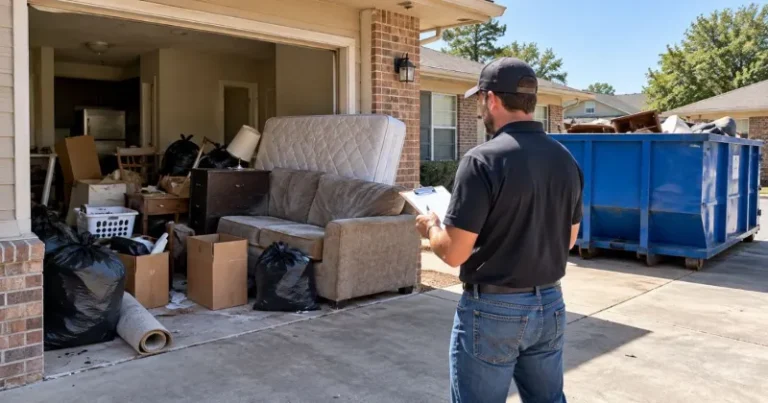
Property managers handling multi-family properties have a different cleanup problem than someone cleaning out a single rental home. Several units may become vacant at the same time, furniture and household items can build up quickly, and dumpster delivery has to work around residents, maintenance crews, parking, and access.
A good multi-family property cleanout plan starts by looking at the entire property. For larger multi-family property cleanouts, planning the disposal process at the property level can make scheduling much easier. The goal is to remove unwanted items, control debris, keep common areas clear, and get vacant units ready for the next tenant without creating unnecessary pickup and delivery problems.
Quick Answer: How Should Property Managers Plan a Multi Family Cleanouts?
Start by inspecting every vacant unit, estimate the total debris across the property, separate household items from renovation debris, and choose a dumpster based on the combined volume. When several units turn over around the same time, one properly placed larger container or a planned series of deliveries may simplify scheduling.
Multi Family Property Cleanouts Checklist
Before ordering a dumpster, walk through the property and create a simple checklist.
- Identify all vacant units
- Document each unit before cleanup
- List furniture and household items that need removal
- Check closets and cabinets
- Inspect garages and storage areas
- Check common areas
- Identify yard debris
- Separate renovation debris
- Estimate the total debris volume
- Confirm accepted materials
- Choose a dumpster size
- Plan dumpster placement
- Schedule delivery
- Coordinate access with maintenance staff
- Set the pickup date
- Complete a final property inspection
This approach gives the property manager a clearer picture of the actual cleanup instead of estimating the dumpster size from only one apartment.
Why Multi Family Cleanouts Require Different Planning
A single vacant apartment may produce a manageable amount of debris. Several units turning over at once can create a much larger disposal project.
For example, three vacant units might each have furniture, boxes, unwanted household items, and minor repair debris. If each unit is handled separately, the property manager may have to coordinate multiple disposal arrangements.
A property-level plan can make scheduling easier when several units are being cleaned at the same time.
Lawton property managers already deal with both single-family and multi-family rentals. Local property management companies in the area list multi-family homes and apartment complexes among the properties they manage.
Planning multi family property cleanouts at the property level helps managers coordinate several vacant units without treating every turnover as a separate project.
Centralized vs. Per-Unit Disposal
There are two basic ways to approach a multi-family cleanout.
Centralized Dumpster
One larger dumpster serves several units or common areas.
This can work well when:
- Several units are vacant together
- Cleanup happens during the same period
- The property has suitable dumpster access
- Debris can be collected in one location
- The provider allows the required materials
The main benefit is simpler coordination. Instead of arranging a separate container for every unit, the property manager can plan around one shared disposal point.
Separate Containers or Deliveries
Separate containers or sequential deliveries may make more sense when:
- Buildings are far apart
- Units turn over at different times
- Access is limited
- Different projects produce different debris
- The cleanup will continue over a longer period
The right approach depends on the property’s layout, debris volume, timing, and dumpster placement options.
How to Estimate Dumpster Size
There is no single dumpster size that fits every property. The right size for multi family property cleanouts depends on the number of units, the amount of furniture and household debris, and whether renovation work is included.
Start by estimating the amount of material coming from all units involved in the cleanup.
Consider:
- Number of vacant units
- Furniture volume
- Household clutter
- Appliances
- Flooring
- Carpet
- Cabinets
- Drywall
- Lumber
- Yard debris
- Common-area cleanup
- Maintenance or renovation debris
For example, two lightly furnished apartment turnovers may require much less space than several units being emptied after a long tenancy.
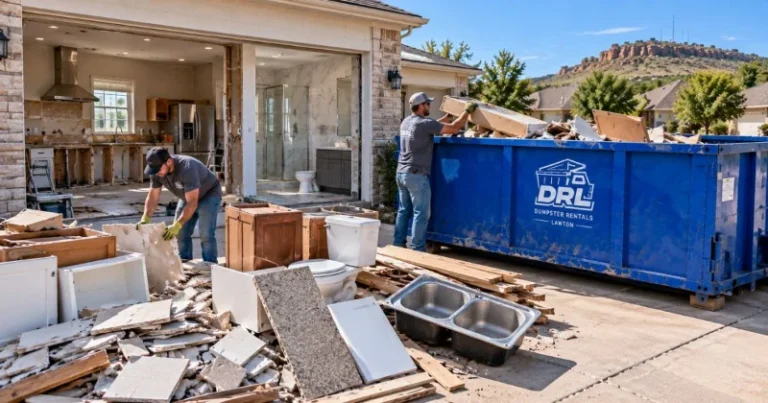
If the project includes remodeling, don’t estimate the container only from household cleanout material. Flooring, cabinets, drywall, and other construction debris can add significant volume.
For help comparing available containers, see our dumpster sizes guide.
Multi Family Turnover Cleanout Process
A repeatable process can make future turnovers easier.
Step 1: Inspect the Units
Walk through each vacant unit before removing anything.
Record:
- Furniture
- Appliances
- Tenant belongings
- Damaged materials
- Flooring
- Fixtures
- General debris
Step 2: Separate Items
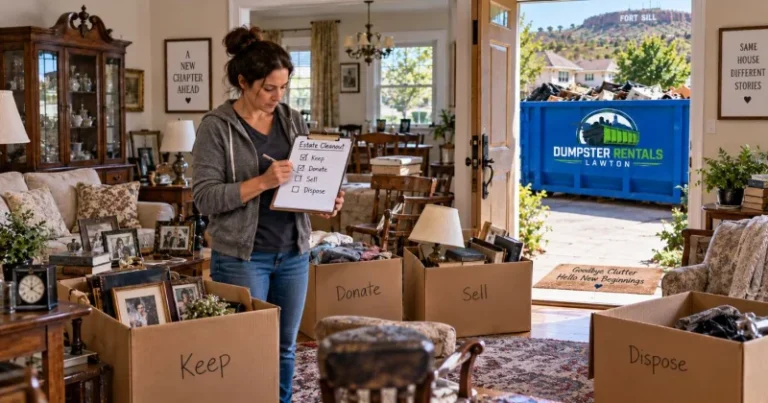
Create groups for:
Keep
Items that belong to the property.
Donate
Usable items that may have another use.
Recycle
Materials accepted through appropriate recycling programs.
Dispose
Items that cannot reasonably be reused or recycled.
Step 3: Estimate Total Volume
Combine the expected debris from all units instead of estimating each unit in isolation.
Step 4: Check Disposal Rules
Confirm that the dumpster provider accepts the materials you plan to load.
Some materials may have separate handling requirements.
Step 5: Plan Dumpster Placement
Choose a location that allows the dumpster to be delivered, loaded, and removed without blocking important access.
Check:
- Driveway access
- Parking
- Maintenance access
- Emergency routes
- Resident traffic
- Clearance for the delivery truck
Step 6: Schedule Delivery and Pickup
Coordinate the dumpster with the actual cleanup schedule.
The container should arrive when the work is ready to begin rather than sitting unused for days.
Common Debris From Apartment Turnovers
Multi family cleanouts can produce many different types of material.
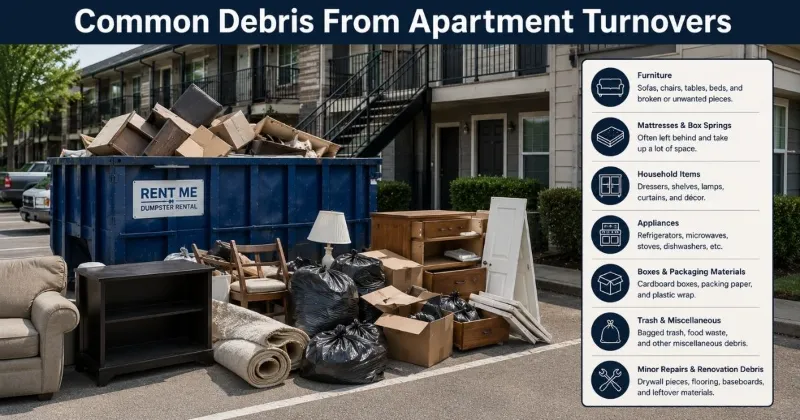
Common examples include:
- Couches
- Chairs
- Tables
- Mattresses
- Boxes
- Shelving
- Broken furniture
- Carpet
- Flooring
- Drywall
- Lumber
- Cabinets
- Yard debris
- General household waste
Don’t assume all of these materials have identical disposal rules.
For example, the City of Lawton’s current solid-waste information separates categories such as furniture, appliances, tree debris, lumber, carpet, construction/remodeling debris, tires, and hazardous materials.
For a private dumpster, always confirm accepted materials with the rental provider before loading.
Handling Tenant Items During a Cleanout
Property managers should not automatically treat everything left inside a vacant unit as disposable.
If belongings may have been left behind by a former tenant, follow the applicable notice, storage, and disposal requirements before throwing them away.
Document the condition of the unit and its contents before beginning the cleanout.
If you’re unsure about the legal requirements for abandoned tenant property, get appropriate legal guidance before disposal.
This is especially useful when several units are being processed at the same time because documentation can become harder to track.
Common Areas and Outdoor Cleanup
Don’t focus only on the apartments.
Multi-family properties may also have debris in:
- Hallways
- Storage rooms
- Laundry areas
- Maintenance rooms
- Parking areas
- Outdoor storage
- Community spaces
- Yards
- Dumpster areas
Include these locations when estimating the total cleanup volume.
A property-wide cleanup can produce considerably more debris than the individual vacant units alone.
Planning Dumpster Placement at an Apartment Property
Dumpster placement needs more thought at a multi-family property than at a typical single-family home.
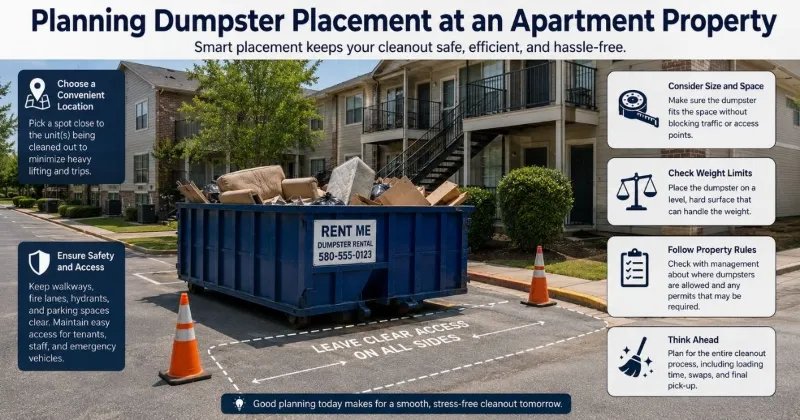
The container should be accessible without creating unnecessary problems for residents or maintenance crews.
Before delivery, check:
- Where the delivery truck can safely enter
- Whether residents need access to the same area
- Whether parking spaces will be affected
- Whether the surface is suitable
- Whether the container blocks gates or access routes
- Whether property rules or management requirements affect placement
If you’re unsure about placement, discuss the location with the dumpster provider before delivery.
Multi Family Property Cleanouts in Lawton
For multi family property cleanouts in Lawton, property managers should also consider local disposal options and the type of material being removed.
The City of Lawton Solid Waste Division currently provides residential bulky-waste collection, landfill operations, and other waste services. Its published information lists categories including furniture, appliances, tree debris, lumber, carpet and padding, electronics, and construction/remodeling debris, with different rules applying to different disposal methods.
That does not mean every item can be placed into a private dumpster. Confirm the accepted-material list with your dumpster provider before loading.
Establishing a Standing Dumpster Relationship
Property managers who regularly handle turnovers may benefit from working with one dumpster provider instead of treating every cleanup as a completely separate project.
A recurring relationship can make it easier to communicate:
- Typical property size
- Common debris types
- Preferred dumpster sizes
- Delivery locations
- Pickup requirements
- Typical turnover periods
Your site already has a commercial dumpster rental page that discusses recurring service for property managers and multi-unit properties, so this article can naturally link to it when discussing ongoing turnover needs.
When Should a Property Manager Order the Dumpster?
Don’t wait until the units are already overflowing with debris.
A better process is:
Unit inspection → debris estimate → dumpster selection → delivery scheduling → cleanout → pickup
If the turnover date is fixed, schedule around the start of the cleanout rather than the end.
If several units have different turnover dates, consider whether one larger rental, multiple containers, or sequential deliveries make the most sense.
When One Dumpster May Not Be Enough
A single container isn’t always the right solution.
Multiple containers or sequential deliveries may make sense when:
- Many units are being renovated
- The property has a large amount of debris
- Units turn over over several weeks
- Construction and household debris need different handling
- The property has limited space for one large container
Don’t overload a dumpster. If the project is larger than expected, contact the provider about another container or pickup.
Frequently Asked Questions
Is one dumpster enough for multiple apartment cleanouts?
It can be, depending on the number of units, debris volume, dumpster size, and cleanup schedule. When several units turn over together, a shared container may simplify disposal.
What dumpster size is best for a multi-family cleanout?
The right size depends on the total volume of debris. Count the units, estimate furniture and household waste, and include any flooring, drywall, lumber, or other renovation debris.
Can multiple units share one dumpster?
Yes, when the property layout, timing, and provider’s terms allow it. A shared dumpster can be practical when several units are cleaned at the same time.
What items are common in apartment cleanouts?
Furniture, mattresses, boxes, shelving, household items, carpet, flooring, and general debris are common. Renovation projects can add drywall, cabinets, lumber, and other construction materials.
How should property managers handle tenant belongings left behind?
Don’t automatically dispose of them. Document the items and follow the applicable notice, storage, and disposal requirements before throwing anything away.
Should I rent a dumpster for every vacant unit?
Not necessarily. If several units are being cleaned at the same time, a shared container may be practical. Separate rentals or sequential deliveries may work better when turnover dates are spread out.
Can I put renovation debris in a multi-family dumpster?
It depends on the provider and material. Confirm whether flooring, drywall, lumber, roofing, appliances, or other construction materials are accepted before loading.
How can property managers reduce cleanout delays?
Start with an inspection, estimate debris early, schedule the dumpster before cleanup begins, confirm placement, and coordinate delivery and pickup with the maintenance or turnover schedule.
Final Multi Family Cleanout Checklist
Before starting the project, confirm:
- Vacant units have been inspected
- Tenant belongings have been handled properly
- Debris has been separated
- Common areas have been checked
- Outdoor areas have been inspected
- Total debris volume has been estimated
- Dumpster size has been selected
- Accepted materials have been confirmed
- Placement has been approved
- Delivery date is scheduled
- Maintenance staff know the plan
- Pickup timing is arranged
A systematic approach to multi family property cleanouts helps property managers handle several turnovers without treating every unit as a separate disposal project.
For recurring property-management needs, see our commercial dumpster rental guide, or use our dumpster sizes guide when estimating container capacity.