Tornado Debris Cleanup in Lawton: Best Safety Tips
How to Handle Tornado Debris Cleanup Safely
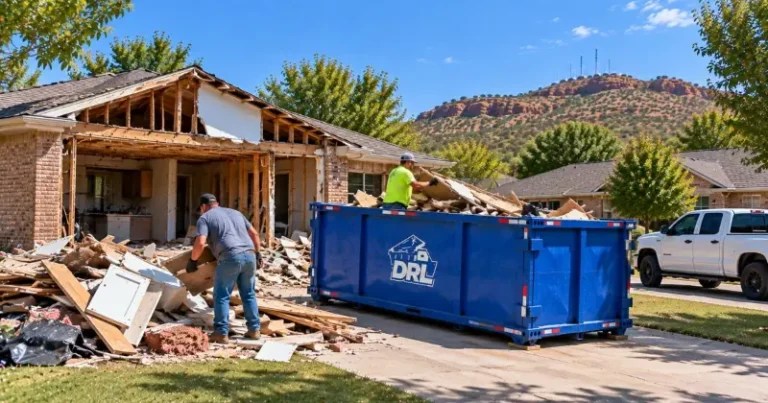
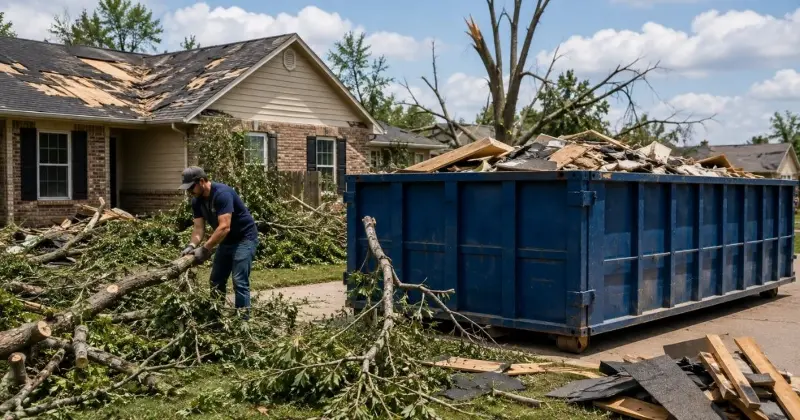
Tornadoes and severe storms can leave behind a wide range of debris, from tree limbs and damaged fencing to roofing, siding, flooring, and other building materials. For homeowners in Lawton and across Comanche County, having a basic tornado debris cleanup plan can make the cleanup process more organized after a storm.
The first priority is always safety. Do not begin removing debris until the area is safe and authorities or emergency personnel have cleared the immediate hazards. After that, document the damage, identify the types of debris, and determine the best disposal option for the material — including whether anything should go to the City of Lawton landfill directly.
Quick Answer: How Should You Handle Tornado Debris?
Start with safety, document the damage, then assess the debris before beginning cleanup. Photograph damaged areas before moving material when possible, keep away from unstable structures and downed utility lines, and determine what types of debris you have. For larger cleanups, a dumpster can provide a central place to collect permitted storm debris while repairs are underway.
When Is Tornado Season in Southwest Oklahoma?
Oklahoma can experience tornadoes outside the traditional spring period, but tornado activity is generally concentrated during the warmer months. National Weather Service Norman maintains historical tornado records for Oklahoma and specifically tracks tornadoes around Lawton.
Historical Oklahoma data shows substantial tornado activity during spring and early summer, with May among the highest-activity months statewide.
For that reason, homeowners planning spring yard work, roofing, remodeling, or other outdoor projects should pay attention to weather conditions and have a plan for severe weather.
Tornado timing is unpredictable, though. A seasonal pattern does not mean a tornado will occur on a particular day or week.
What Types of Debris Can Tornadoes Produce?
The amount and type of debris depends on the strength and path of the storm and the property involved.
Common storm debris can include:
- Tree limbs and branches
- Damaged fencing
- Roofing materials
- Siding
- Broken windows and doors
- Damaged furniture
- Flooring
- Drywall
- Lumber
- Insulation
- Household items
- Construction materials
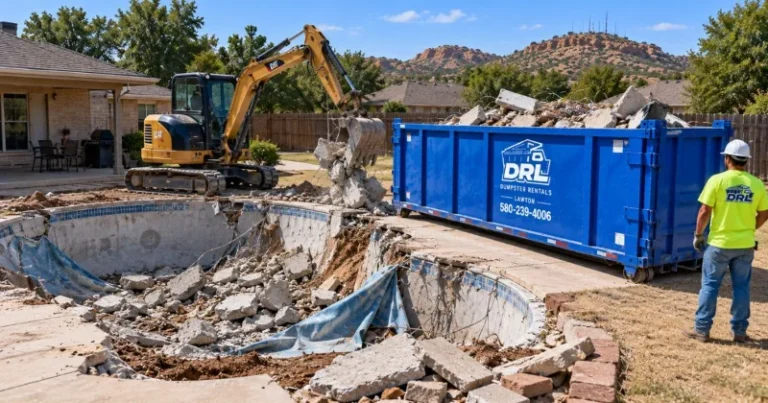
A smaller storm cleanup may involve mostly branches and exterior debris. A more serious event can produce mixed structural debris across multiple areas of a property.
Because the debris can vary so much, don’t choose a dumpster based only on the fact that the damage came from a tornado. Estimate the actual volume and type of material first.
Safety Before Tornado Debris Cleanup
Storm cleanup should never begin simply because the tornado has passed.
The National Weather Service recommends getting inside a sturdy structure during a tornado threat and protecting yourself from flying or falling debris.
After the storm, watch for hazards such as:
- Downed power lines
- Damaged electrical equipment
- Unstable walls
- Broken glass
- Sharp metal
- Gas leaks
- Damaged roofs
- Large tree limbs under tension
- Flooded areas
- Unstable structures
If you see a large debris obstruction or other emergency road hazard in Lawton, the City provides instructions for reporting it. Current City guidance lists 580-581-3427 during normal business hours and Police Dispatch at 580-581-3272 after hours, weekends, or holidays.
Do not attempt to handle dangerous electrical, structural, or hazardous-material situations yourself.
Document Tornado Damage Before Cleanup
Take photographs and videos of the property before starting tornado debris cleanup whenever it is safe to do so.
Document:
- Roof damage
- Broken windows
- Damaged siding
- Fallen trees
- Damaged fencing
- Interior water damage
- Structural damage
- Damaged appliances
- Other visible property damage
Keep the photographs organized and record the date of the storm and cleanup.
If you have insurance coverage, contact your insurance company and follow its instructions before disposing of major damaged materials. Your insurer may have specific documentation requirements.
How to Choose a Dumpster for Tornado Debris
There isn’t one dumpster size that fits every tornado cleanup.
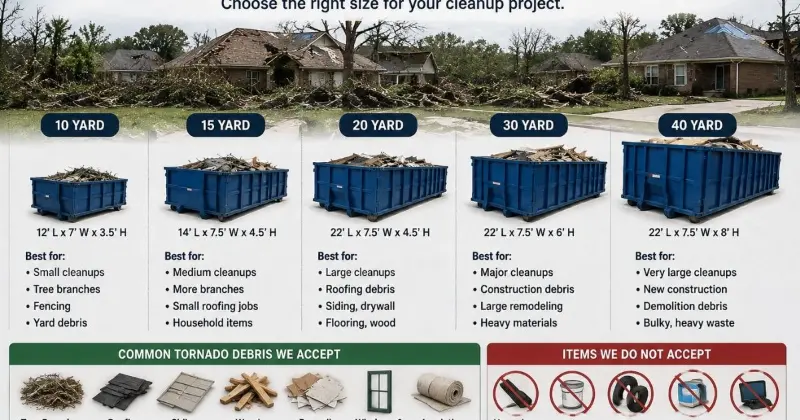
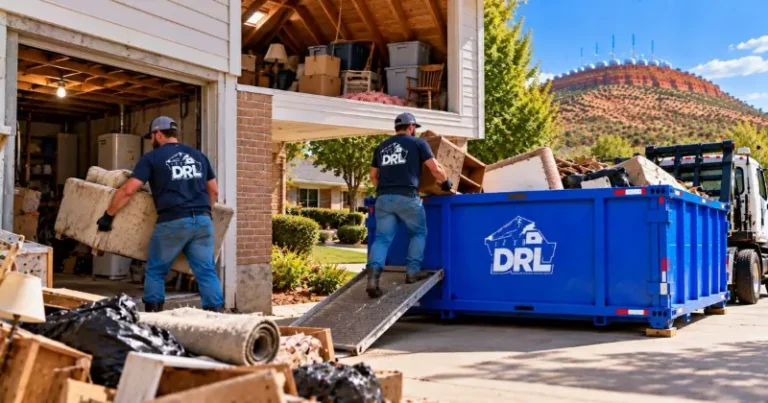
A small residential cleanup involving branches, fencing, and household debris may need a smaller container. A larger cleanup involving roofing, flooring, drywall, lumber, and other renovation material may require more capacity.
The best approach is:
- Assess the damaged areas.
- Separate different types of debris.
- Estimate the total volume.
- Check which materials the dumpster provider accepts.
- Choose a container based on the actual debris.
- Arrange delivery when the property is safe to access.
If the amount of debris is uncertain, ask the rental provider about available sizes and whether additional pickups or a larger container are possible.
For help comparing container sizes, see our dumpster sizes guide.
Different Storm Debris May Have Different Disposal Rules
Don’t assume that every item damaged by a tornado can go into the same dumpster.
For example, ordinary household debris is different from materials that may require special handling.
Before loading the container, ask about:
- Roofing materials
- Appliances
- Tires
- Paint and chemicals
- Electronics
- Refrigerators or freezers
- Concrete
- Large tree debris
- Other potentially restricted materials
The provider can tell you what it accepts and whether certain materials need a different disposal method.
Tornado Debris Cleanup in Lawton
Lawton has its own local storm cleanup procedures, and these can change depending on the event.
For example, following a June 2026 storm, the City of Lawton provided temporary roll-off dumpsters at designated locations specifically for downed tree limbs and branches. The City stated that those temporary dumpsters were not for household trash, construction debris, or other non-storm-related waste. Residents who could not use the temporary sites were directed to the City of Lawton Landfill for storm debris.
This is a useful reminder that City storm-debris programs and private dumpster rentals are not necessarily the same thing.
Before hauling storm debris, check current City instructions and confirm what your private dumpster provider accepts.
For current municipal information, see the City of Lawton Public Works page.
What to Do With Tree Debris
Trees and branches can make up a large part of a residential storm cleanup.
Before loading them:
- Separate large branches from household debris.
- Check whether the City has temporary storm-debris collection locations.
- Confirm whether your private dumpster accepts tree debris.
- Secure loads properly if transporting debris yourself.
- Do not place hazardous or restricted material with ordinary tree debris.
The City of Lawton has previously established temporary roll-off locations specifically for downed limbs and branches after storms, showing why checking current local instructions matters.
What to Do With Roofing and Construction Debris
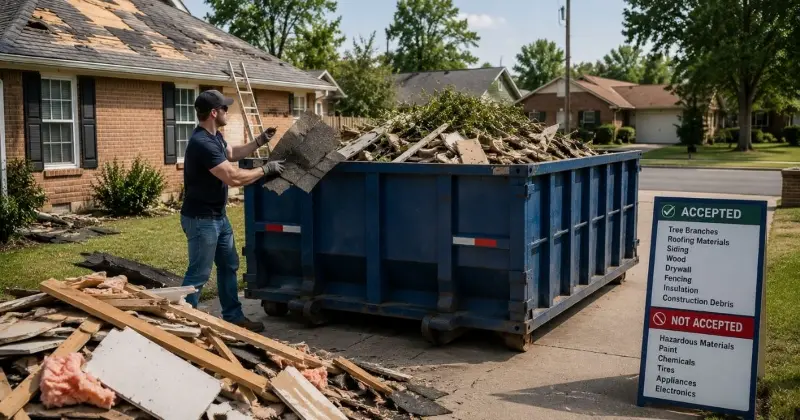
Roof damage can create shingles, underlayment, wood, insulation, and other materials.
If you’re repairing the roof after a tornado, estimate the debris from the repair separately from household and yard cleanup.
For a larger repair, the debris volume can increase quickly. Ask the dumpster provider about:
- Accepted roofing materials
- Weight limits
- Container size
- Placement
- Rental period
- Pickup timing
This helps prevent problems after the dumpster is delivered.
When Should You Rent a Dumpster After a Tornado?
Don’t schedule delivery before you know that the property is safe and accessible.
Once the immediate hazards have been addressed, determine how much debris needs to be removed and what type of material you have before starting tornado debris cleanup.
A practical sequence is:
Storm → Safety check → Damage documentation → Debris assessment → Dumpster selection → Cleanup → Pickup
If the cleanup grows larger than expected, contact the rental provider before the container becomes overloaded or the project reaches the end of the rental period.
Frequently Asked Questions
When is tornado season in Lawton?
Tornadoes can occur at different times of the year, but Oklahoma historically sees substantial tornado activity during spring and early summer. NWS Norman provides historical tornado information for Lawton and Oklahoma.
What is the most common tornado debris?
There is no single type of debris that occurs in every tornado. Residential cleanup can include tree limbs, roofing, fencing, siding, drywall, flooring, lumber, furniture, and other damaged materials.
What should I do first after tornado damage?
Put safety first. Stay away from downed power lines, unstable structures, gas leaks, and other hazards. Once it is safe, document the damage and contact your insurer if applicable before beginning major cleanup.
What dumpster size do I need for tornado cleanup?
It depends on the amount and type of debris. A small cleanup may need a smaller container, while significant structural or renovation debris may require a larger container or additional pickups.
Can I put tree branches in a dumpster?
It depends on the dumpster provider and the specific rental. Some providers accept yard debris while others have restrictions. Confirm before loading branches or other storm debris.
Can I put roofing debris in a dumpster?
Many dumpsters can be used for roofing debris, but accepted materials and weight limits vary. Confirm the provider’s rules before starting the cleanup.
Does Lawton provide storm debris dumpsters?
The City of Lawton has provided temporary roll-off dumpsters for specific storm events. For example, in June 2026, the City provided designated dumpsters for downed tree limbs and branches and directed residents who could not use those sites to the City landfill. Availability and locations depend on the specific storm event.
Should I remove storm debris before contacting my insurance company?
Photograph and document the damage before removing major debris whenever it is safe to do so. Then follow your insurance company’s instructions about inspection, documentation, and disposal.
Planning Ahead for Tornado Debris Cleanup
You cannot predict exactly when a tornado will affect a particular property, but you can make the cleanup process easier by knowing what to do after a storm.