Pool Removal Debris: What Homeowners Should Expect
Planning for Pool Removal Debris and Disposal
Pool removal can generate very different types and amounts of debris depending on whether you’re taking down an above-ground pool or removing an inground pool. An above-ground pool may produce mostly metal framing, liner material, and deck components, while an inground pool can involve heavy concrete or gunite, rebar, plaster, and other demolition debris.
Quick Answer: Above-ground pool removal usually produces lighter debris such as metal framing, liner material, and deck components, so a 10-yard dumpster may be suitable for some projects. Inground pool removal is much more debris-intensive, especially when concrete or gunite and rebar are being removed. Depending on the pool size and removal method, a 20- or 30-yard dumpster or multiple hauls may be needed.
Pool Removal in Lawton OK: What to Know Before You Start
For homeowners in Lawton, pool removal can involve more than just tearing out the pool. The type of pool, amount of concrete, removal method, and disposal requirements can all affect how much debris needs to be hauled away and what dumpster makes sense.
Above-Ground vs. Inground Pool Removal
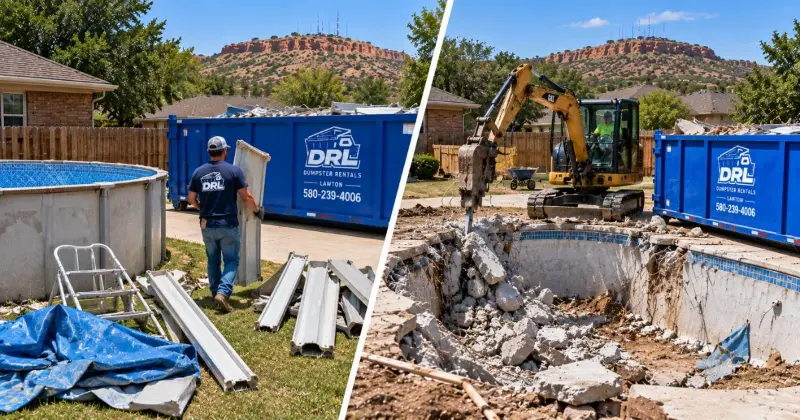
An above-ground pool is usually made up of metal framing, a liner, and sometimes a wood or composite deck. Once the pool is drained and dismantled, the debris is generally lighter than material from an inground pool, although the amount can vary depending on the pool and surrounding structure.
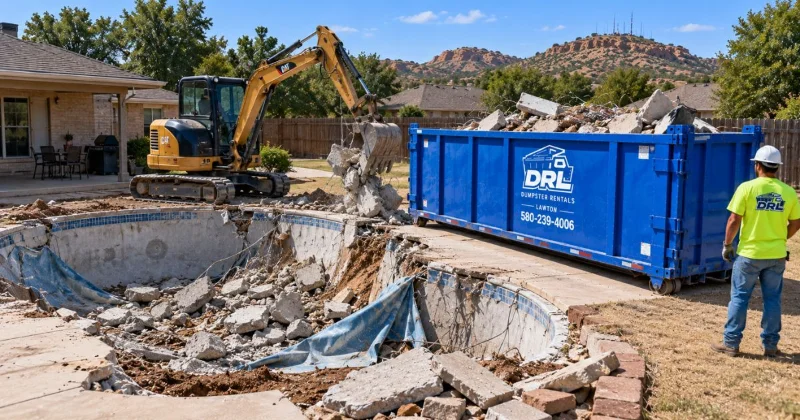
An inground pool is a much heavier demolition project when the concrete or gunite shell is being removed. The debris may include broken concrete or gunite, rebar, plaster or liner material, and other components. The amount that needs to be hauled away depends heavily on whether the project involves full excavation and removal or a partial collapse-and-backfill approach.
Concrete and Rebar From Inground Removal
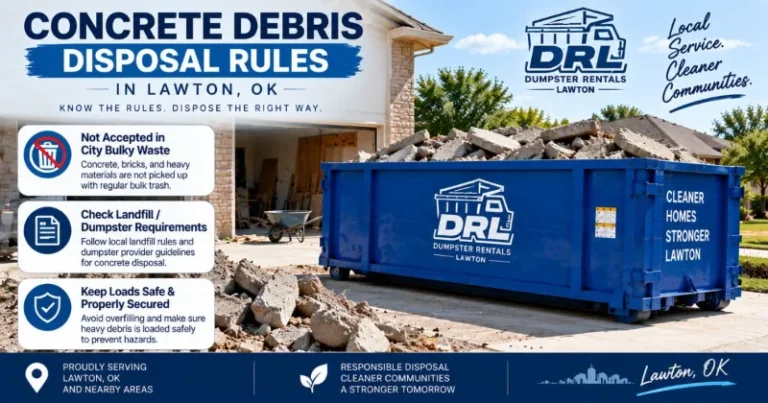
The concrete shell of an inground pool is extremely heavy and is often reinforced with rebar. Whether the project involves full excavation and removal of the shell or a partial collapse-and-backfill approach makes a major difference in how much material needs to leave the property. See our concrete debris disposal guide for more information about handling and estimating heavy concrete debris.
Liner, Equipment, and Metal Framing
Pool liners, whether vinyl from an above-ground pool or a surface layer from an inground pool, can add volume even though they weigh much less than the concrete shell. Pumps, filters, heaters, ladders, and metal framing may also need to be removed. Before loading pool equipment into a dumpster, check whether any component contains refrigerant, chemicals, or other materials that require separate handling.
Backfill and Grading Considerations
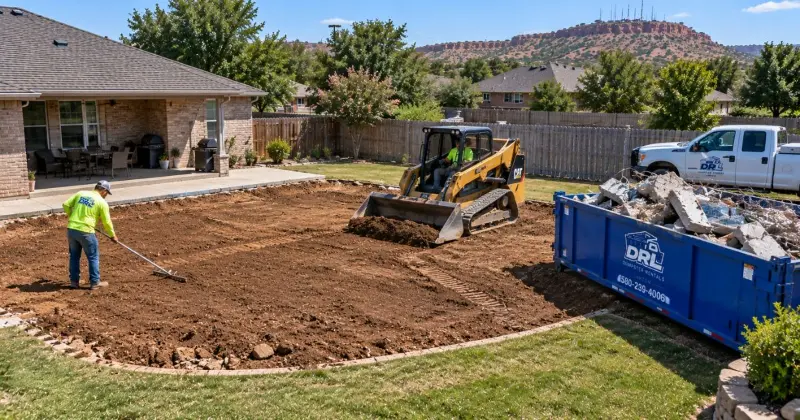
Inground pool removal may involve bringing fill material onto the property after the pool structure is removed or collapsed. That fill is separate from the debris being hauled away, so it should not be included in your dumpster estimate unless other debris is also being loaded into the container. Ask the pool-removal contractor what materials will be removed from the site and what fill or grading work will be needed afterward. This helps keep the dumpster size and disposal plan separate from the backfill work.
Permits for Pool Removal
Permit requirements can depend on the type and scope of pool removal. Before starting an inground pool demolition or collapse-and-backfill project in Lawton, check with the City of Lawton to confirm whether a building or other permit is required for the specific work. Above-ground pool removal may have different requirements because the structure is typically dismantled rather than demolished.
Choosing a Dumpster Size for Pool Removal
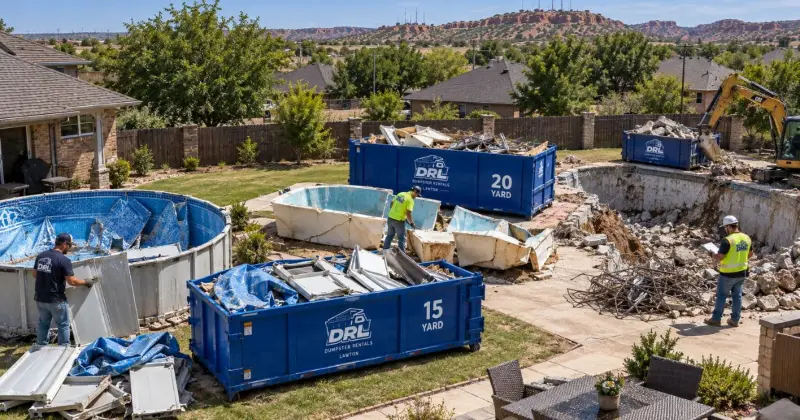
Above-ground pool removal debris may fit a 10-yard container, depending on the pool size and whether the project includes a deck or other materials. Inground pool demolition is a much larger undertaking, and depending on the pool’s size and whether full excavation is involved, may require a 20- or 30-yard dumpster, multiple containers, or more than one haul.
Because inground pool projects vary widely in scope, describing the pool’s size, construction type, and whether full excavation or partial collapse-and-fill is planned gives a more accurate size and weight recommendation than relying on a general estimate.
Why Homeowners in This Area Remove Pools
Homeowners may consider pool removal when an older pool becomes expensive to maintain or repair, when they want to reclaim yard space, or when the property is being prepared for a future sale. The right removal method depends on the pool’s condition, construction, location, and the homeowner’s plans for the property.
An inground pool with a damaged shell, persistent leaks, or outdated equipment may require significant repairs to remain usable. In some situations, removing the pool can be an option for reclaiming the space, but the costs and requirements should be discussed with a qualified pool-removal contractor before work begins.
A Realistic Timeline for Pool Removal
Above-ground pool removal may be completed relatively quickly once the pool has been drained and dismantled. The exact schedule depends on the pool size, surrounding deck or structure, and how much material needs to be hauled away.
Inground pool removal usually takes longer because the work can involve draining the pool, breaking up or removing the shell, loading heavy debris, and backfilling or grading the area afterward. Full excavation can take longer than a partial collapse-and-backfill approach.
Weather and site conditions can also affect the schedule. Heavy rain may make excavation, demolition, and backfilling more difficult, so the contractor may need to adjust the work based on conditions at the property.
Frequently Asked Questions
What size dumpster do I need to remove a pool?
The right size depends on the pool type and removal method. Above-ground pools may fit a 10-yard dumpster, while inground pools may need a 20- or 30-yard container or multiple hauls because of the concrete and rebar.
Do I need a permit to remove a pool?
Permit requirements depend on the type and scope of the pool removal. Check with the City of Lawton before starting an inground pool demolition or collapse-and-backfill project to confirm what permits apply.
Can I leave the pool shell partially buried instead of fully removing it?
Some inground pool projects use a collapse-and-backfill approach rather than full excavation, which can significantly reduce the amount of debris that needs to be hauled away compared to complete removal.
What’s the heaviest part of pool removal debris?
For inground pools, the concrete or gunite shell is usually the heaviest part of the debris. Rebar can add significant weight as well, while liners, equipment, and framing generally add more volume than weight.
Planning a Pool Removal Project
Because pool removal debris varies between above-ground and inground projects, share the pool type, size, construction, and removal method when requesting a dumpster. This helps determine the appropriate container and weight allowance. For related concrete or construction debris, see our construction dumpster rental guide.