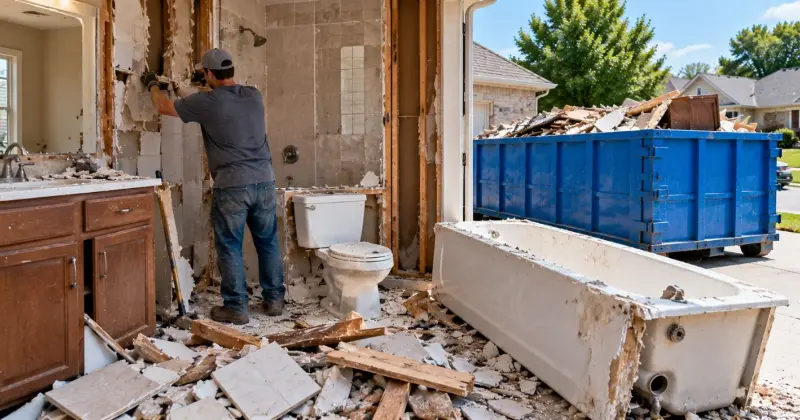
Bathroom Renovation Debris: Easy Disposal Tips
How to Handle Bathroom Renovation Debris
A bathroom renovation can create more debris than expected once demolition begins. Old tile, drywall, flooring, cabinets, fixtures, and other materials can quickly fill a dumpster.
Before starting the project, it helps to know what materials you’ll be removing, which items your dumpster provider accepts, and how much space the debris is likely to require.
Quick Answer
Bathroom renovation debris can include tile, drywall, flooring, vanities, toilets, tubs, cabinets, and other demolition materials. Before renting a dumpster, check the provider’s accepted-material list, consider the weight of dense materials such as tile, and estimate the total debris from the entire renovation.
7 Smart Disposal Tips for Bathroom Renovation Debris
1. Make a List of Everything Being Removed
Before demolition begins, identify the materials that will leave the bathroom.
A typical renovation may produce:
- Old tile
- Drywall
- Flooring
- Vanity cabinets
- Countertops
- Toilets
- Bathtubs
- Shower materials
- Shelving
- Doors
- Trim
- Plumbing-related debris
Making a list gives you a better idea of the amount and type of material you’ll need to dispose of.
It also makes it easier to ask the dumpster provider whether anything requires separate handling.
2. Check What Your Dumpster Provider Accepts
Don’t assume every bathroom-remodeling material is automatically accepted.
Before loading the dumpster, ask about unusual or questionable materials.
This is especially useful if you’re working on an older bathroom or removing materials that aren’t part of a typical residential cleanup.
Your provider can tell you which materials are accepted and whether anything needs another disposal method.
3. Pay Attention to Tile Weight
Bathroom tile can take up less space than bulky furniture but still add significant weight to a dumpster.
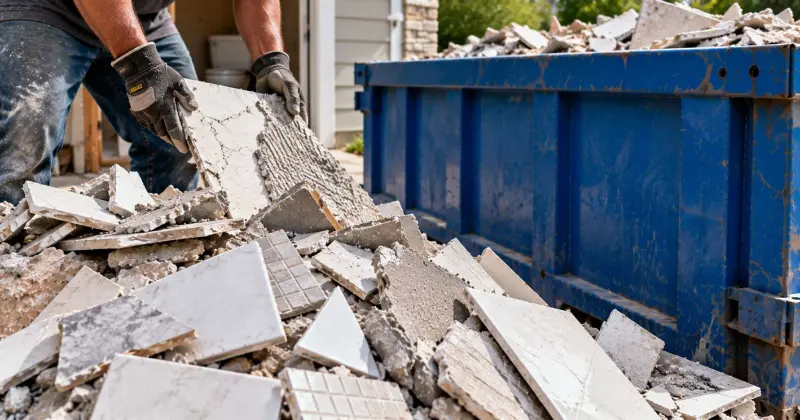
Ceramic and porcelain tile, along with tile backer materials, can become heavy when you’re removing an entire bathroom floor or shower area.
For example, a small pile of broken tile may not look like much when compared with a pile of cardboard boxes, but the tile can contribute considerably more weight.
If your renovation involves extensive tile demolition, mention that when requesting a dumpster recommendation.
4. Consider the Bathtub and Other Large Fixtures
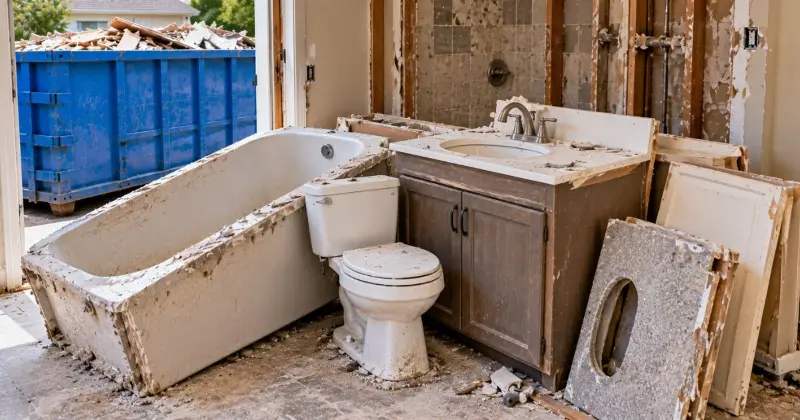
Bathroom fixtures can take up a surprising amount of space.
Depending on the renovation, you may be removing:
- Bathtub
- Shower enclosure
- Vanity
- Sink
- Toilet
- Cabinets
- Countertop
Break down materials where appropriate and follow your dumpster provider’s loading instructions.
Large fixtures should also be included when estimating the total amount of debris rather than treating them as an afterthought.
5. Be Careful With Older Bathroom Materials
Older homes can produce bathroom renovation debris that needs additional attention before disposal.
If the property is several decades old and you’re unsure about a particular material, don’t guess.
If you’re working with an older home and are concerned about asbestos-containing materials, review the EPA asbestos information before demolition.
Talk with a qualified renovation professional about the material before demolition starts.
This is especially relevant when you’re dealing with older construction materials, coatings, or other products that may require special handling.
If you identify a material that shouldn’t go into a standard dumpster, arrange the appropriate disposal method instead.
6. Choose the Dumpster Size Based on the Whole Project
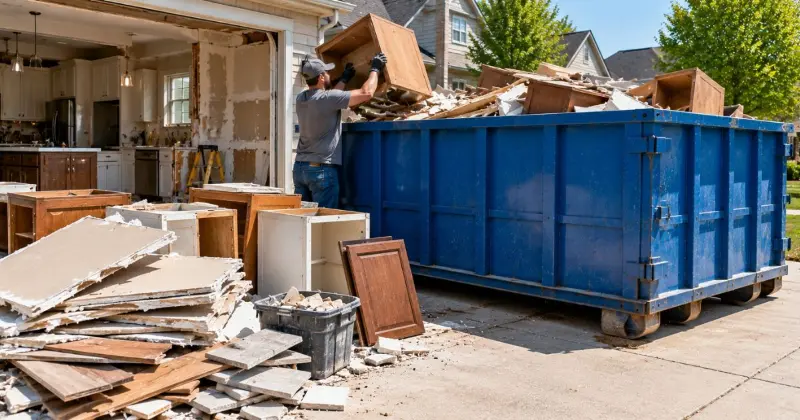
A single bathroom renovation may produce a moderate amount of debris, but the right dumpster size depends on the actual scope of the work.
A 15-yard dumpster can be a reasonable starting point for a standard bathroom renovation.
A larger bathroom, extensive tile demolition, multiple bathrooms, or additional remodeling work may require a 20-yard container or larger.
Don’t estimate size from the bathroom’s floor area alone.
Consider the total amount of:
- Tile
- Drywall
- Flooring
- Cabinets
- Fixtures
- Shower materials
- Countertops
- Other demolition debris
For more help choosing a container, see our accepted items guide.
7. Plan the Dumpster Before Demolition Starts
Ideally, the dumpster should be available when demolition begins.
This gives you a place to put debris as materials are removed instead of creating a large pile that must later be moved.
Before delivery, check the placement area and make sure there is enough access for the delivery truck.
If the dumpster will be placed in a driveway, consider access, overhead clearance, gates, vehicles, and the condition of the surface.
Planning this before demolition can make the cleanup much easier.
Bathroom Renovation Debris in Lawton, OK
Bathroom remodeling projects in Lawton can range from a simple fixture replacement to a complete demolition.
A small renovation may produce only a limited amount of debris, while removing tile, drywall, cabinets, flooring, and fixtures can create a much larger load.
If you’re renovating more than one bathroom or combining the project with another home improvement job — a kitchen remodel, for example, see our kitchen and bathroom remodel waste guide — estimate the debris from all projects together before selecting a dumpster.
For homeowners planning a residential renovation, see our residential dumpster rental page for more information.
What Bathroom Materials Usually Go Into a Dumpster?
Common renovation debris may include (see our full accepted items guide for details):
- Drywall
- Flooring
- Tile
- Wood
- Cabinets
- Vanities
- Countertops
- Broken fixtures
- Shower materials
- Other accepted construction debris
However, acceptance depends on the dumpster provider.
Don’t put chemicals, paint, solvents, batteries, or other potentially hazardous materials into the container unless the provider specifically confirms that they are accepted.
How Much Dumpster Space Does a Bathroom Renovation Need?
There isn’t one answer for every bathroom. Our dumpster sizes guide can help you match a container to your project.
A basic renovation involving a vanity, toilet, flooring, and limited demolition can produce considerably less debris than a complete gut renovation.
A full demolition may include:
Floor tile + wall tile + drywall + flooring + vanity + tub + toilet + cabinets + other debris
That’s why the best estimate comes from looking at the complete demolition plan rather than simply counting the number of bathrooms.
If you’re unsure between two dumpster sizes, describe the project and materials to the rental provider.
What About Heavy Bathroom Debris?
Weight deserves special attention during bathroom demolition.
Tile, concrete-based materials, and other dense debris can become heavy quickly.
A dumpster can reach its weight allowance before it appears completely full — see our guide on dumpster weight limits and overage fees for more detail, or our broader flooring removal debris guide if the project spans more than just the bathroom.
If you’re removing large quantities of tile or other dense materials, tell the provider before booking.
This can help you choose a container that fits the project without relying only on available volume.
Preparing for Bathroom Demolition
Before starting demolition, make sure you know:
- What materials are being removed
- Which materials your provider accepts
- How much tile is being removed
- Whether large fixtures are being discarded
- Whether older materials need professional assessment
- Where the dumpster will be placed
- How much debris the project may produce
- How many rental days you’ll need
Having these details ready makes the dumpster-selection process easier.
Frequently Asked Questions
Can I put bathroom tile in a dumpster?
Tile is commonly included in bathroom demolition debris, but you should confirm acceptance with your dumpster provider. Large quantities of tile can also add substantial weight.
Can an old bathtub go into a dumpster?
It depends on the provider and the bathtub material. Ask before loading large fixtures, especially heavy cast-iron tubs.
Can I put a toilet in a dumpster?
Many dumpster providers accept toilets as part of residential renovation debris, but accepted materials vary. Confirm with your provider before disposal.
What dumpster size is good for a bathroom renovation?
A 15-yard dumpster may work for a standard bathroom renovation. A larger renovation, extensive tile removal, or multiple bathrooms may require a 20-yard container or larger.
Does tile make a dumpster load heavy?
Yes. Tile is much denser than many common household materials, so a large amount can increase the weight of the dumpster load significantly.
What should I do with questionable materials from an older bathroom?
Don’t guess. If you’re unsure about an older material, have it assessed by a qualified professional before demolition and disposal.
Can I combine bathroom renovation debris with another project?
Potentially, yes. Combining projects can make one dumpster more useful, as long as the materials are accepted and the combined debris stays within the container’s volume and weight limits.
Should I rent the dumpster before demolition begins?
Having the dumpster available when demolition starts can make cleanup easier because debris can go directly into the container instead of accumulating elsewhere on the property.
Planning Bathroom Renovation Disposal
Bathroom renovations can produce a mixture of bulky fixtures, lightweight materials, and heavy demolition debris.
Before the project begins, identify what you’re removing, check the provider’s accepted-material list, and consider both volume and weight when selecting your dumpster.
A standard renovation may work with a 15-yard container, while a larger demolition project may require a 20-yard container or more.
If you’re unsure which dumpster size fits your renovation, describe the project and materials to the rental provider before booking.