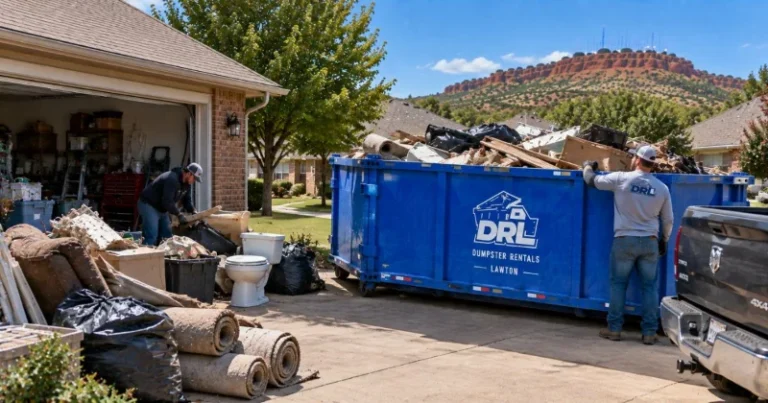
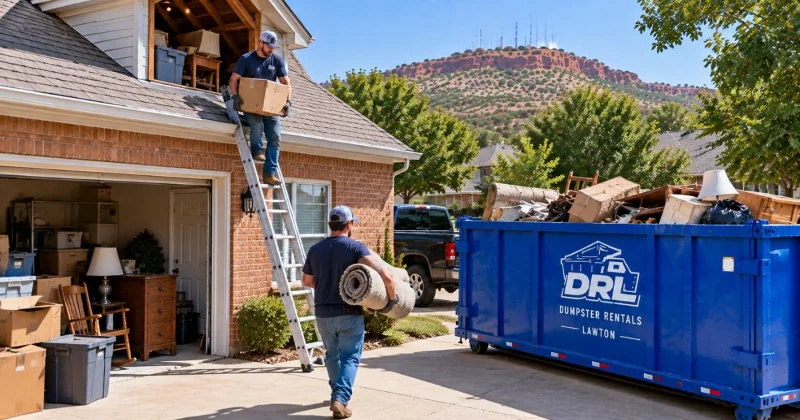
Attic Cleanout Dumpster: Sizing and Safety Guide
An attic cleanout dumpster often ends up smaller than people expect, mostly because attic debris behaves differently than debris from other parts of a house. Boxes, old insulation, holiday decorations, and forgotten storage items are usually light for their volume, but attics come with their own set of access and safety problems that a garage or basement cleanout doesn’t have.
Quick Answer: Most attic cleanouts fit a 10 or 15-yard dumpster, since attic debris is usually bulky but light. The bigger planning issues are heat, limited access through a hatch or pull-down stairs, and checking whether older insulation needs special handling before it’s disturbed.
What Makes an Attic Cleanout Different
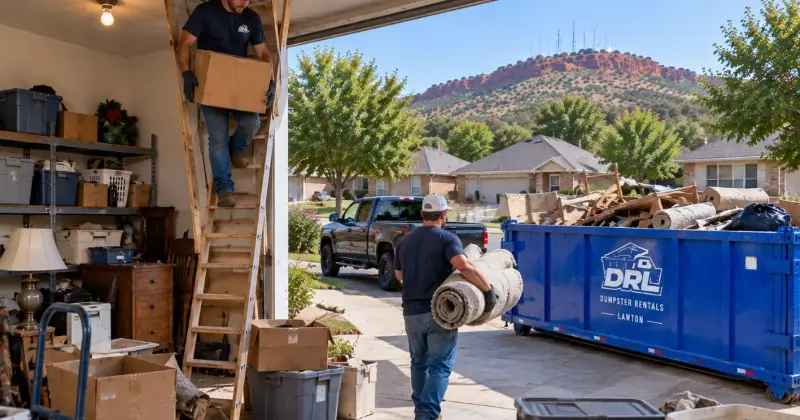
Most other cleanout projects involve walking debris out through a door or garage. Attics usually mean carrying items down a pull-down ladder or through a narrow hatch, often while bent over under low clearance. This slows the physical process down considerably compared to a garage or room cleanout of similar volume, even when the total amount of material is smaller.
Attics in Oklahoma also get extremely hot during the summer months, sometimes well beyond what’s safe for extended physical work. Planning an attic cleanout dumpster project for early morning hours, or scheduling it during cooler months, makes the actual sorting and hauling far more manageable than working through a July afternoon under a hot roofline.
What Typically Comes Out of an Attic
Attic storage tends to fall into a few predictable categories: cardboard boxes of old paperwork, holiday decorations, out-of-season clothing, luggage, and furniture that got moved up and forgotten. Old insulation, particularly if it’s being removed as part of an upgrade, adds its own volume and sometimes its own handling considerations.
Because most of this material is lightweight relative to its size, an attic cleanout dumpster is usually sized around available space rather than weight, which is the opposite of what drives sizing for something like a concrete or roofing project.
Older Insulation and What to Check Before Removal
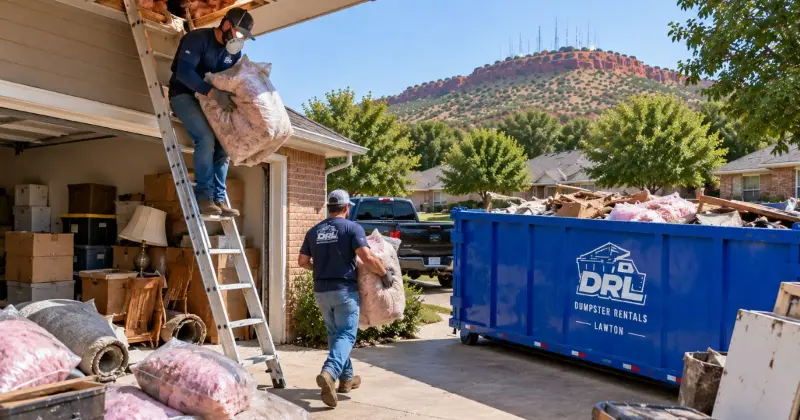
Homes with older attic insulation particularly a loose, pebble-like material poured in rather than installed as batts or rolls should be treated with some caution before anyone starts moving boxes around or bagging it up. This type of insulation, often called vermiculite, was widely sold for decades and some of it was contaminated with asbestos, though not all vermiculite insulation contains it.
The EPA’s guidance on asbestos recommends treating vermiculite-style attic insulation as if it may contain asbestos unless it’s been tested, and avoiding disturbing it until a professional has evaluated it. If an attic has this type of loose, granular insulation and the plan involves disturbing it not just carrying boxes past it that’s worth checking before work begins rather than after.
For a straightforward cleanout that’s only removing stored items and leaving existing insulation undisturbed, this isn’t something that needs to hold up the project. It mainly matters when the insulation itself is being removed or heavily disturbed.
Choosing the Right Dumpster Size
A single attic’s worth of storage, even a fairly full one, often fits comfortably in a 10-yard container. Larger homes, attics that have accumulated decades of storage, or attic cleanouts combined with another project clearing out a garage at the same time, for example may call for a 15 or 20-yard dumpster instead.
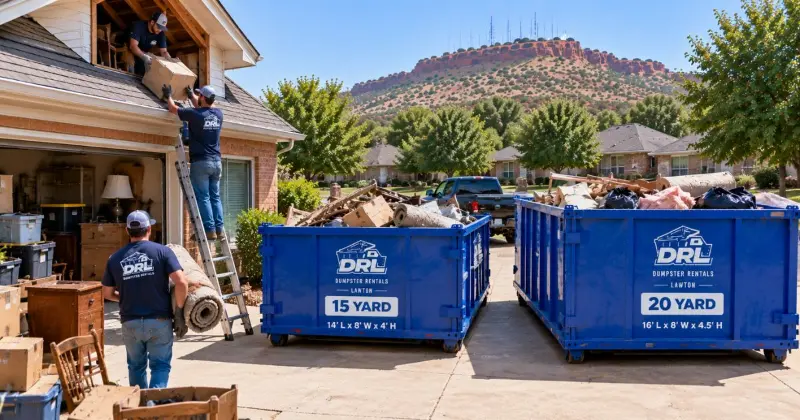
Since weight is rarely the limiting factor for a typical attic cleanout, describing the general volume a few dozen boxes, several pieces of furniture, holiday decorations accumulated over years usually gives a provider enough information to recommend an appropriate size. Our dumpster size guide covers general sizing across different project types if you’re weighing this against other work happening at the same time. For most residential projects, an Attic Cleanout Dumpster is sized by the amount of stored material rather than its weight.
Getting Items Down Safely
Pull-down attic stairs aren’t built for heavy or awkward loads, and carrying boxes down them one at a time is often safer and faster than trying to move large items through a narrow opening. For furniture or anything too large to fit through the hatch comfortably, it’s worth checking whether the item can actually be broken down before assuming it needs to come out in one piece.
Setting up a staging area near the base of the attic access point — rather than carrying each item directly to the dumpster one trip at a time — also speeds up the process considerably, since it separates the awkward, careful part of the job (getting things down safely) from the faster part (hauling them to the container).
What to Do With Items Worth Keeping
Not everything pulled out of an attic is headed for the dumpster. Furniture that got stored rather than sold, working small appliances, and holiday decorations in good condition often have donation or resale value, and setting these aside before the disposal phase begins keeps the container focused on what genuinely needs to be hauled away.
Photos, documents, and other paper items stored in an attic are worth a separate look before disposal, particularly in an Oklahoma attic where summer heat can accelerate deterioration of anything paper-based that’s been up there for years. Items that show heat or moisture damage may not be worth keeping regardless of sentimental value, but it’s worth a quick check before assuming everything in a box is still in usable condition.
Attic Access in Older Lawton Homes
Homes built several decades ago in the Lawton area sometimes have smaller, less convenient attic access points than newer construction, since building codes and typical hatch sizing have changed over the years. A narrow scuttle hole rather than a full pull-down staircase changes how a cleanout needs to be approached, since large items may need to be broken down into smaller pieces before they can come out at all.
Checking the access point before assuming a piece of furniture or a large box can be removed intact avoids the frustration of discovering mid-project that something simply won’t fit through the opening as-is.
Attic Cleanout Dumpster Rental in Lawton, OK
For homeowners in Lawton planning an attic cleanout, the main dumpster considerations are usually volume, access, and the type of material being removed. A 10-yard dumpster may work well for a typical attic cleanout, while larger projects combined with garage or whole-house cleanup may need more capacity. Before scheduling delivery, consider where the dumpster can be placed and how items will be moved from the attic to the container. If you’re unsure about the right size, describing the amount and type of debris can help determine the appropriate dumpster for the project.
Frequently Asked Questions
What size dumpster do I need for an attic cleanout?
Most attic cleanout dumpster needs fit a 10-yard container comfortably. Larger attics, decades of accumulated storage, or a cleanout combined with another project may call for a 15 or 20-yard dumpster instead.
Is old attic insulation safe to remove myself?
If the insulation is a loose, pebble-like material rather than batts or rolls, it’s worth having it evaluated before disturbing it, since some of this type of insulation was found to contain asbestos. A straightforward cleanout that leaves the insulation in place generally doesn’t raise this concern.
Can I put attic insulation in a standard dumpster?
Fiberglass batt or roll insulation may be accepted in a standard roll-off container, but acceptance can depend on the dumpster provider and local disposal requirements. Confirm the material is accepted before loading it. Loose fill insulation that hasn’t been tested and confirmed safe should be handled separately rather than bagged up along with other attic cleanout debris.
What’s the best time of year for an attic cleanout in Lawton?
Spring and fall generally offer more comfortable working conditions than the height of summer, when attic temperatures can climb well beyond what’s safe for extended physical work. Early morning hours during warmer months are also a reasonable alternative if the timeline doesn’t allow for waiting on cooler weather.
Planning an Attic Cleanout the Right Way
An attic cleanout dumpster project is usually simpler than it looks once the access and heat challenges are accounted for. Most of the debris is light, the sizing is generally forgiving, and the main planning work is around safety and timing rather than the dumpster itself. For projects that combine an attic cleanout with other areas of the house, see our residential dumpster rental page for broader guidance.
Need a Dumpster for an Attic Cleanout?
If you’re planning an attic cleanout in Lawton and aren’t sure whether a 10-, 15-, or 20-yard dumpster is right for the project, contact us for a quote. Tell us roughly how much material you’re removing, and we can help you determine the appropriate container.
Call (580) 239-4006 or get a free quote