Recycling vs Landfill: What Happens to Your Debris?
Recycling vs landfill is an important distinction when deciding what happens to debris after it leaves a property in a dumpster. Some materials have established recycling options, while mixed debris may require standard disposal. Understanding how these different disposal routes work can help Lawton homeowners, contractors, and businesses make better decisions about their waste.
How Standard Disposal Works
Most debris collected through a standard roll-off dumpster rental goes to a licensed landfill facility, where it’s processed according to established regulations. This is the default and most common outcome for general mixed debris, since sorting recyclable materials from a mixed load requires additional processing that not every facility offers.
Does Recycling Always Avoid the Landfill?
Not necessarily. Recycling only works when a material is accepted, properly separated, collected, and processed through a recycling system. Contamination or lack of a suitable recycling outlet can cause some materials to be rejected and sent for disposal.
This is why separating clean recyclable materials before they enter a mixed dumpster can make a bigger difference than assuming every item will be sorted after collection.
Recycling vs Landfill: What Materials Can Be Recycled?
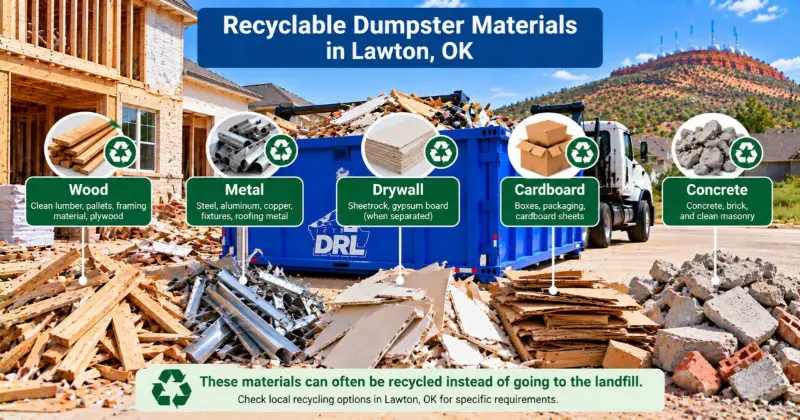
Certain materials have established recycling pathways that make separation worthwhile. Metal is one of the more consistently recycled materials because scrap metal has established recycling markets. Clean, uncontaminated concrete is also commonly processed for aggregate reuse rather than standard landfill disposal.
Cardboard and clean wood in large enough quantities sometimes have recycling options as well, though this varies more by facility and isn’t as universally available as metal or concrete recycling. Understanding the difference between recycling vs landfill can help you decide which materials are worth separating before disposal.
Which Materials Are Usually Easier to Recycle?
Some materials have well-established recycling markets, while others are much harder to process.
Common examples include:
- Clean metal
- Aluminum cans
- Certain cardboard
- Clean concrete and aggregate
- Some types of paper
- Certain accepted plastics
- Glass, where local facilities accept it
Acceptance varies by facility, so customers should check local requirements before setting materials aside for recycling.
Why Mixed Loads Are Harder to Recycle
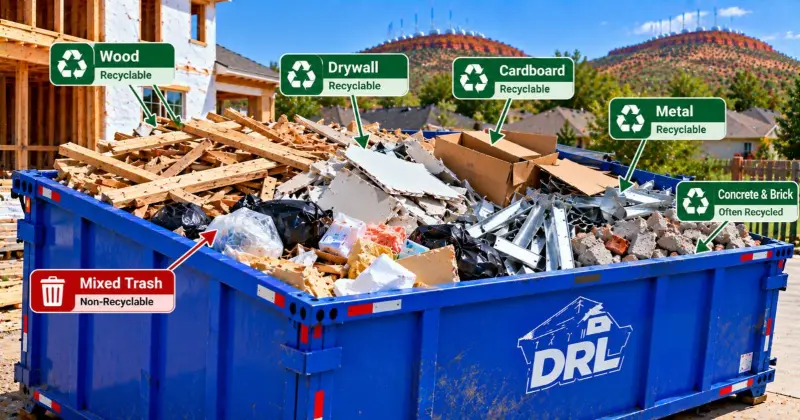
A dumpster loaded with a mix of household junk, general debris, and various material types is inherently harder to recycle than a load of a single, clean material type. Sorting mixed debris after the fact requires labor and processing that adds cost, which is why most standard dumpster rentals default to landfill disposal for mixed loads rather than assuming automatic recycling.
Recycling vs Landfill: Common Questions
People often wonder whether everything placed in a dumpster automatically goes to a landfill. The answer depends on the material, how the load is collected, local processing options, and whether recyclable materials were separated beforehand.
A clean load of one material can have a better recycling path than a mixed container containing household junk, packaging, wood, drywall, and other debris. This is why sorting suitable materials before disposal can be more effective than relying on recycling after collection.
For a Lawton project, customers should ask their dumpster provider which materials are accepted and whether separate recycling or disposal options are available.
What Happens to Materials That Cannot Be Recycled?
Materials that cannot be recycled through an available local program generally need another disposal route. For mixed dumpster loads, this can mean disposal at a permitted waste facility.
Some materials also require special handling rather than being placed in a standard dumpster. Paint, batteries, certain chemicals, tires, and other restricted materials should be handled according to applicable disposal requirements.
Recycling vs Landfill: How to Maximize Recycling
For anyone comparing recycling vs landfill, the most effective approach to reducing landfill volume is separating recyclable materials before they go into the dumpster rather than relying on post-collection sorting. Setting aside metal scrap, clean concrete, or cardboard separately, and disposing of them through dedicated recycling channels, achieves more genuine diversion than mixing everything into one load and hoping for the best.
What Happens After a Dumpster Is Picked Up?
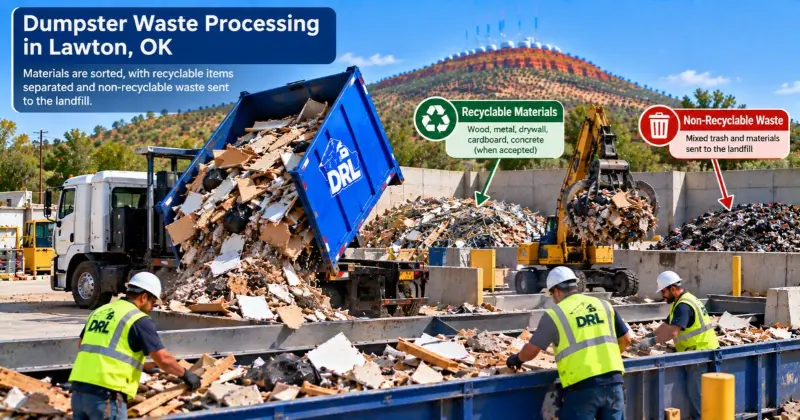
Once a dumpster is collected, the next step depends on the type of waste inside and the disposal facility handling the load. A clean, separated material may have a different processing route from a mixed container containing several types of debris.
Mixed loads can require additional handling or sorting, while materials such as clean metal, concrete, or other accepted recyclable materials may have separate recovery options.
This is why asking about disposal practices before starting a project can give you a clearer idea of what happens to your debris after pickup. For general guidance on reducing waste and recycling materials, see the EPA recycling and waste management guidance.
Understanding recycling vs landfill can help you set realistic expectations about where different types of dumpster debris may go after collection.
Does Recycling Actually Save Money?
Recycling can save money in some situations, but it is not automatically cheaper than landfill disposal.
The result depends on the material, local recycling options, transportation, sorting requirements, and disposal fees. Clean materials with established recycling markets can be easier to divert than mixed debris that requires additional sorting.
For a dumpster project, separating recyclable materials before loading the container may reduce the amount of waste requiring landfill disposal.
Why Do People Choose Not to Recycle?
Common reasons include limited local recycling options, uncertainty about what is accepted, contamination concerns, convenience, and the extra effort required to separate materials.
For a dumpster project, the process becomes simpler when recyclable materials are identified before the container is loaded.
Frequently Asked Questions
Making Informed Disposal Choices
Understanding the real distinction between recycling and landfill disposal helps set accurate expectations for any dumpster rental project. For more on what materials are accepted, see the accepted items guide.
Does Recycling Just Go to Landfills?
Not always. Materials that are properly separated and accepted by a recycling facility can be processed for recovery instead of being sent directly to a landfill. However, contaminated or unsuitable materials may still require disposal.
Does Recycling Actually Save Money?
It can, depending on the material and local processing options. Clean materials with established recycling markets may have useful recovery value, while mixed debris often requires additional sorting and handling.
What Are 5 Things That Cannot Be Recycled?
Items that commonly require other disposal methods include batteries, paint, chemicals, certain electronics, and contaminated materials. Recycling rules vary by facility, so always check the specific disposal requirements before placing an item in a recycling container.
Why Do People Choose Not to Recycle?
Common reasons include limited recycling access, uncertainty about accepted materials, contamination concerns, and the extra effort needed to separate waste. For dumpster projects, planning material separation before loading can make recycling easier.
Can Construction Debris Be Recycled?
Some construction materials can be recycled or recovered, particularly clean metal, concrete, cardboard, and certain wood materials. The available options depend on the material, condition, local facility, and how the debris is separated.
Should I Separate Metal Before Renting a Dumpster?
If you have a significant amount of clean scrap metal, separating it before disposal can make recycling easier. It can also prevent recyclable material from becoming mixed with general debris.
What Happens to Concrete After It Is Removed?
Clean concrete can sometimes be processed into recycled aggregate rather than being disposed of as ordinary landfill waste. The available option depends on the facility receiving the material and its acceptance requirements.
Is It Better to Use One Mixed Dumpster or Separate Materials?
For a project with substantial recyclable materials, separating clean materials can make recovery easier. A mixed dumpster may be more convenient for general debris, but recycling options can be more limited once different materials are combined.