DIY Junk Removal vs. Dumpster Rental: The Hidden Costs
The Real Cost of DIY Junk Removal
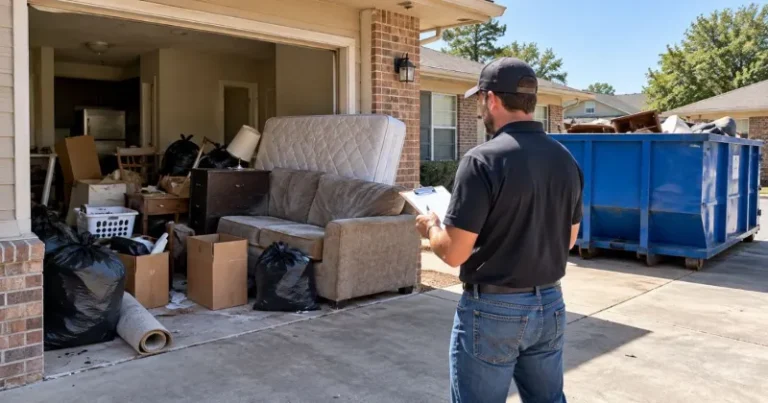
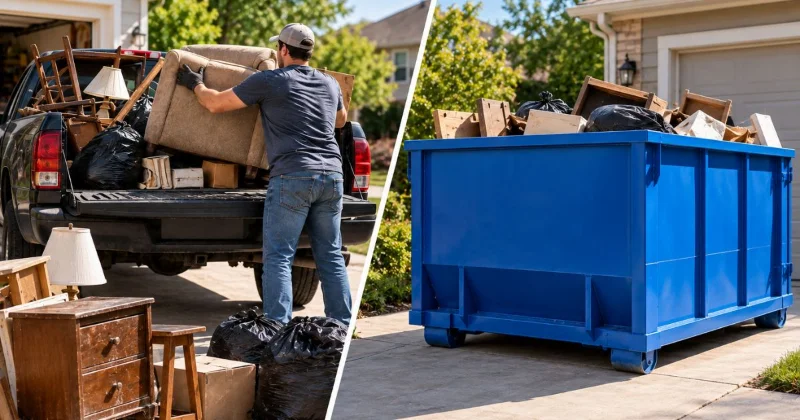
When a room needs to be cleared out, a garage full of old furniture needs to go, or a renovation is generating more debris than a few trash bags can handle, the choice usually comes down to two options: rent a dumpster, or handle it piecemeal with DIY trips to the landfill, curbside pickup services, and whatever hauling capacity a personal vehicle allows. On paper, the DIY route looks cheaper. In practice, the comparison is more complicated once every real cost gets counted. For many homeowners, DIY Junk Removal seems like the cheaper option at first.
What “Free” Junk Removal Actually Costs
The appeal of DIY junk removal is straightforward: no rental fee, no delivery scheduling, just load up a truck or trailer and make a run to the disposal facility. The costs that don’t show up in that initial calculation are what make the comparison worth thinking through carefully.
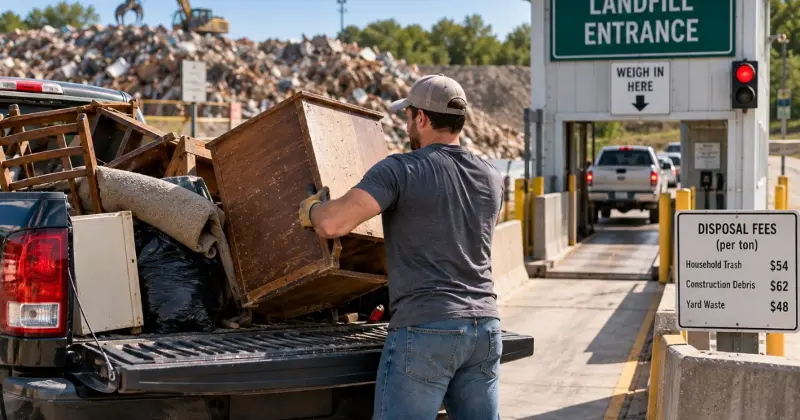
Landfill and transfer station fees are charged by weight, typically per ton, and those fees apply whether debris arrives in a rented dumpster or a personal truck bed. For general information about household waste and disposal, you can also review the EPA’s waste management resources. A dumpster rental’s flat-rate price is usually built around a specific weight allowance, meaning that cost is already accounted for. A DIY trip pays the same type of fee at the gate, just without it being bundled into a single predictable number decided in advance.
Then there’s the time cost, which is easy to underestimate. A single pickup truck load rarely clears an entire room, let alone a garage or a renovation’s worth of debris. Multiple trips mean multiple round trips to a disposal facility, each one consuming an hour or more depending on distance, wait times, and loading and unloading on both ends. For anyone whose time has real value — which is most people — this adds up fast.
Vehicle Wear and Hidden Costs
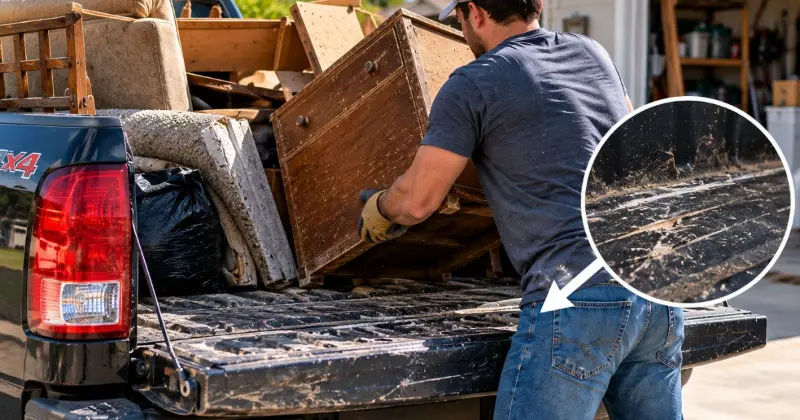
Hauling construction debris, old furniture, or yard waste in a personal vehicle isn’t free of cost even when no fee changes hands directly. Heavy or sharp debris can damage truck beds, upholstery, or trailer flooring. Repeated loading of items like concrete, drywall, or broken furniture adds wear that doesn’t show up until a repair bill does. For anyone without a truck or trailer at all, there’s the added cost of renting one, which quickly erodes any savings from skipping a dumpster rental.
There’s also the question of what a personal vehicle can legally and safely carry. Many disposal facilities have restrictions on how debris must be secured during transport, and improperly loaded materials create genuine safety risks on the road — for the driver and for others.
What a Dumpster Rental Actually Includes
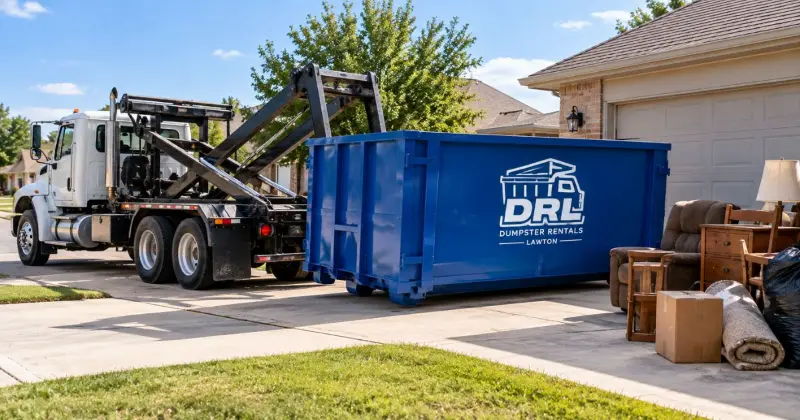
A flat-rate dumpster rental typically bundles delivery, pickup, and a weight allowance into a single quoted price, agreed to before the container arrives. That means the cost is known upfront rather than accumulating trip by trip, and there’s no need to estimate how many loads a project will take or coordinate multiple runs around a work or family schedule.
The container also stays on-site for the duration of the project — typically a week to ten days as a standard rental period — which means debris can be loaded gradually as a project progresses rather than requiring everything to be hauled away in one continuous push. For renovation work in particular, this matters: debris accumulates over days, not all at once, and having a dumpster on-site means it never has to sit around waiting for a haul day.
When DIY Actually Makes Sense
None of this means DIY Junk Removal is always the wrong choice. For genuinely small amounts of debris a single piece of furniture, a modest bag or two of yard waste a DIY trip or a municipal bulk pickup service is often the more efficient option. or a municipal bulk pickup service is often the more efficient option, and renting a dumpster for that scale of project would be overkill.
The comparison shifts once a project crosses a certain threshold generally, once it would take more than a single truck load, or once the timeline stretches across multiple days rather than a single afternoon. it would take more than a single truck load, or once the timeline stretches across multiple days rather than a single afternoon. At that point, the cumulative time, fuel, and disposal fees from repeated DIY trips tend to catch up to or exceed the cost of a single flat-rate rental, without accounting for the convenience of not having to manage multiple trips at all.
Comparing the Real Numbers
Because landfill fees are charged by weight rather than by trip, the actual disposal cost for a given amount of debris is roughly similar whether it goes through a rented dumpster or a series of personal vehicle trips. The difference comes from everything layered on top of that base disposal fee: fuel for multiple trips, the value of the time spent driving and waiting, potential vehicle wear, and the mental overhead of coordinating several separate runs instead of one delivery and one pickup. This is where DIY Junk Removal can become more expensive than it first appears.
For a project generating more than roughly three or four pickup truck loads of debris — which corresponds to the smallest standard dumpster size — the math tends to favor a single rental over repeated DIY trips once every real cost is included, not just the sticker price at the landfill gate.
The Convenience Factor Rarely Gets Counted
Beyond the direct dollar comparison, there’s a less tangible but very real cost to coordinating multiple DIY disposal trips around an already busy schedule. Work commitments, family obligations, and the simple unpredictability of daily life all make it harder to consistently carve out time for repeated trips than to schedule a single delivery and a single pickup around a project’s actual timeline.
This matters more for projects that stretch across several days or weekends, since DIY disposal in that scenario means either hauling debris away incrementally after each work session or letting it accumulate until a larger trip makes sense — both of which add friction that a dumpster sitting on-site simply avoids. This is especially true for larger jobs like an estate cleanout or a time-sensitive Fort Sill PCS move, where repeated trips aren’t practical.
Factoring In Project Type
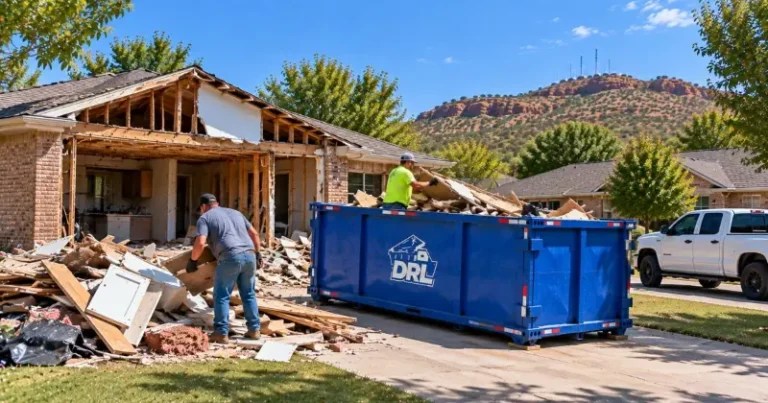
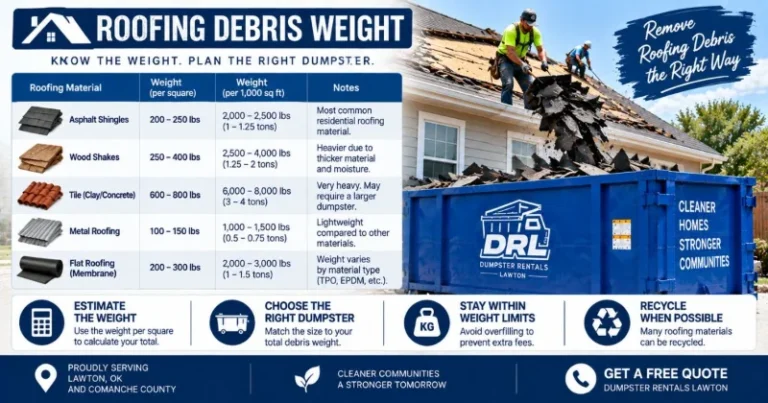
Some types of debris make the DIY comparison even less favorable. Construction and renovation debris — drywall, flooring, framing scrap — is often heavier and bulkier than household junk, meaning fewer items fill a truck bed and more trips are required to move the same total volume. Roofing debris in particular is deceptively heavy for its size, since shingles carry significant weight relative to how much space they take up, which can make DIY hauling both more time-consuming and harder on a vehicle than expected.
Yard debris tends to be the opposite case: often bulky but comparatively light, meaning volume becomes the limiting factor for a truck bed well before weight does. Either way, the practical result is the same — heavier and bulkier debris both push the comparison further in favor of a single dumpster rental over multiple DIY runs.
A Closer Look at Multi-Trip Math
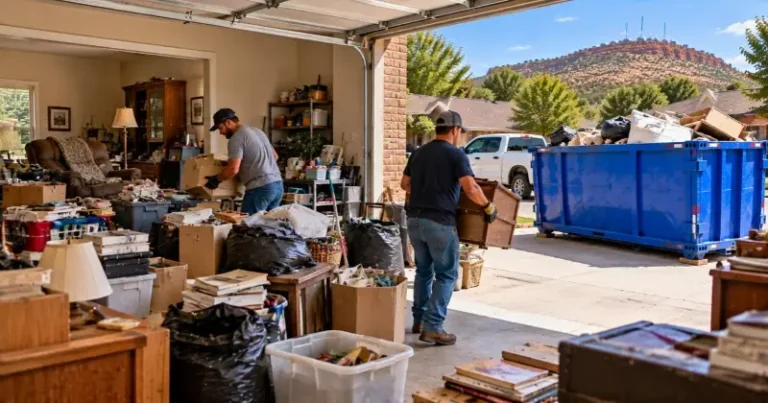
It helps to see how DIY Junk Removal costs can add up through a concrete example. A garage cleanout generating roughly four pickup truck loads of mixed debris would typically require four separate round trips in a DIY scenario — each involving loading time, drive time to a disposal facility, a wait at the gate, unloading, and the drive back. Even at a conservative estimate of ninety minutes per round trip, that’s six hours of active time spent just on transportation and disposal, not counting the sorting and loading itself.
A single dumpster rental sized to hold that same four-load volume eliminates all but the initial loading time. The delivery and pickup happen without the vehicle owner’s involvement, and the debris can be loaded at whatever pace fits the project rather than needing to coordinate around disposal facility hours.
Frequently Asked Questions
Is it ever cheaper to just pay someone else to haul debris away?
Full-service junk removal, where a crew loads and hauls debris for you, is a separate option from both DIY disposal and a dumpster rental. It typically costs more than a dumpster rental since labor is included, but it removes the loading work entirely. For anyone without the time or physical ability to load debris themselves, it’s worth comparing directly rather than assuming a dumpster rental is always the cheaper path.
What’s a common mistake people make when estimating DIY disposal costs?
The most common oversight is forgetting to count fuel and time across multiple trips, since each individual trip feels manageable in isolation. It’s only when the trips are added up across a full project that the cumulative cost becomes clear, and by then the project is often already underway.
Do disposal facility fees vary by what kind of debris I bring?
Yes, fees are generally weight-based but can vary depending on material type, since some categories require special handling or separate processing. This applies whether debris arrives via personal vehicle or a rented dumpster, which is part of why a flat-rate quote that already accounts for expected debris type tends to be more predictable than paying per-trip fees that can vary visit to visit.
Making the Right Call for Your Project
The decision ultimately comes down to project size and how much a person’s own time is worth. For small, one-off cleanups, DIY disposal remains a perfectly reasonable choice. For anything approaching a full room, a garage, a renovation, or ongoing debris over several days, a flat-rate dumpster rental tends to come out ahead once fuel, time, vehicle wear, and the inconvenience of multiple trips are weighed against a single predictable price. For larger cleanouts, DIY Junk Removal can quickly become less practical once time, fuel, and disposal costs are added together.
Anyone unsure which category their project falls into can check the dumpster sizes guide for a sense of how much debris different container sizes hold, or review what affects dumpster rental cost to understand how pricing is actually structured before comparing it against a string of DIY trips.