
Shed Demolition Debris: A Removal and Disposal Guide
What Shed Demolition Debris Actually Includes
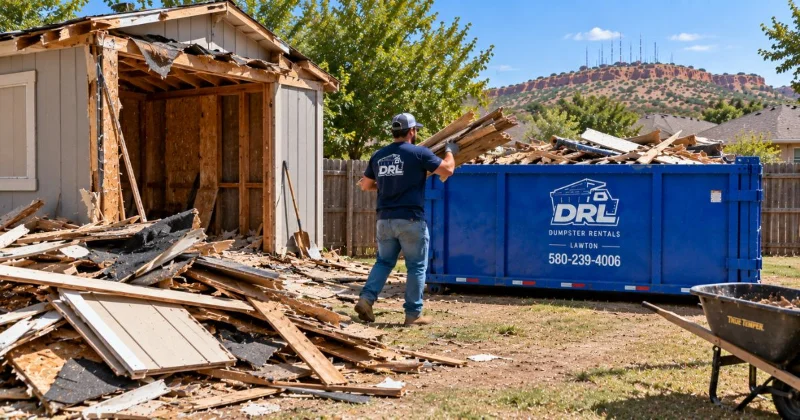
An old shed looks small from the outside, but shed demolition debris can add up quickly once the walls, roof, floor, and interior materials are torn apart. A structure that took a weekend to build years ago can create a surprising amount of waste during demolition. Wood framing, plywood, roofing materials, metal parts, nails, and other pieces all add to the final load. The foundation also matters, since a concrete slab can make the debris much heavier than a shed built on skids or posts. Understanding the shed’s size, materials, roofing, and foundation helps when planning removal and choosing the right dumpster.
Quick Answer: A typical wood-frame shed produces enough debris for a 10 or 15-yard dumpster, depending on size and whether it sits on a concrete slab. Roofing material adds weight, concrete floors add significant weight, and older sheds sometimes include materials worth checking before demolition begins.
What a Typical Shed Teardown Produces
Most backyard sheds are built from wood framing, plywood or OSB siding, and some form of roofing — asphalt shingles, metal panels, or occasionally rolled roofing material. Once torn down, this breaks into framing lumber, sheet material, and roofing debris, plus whatever hardware, nails, and fasteners come along with it.
Metal sheds behave differently, since the main material is sheet metal rather than wood, which is lighter per square foot but can have sharp edges that need careful handling during loading. Either way, shed demolition debris is generally more volume than weight, unless the shed sits on a concrete slab.
Roofing Material From a Shed Teardown
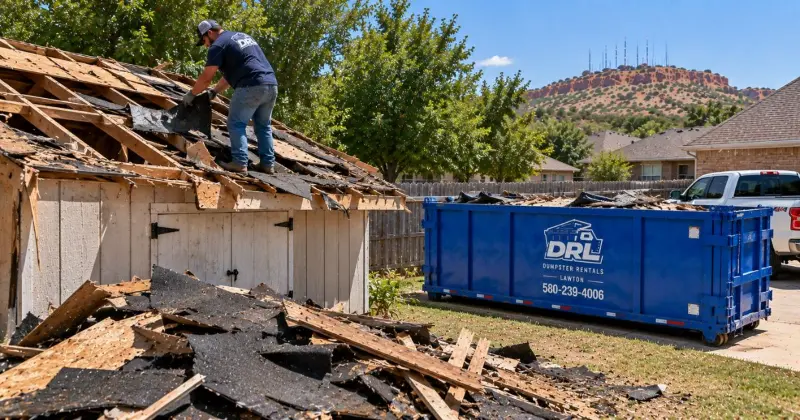
Even a small shed roof adds real weight to the load, particularly if it has asphalt shingles rather than lighter metal panels. The same weight-versus-volume issue that applies to a full-size roofing project applies here on a smaller scale our roofing debris weight guide covers this in more detail if the shed roof is a significant part of the teardown.
Concrete Slabs and Footings
Sheds built on a concrete pad rather than a wood floor or gravel base add a completely different weight category to the project. Breaking up and removing a slab, even a small one, can weigh more than the entire wood-and-roofing portion of the shed combined. If the project includes slab removal, it’s worth mentioning that separately when requesting a quote — see our concrete debris disposal guide for how that material is typically handled.
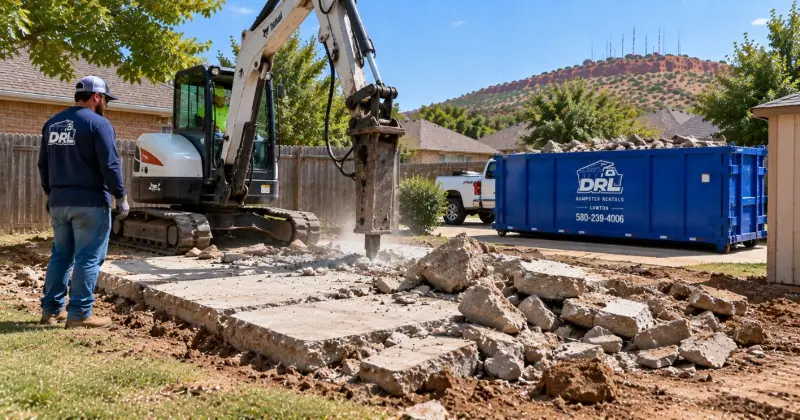
Sheds on simple post or skid foundations don’t carry this same weight consideration, since there’s no slab to break up, just posts or skids to remove.
Choosing a Dumpster Size for Shed Demolition
A small shed, roughly 8×10 feet or smaller, generally produces enough shed demolition debris to fill a 10-yard container without much room to spare. Larger sheds, or ones that include a concrete floor, often call for a 15-yard dumpster to comfortably handle both the volume and the added weight.
If the shed teardown is happening alongside another project clearing the rest of the yard, for instance combining both into a single larger container is often more efficient than renting two separate dumpsters for the same general area of the property.
Permits for Shed Demolition
Most residential shed demolition doesn’t require a permit, since it’s generally treated as removing an accessory structure rather than a regulated demolition project. Larger sheds, or ones that were originally permitted as a significant structure, are worth checking on with the City of Lawton’s building permit office before work begins, particularly if the shed had utilities run to it.
DIY Teardown vs. Hiring a Crew
A small wood-frame shed can often be taken apart by a homeowner with basic tools, especially when the structure is in good condition and doesn’t have complicated electrical or utility connections. Start by removing loose contents, doors, windows, and roofing materials before taking down the walls and framing. Roofing work deserves extra care because shingles, nails, and damaged panels can create sharp debris.
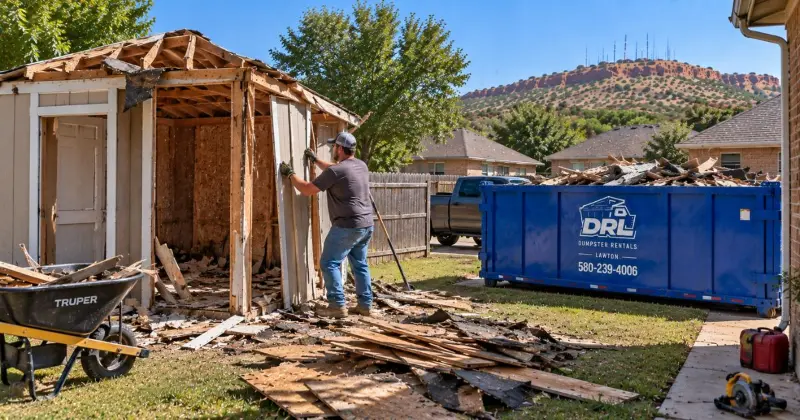
Larger sheds, sheds sitting on concrete slabs, or structures showing significant rot or storm damage may be better handled by a crew with the right equipment and experience. An unstable shed can shift or collapse unexpectedly once parts of the structure are removed. If utilities are connected, make sure they are properly disconnected before demolition begins. Taking the shed apart in a controlled order also makes it easier to separate reusable materials and load the remaining shed demolition safely into the dumpster. If the shed contains old paint, chemicals, or other potentially hazardous materials, check the EPA’s guidance on household hazardous waste before putting those materials in a dumpster.
What to Do With Reusable Shed Materials
Not every part of an old shed is worthless once it comes down. Metal roofing panels and hardware often have scrap value, and dimensional lumber in decent condition — not rotted or insect-damaged can sometimes be reused for smaller projects like raised garden beds or repair work elsewhere on the property. Sorting these out during demolition rather than after everything’s already mixed together in a pile makes reuse far more practical.
Sheds that have been sitting unused for years sometimes still have contents left inside old tools, lawn equipment, leftover paint that need to be sorted separately from the structure itself before demolition begins. Treating the contents like a mini garage cleanout, sorted into keep, donate, and dispose categories, keeps that material from simply becoming part of the demolition debris pile by default.
Older Sheds and Weathered Materials
A shed that’s been standing in a Lawton backyard for a couple of decades has usually been through a lot of temperature swings, hail, and wind, which tends to leave wood siding and framing more brittle than it looks from the outside. This can actually make demolition go faster in some respects, since weathered wood breaks apart more easily than newer, sturdier material, though it also means more caution is needed around nails and splintered edges during teardown.
Sheds with a history of storm damage a partially caved roof or a wall that’s been patched more than once are also worth approaching carefully, since a structure that’s already compromised can shift unpredictably once demolition begins rather than coming down in the orderly way a sound structure would.
Frequently Asked Questions
What size dumpster do I need to tear down a shed?
A small wood-frame shed generally fits a 10-yard container. Larger sheds, or ones built on a concrete slab, often need a 15-yard dumpster to handle the added volume and weight.
Can shed roofing shingles go in the same dumpster as the wood framing?
Generally yes, both are typically accepted in a standard roll-off container together. The main consideration is making sure the combined weight, including the shingles, stays within the container’s weight allowance.
Do I need a permit to tear down a shed?
Most residential shed demolition doesn’t require a permit, but larger or originally-permitted structures are worth checking on with the city before starting, especially if utilities were run to the shed.
What if my shed has a concrete floor?
Mention this when requesting a dumpster, since a concrete floor adds significant weight beyond what a typical wood-frame shed produces. This often changes the recommended container size compared to a shed on a simple post or skid foundation.
Planning Ahead for Shed Demolition Debris
Describing the shed’s size, foundation type, and roofing material when requesting a quote gives a much more accurate size recommendation than guessing based on the structure’s footprint alone. Since shed demolition debris can range from a light, easy 10-yard load to something considerably heavier with a concrete floor involved, that detail makes a real difference. For broader yard cleanup happening alongside the teardown, see our yard waste disposal guide.