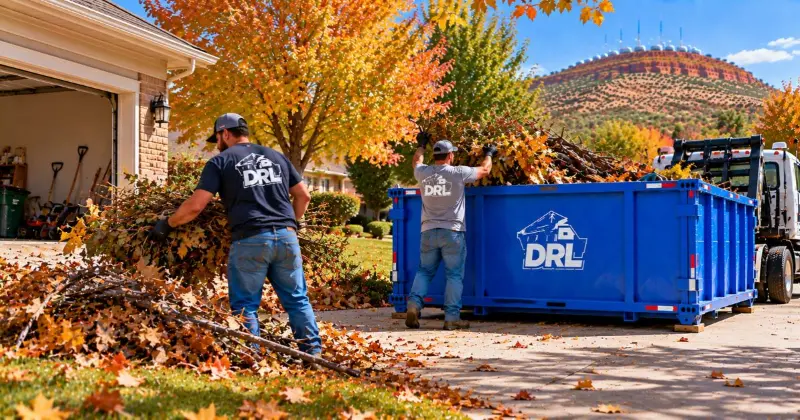
Fall Cleanup in Lawton Guide : Leaves, Branches & Debris
Fall cleanup in Lawton is more than simply raking leaves. Depending on the property, a seasonal cleanup can include fallen branches, grass clippings, dead plants, weeds, damaged growth, garden-bed debris, and other material that has accumulated outdoors during the year.
A good cleanup plan starts with knowing what actually needs to be removed, what can stay in the yard, and how much debris you are likely to create. For smaller amounts, Lawton residents have city collection and landfill options. Larger projects may call for a dumpster, especially when yard cleanup is being combined with a garage, home, or property cleanout.
What Does a Fall Cleanup Consist Of?
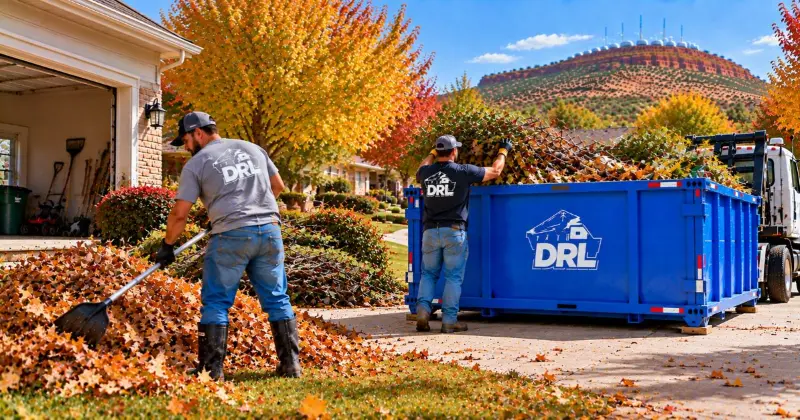
A typical fall yard cleanup can include several different tasks:
- Raking or removing excessive leaves
- Collecting fallen branches and limbs
- Cutting back dead or damaged growth
- Removing weeds and unwanted vegetation
- Cleaning garden beds
- Clearing grass clippings and other yard debris
- Trimming shrubs where appropriate
- Cleaning around fences, walkways, patios, and outdoor structures
- Removing storm-damaged branches
- Preparing outdoor areas for winter
Not every property needs every task. A home with a few mature trees may mainly need leaf removal, while a larger property could generate a substantial amount of branches and vegetation.
The goal is not necessarily to remove everything from the yard. Some healthy leaves and plant material can be useful when mulched or composted.
The EPA notes that leaves, grass clippings, yard trimmings, and tree trimmings can be composted.
When Should You Start Fall Cleanup in Lawton?
There is no single date that works for every Lawton property.
A practical approach is to start light cleanup as fall debris begins accumulating, then do the heavier cleanup after most of the leaves have dropped from the trees.
Early fall
This is a good time to look over the property, remove obvious dead growth, trim damaged branches, and clean areas that have accumulated summer debris.
Mid-fall
Leaf volume usually becomes more noticeable. This is when regular raking, mulching, or collection may become necessary.
Late fall
Once most leaves have dropped, you can complete the larger cleanup and prepare the property for winter.
Waiting until the end of the season can make sense when your main goal is to collect most of the leaves in one project. On the other hand, leaving heavy layers of leaves on lawn areas for too long can create problems.
The best timing depends on the trees, plants, weather, and condition of the property.
Fall yard work Checklist for Lawton Homeowners
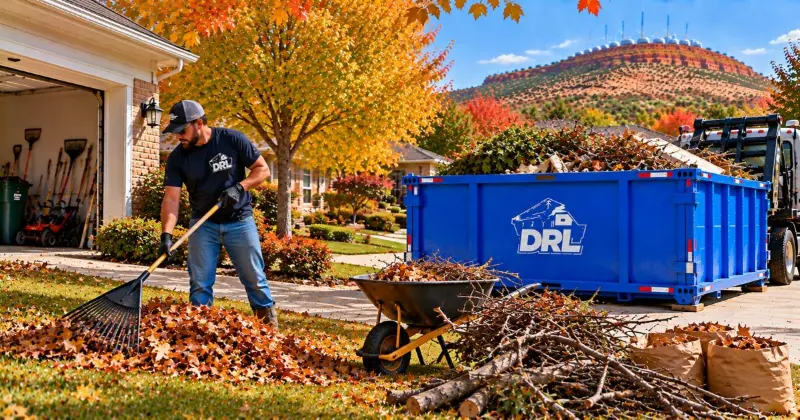
Before starting, walk around the property and make a simple list.
1. Remove Excess Leaves
Leaves can be raked, bagged, mulched into the lawn, or used as part of a composting setup where appropriate.
You do not necessarily need to remove every healthy leaf from your property. Shredded leaves can be useful as organic material, while thick layers covering lawn areas may need to be cleared.
2. Collect Fallen Branches
Walk the yard after windy weather and collect branches that have fallen from trees.
Separate unusually large limbs before disposal. Lawton’s current bulky-waste guidance accepts tree debris up to 6 feet long and 24 inches in diameter through its bulky-waste service. Larger tree debris has different disposal options.
3. Clean Garden Beds
Remove unwanted weeds and clearly diseased or pest-damaged plant material.
However, you do not have to strip every garden bed completely. Some healthy stems, seed heads, and natural leaf cover can provide winter habitat and organic material.
4. Trim Damaged Growth
Remove dead or damaged branches where appropriate.
For larger trees or branches that could create a safety problem, hiring a qualified professional is safer than attempting the work yourself.
5. Clear Walkways and Outdoor Areas
Check:
- Walkways
- Driveways
- Patios
- Fences
- Around sheds
- Around outdoor equipment
- Drainage areas
Removing accumulated debris from these areas makes the property easier to maintain through winter.
6. Decide What Should Stay
Not everything collected during autumn yard cleanup needs to become waste.
Healthy leaves can be shredded for mulch. Leaves and suitable yard trimmings can also be composted. EPA guidance on composting specifically identifies dry leaves, grass clippings, plant stalks, twigs, and other yard materials as potential compost materials.
What Can Lawton Residents Do With Fall Yard Debris?
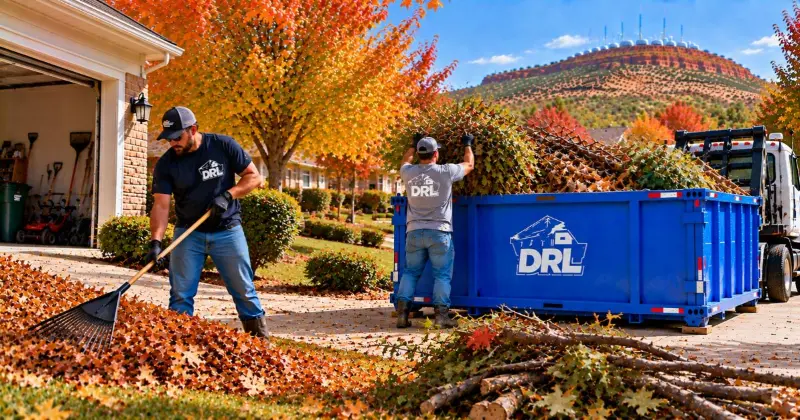
This is where local disposal rules matter.
The City of Lawton provides monthly bulky-waste collection for qualifying residential properties. Its current guidance lists bagged yard waste such as leaves and grass clippings and tree debris up to 6 feet long and 24 inches in diameter among accepted bulky-waste materials.
The City also provides residential landfill access for qualifying utility account holders, with one trip per quarter subject to the current program rules and applicable fees. Loads must be properly secured or tarped before arriving.
That means a homeowner does not automatically need a dumpster for every fall yard cleanup.
For a smaller amount of debris, city collection, composting, or a landfill trip may be enough.
For a much larger cleanup, a temporary dumpster can be more convenient because the debris can be placed into one container as the project progresses.
Can You Burn Leaves, Branches or Yard Debris in Lawton?
No.
The City of Lawton states that burning yard waste and debris is prohibited. The city’s fire guidance also lists yard waste and construction debris among prohibited burning materials.
So burning a large pile of leaves or branches is not a disposal solution for Lawton homeowners.
Better options include:
- City bulky-waste collection
- Residential landfill disposal
- Composting suitable material
- Mulching leaves
- A properly arranged dumpster rental for a larger cleanup
Always check current city requirements before setting material at the curb.
When Is a Dumpster Better for yard debris removal?
A dumpster becomes more useful when the cleanup is larger than a normal seasonal yard tidy-up.
For example, you may have:
- Several large piles of branches
- Heavy leaf accumulation
- A large property with mature trees
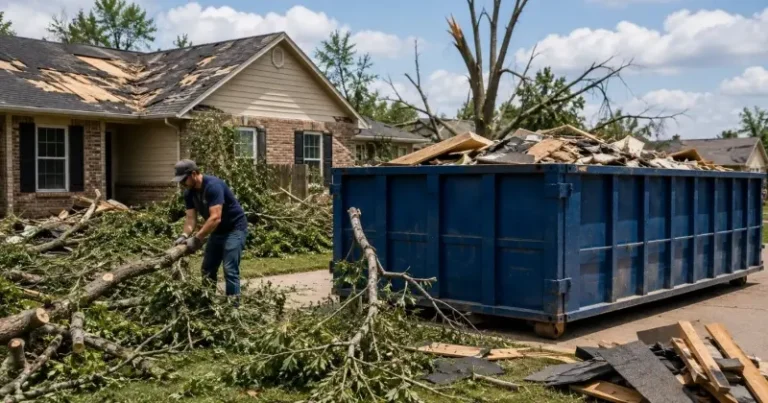
- Storm-related cleanup
- Landscaping work
- Yard cleanup combined with garage cleanup
- A home cleanout happening at the same time
- Other permitted debris being removed during the project
The advantage is simple: instead of repeatedly filling small bags or making several trips, you have one container at the property while the cleanup is underway.
But do not assume every type of yard material is automatically accepted. Before delivery, confirm the provider’s rules for leaves, branches, wood, soil, landscaping material, and storm debris.
Choosing a Dumpster Size for Fall Yard Cleanup
The amount of debris matters more than the name of the project.
A small yard with limited trees may produce only a modest amount of material. A larger property with mature trees can generate much more debris.
As a general planning guide:
| Fall yard Cleanup Project | Possible Dumpster Size |
|---|---|
| Small leaf cleanup | 10-yard |
| Leaves and light trimming | 10-yard |
| Leaves plus branches | 10–15-yard |
| Larger property cleanup | 15–20-yard |
| Major yard or property cleanup | 20-yard or larger |
If you’re unsure which container you need, our guide to dumpster sizes in Lawton explains the available sizes and what each one is commonly suited for.
These are general planning ranges, not guaranteed size recommendations.
Leaves are relatively light but can take up a lot of space. Branches can fill a container quickly, especially when they are large or not cut into manageable pieces.
If you’re deciding between two sizes, describe the project, the approximate amount of debris, and the type of material when requesting a quote. That gives the dumpster provider enough information to recommend an appropriate container.
Can Leaves and Branches Go in the Same Dumpster?
That depends on the dumpster provider and disposal facility.
Do not assume that every type of yard debris can be mixed together. Before loading the container, confirm that both leaves and branches are accepted and ask whether there are restrictions on branch size, weight, soil, stumps, treated wood, or other landscaping material.
This matters even more when storm damage is involved because storm debris can have different disposal requirements.
For Lawton’s city bulky-waste service, tree debris has a stated size limit of 6 feet or less in length and a maximum diameter of 24 inches. Materials outside those limits may need another disposal method.
How to Combine Fall yard Cleanup With Other Projects
Fall can be a useful time to handle more than the yard.
If you are already renting a dumpster for a large cleanup, you may also be dealing with:
- Garage clutter
- Basement items
- Old furniture
- Household cleanout material
- Minor renovation debris
- Outdoor storage cleanup
Combining projects can be practical, but only when the materials are allowed in the same container. If your fall yard cleanup is part of a larger renovation or building project, see our construction dumpster rental in Lawton page for more information about handling construction debris.
Do not mix restricted materials simply to fill the dumpster. Ask about prohibited items before loading.
This can prevent a situation where the container is full but some of the material cannot legally or safely be disposed of with the rest.
Fall Cleanup in Lawton: What Should You Keep Out?
Some materials require a different disposal method.
The City of Lawton’s current guidance excludes various hazardous or restricted materials from its bulky-waste collection, including batteries, tires, automotive fluids, paints, solvents, oils, hazardous chemicals, medical waste, and explosives. Before loading a dumpster, check our guide on what can go in a dumpster to see which materials are generally accepted and which items require separate disposal.
Do not put restricted materials into a dumpster simply because there is room.
If you are unsure about an item, check the disposal rules before putting it into the container.
How Much Does Fall yard Cleanup Cost?
There is no single price for a leaf cleanup.
The total cost can depend on:
- Amount of debris
- Number of trees on the property
- Amount of labor required
- Whether branches need cutting
- Disposal method
- Dumpster size
- Rental period
- Whether additional services are needed
A homeowner doing the work personally may mainly have disposal costs. Hiring a landscaping or cleanup crew adds labor.
For a dumpster rental, the best way to get an accurate price is to describe the debris volume, material type, location, and expected rental period rather than relying on a generic leaf cleanup price. If you are comparing dumpster costs for a larger yard project, see our dumpster rental pricing in Lawton page for current pricing information and cost factors.
What Should Be on a fall yard work List?
A simple checklist can prevent small jobs from being forgotten:
Lawn
- Rake or mulch excessive leaves
- Remove heavy leaf buildup
- Collect grass clippings where appropriate
Trees and shrubs
- Collect fallen branches
- Remove damaged growth
- Arrange professional help for hazardous tree work
Garden beds
- Remove weeds
- Remove diseased plant material
- Leave suitable healthy plant material where appropriate
Property
- Clear walkways
- Clean around fences
- Check patios and driveways
- Remove accumulated outdoor debris
Disposal
- Separate compostable material
- Check Lawton collection requirements
- Confirm dumpster restrictions
- Arrange disposal before the debris pile grows
Frequently Asked Questions
How long does a fall cleanup usually take?
he time depends on the property size, amount of leaves and branches, and how much material needs to be removed. A small yard may take a few hours, while a larger property with mature trees and heavier debris can take longer.
When should you start fall cleanup?
You can begin light cleanup when seasonal debris starts accumulating. For the final major cleanup, many homeowners wait until most leaves have fallen so they can handle the bulk of the debris in one project.
What should I include on my fall cleanup list?
Include leaves, fallen branches, dead or damaged growth, weeds, garden-bed debris, walkways, patios, driveways, and other outdoor areas that need attention before winter.
Can I compost leaves from my leaf cleanup?
Yes, suitable leaves and other yard materials can be composted. EPA identifies leaves, grass clippings, plant stalks, twigs, and other yard materials as compostable materials.
Can I burn leaves and branches in Lawton?
No. The City of Lawton says burning yard waste and debris is prohibited.
Does Lawton collect leaves and tree debris?
The City’s bulky-waste service accepts bagged yard waste such as leaves and grass clippings, along with tree debris within its stated size limits, for qualifying residential properties.
Do I need a dumpster for leaf cleanup?
Not always. Smaller projects may be handled through city collection, composting, or another disposal option. A dumpster becomes more useful when the project creates a large volume of debris or combines yard cleanup with another property cleanout.
What dumpster size is best for fall yard work?
A 10-yard container may work for a smaller cleanup, while larger properties or projects with substantial branches may require 15-, 20-yard, or larger capacity. The actual requirement depends on the volume and type of debris.
Get Your Lawton Property Ready for Winter
A good fall yard work does not have to mean removing everything from the property.
Mulch or compost suitable leaves and yard material when practical. Use Lawton’s collection and landfill options when they fit the project, and consider a dumpster when the amount of permitted debris is too large for normal household disposal.
The City of Lawton currently provides monthly bulky-waste collection for qualifying residential properties and accepts certain bagged yard waste and tree debris within its stated limits.
For larger projects, planning the disposal method before the cleanup begins can save time and prevent a growing pile of debris from becoming a second problem.
If you’re planning fall cleanup in Lawton, start by estimating the amount and type of material you expect to remove. Then choose the disposal option that actually fits the project.