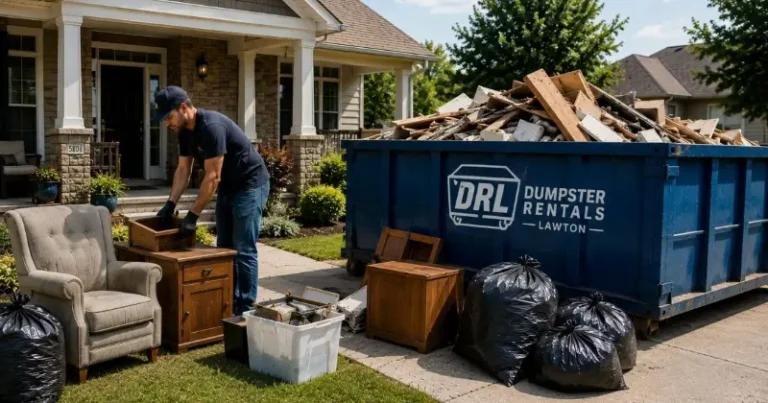
Garage Cleanout Process: Essential Dumpster Guide for Lawton
A Step-by-Step Garage Cleanout Process
The garage has a way of becoming the default storage space for anything that doesn’t have an obvious home elsewhere in the house: half-used paint cans, outgrown sports equipment, tools that seemed useful at the time, and boxes that were never fully unpacked after the last move. For many Lawton homeowners, a garage cleanout isn’t a single event so much as something that gets put off until the clutter finally becomes unmanageable.
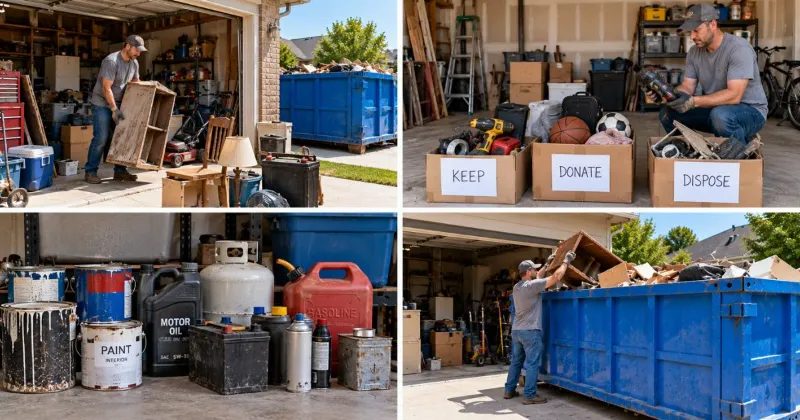
A clear garage cleanout process makes the project easier to handle. Sort everything into three basic groups: keep, donate or sell, and dispose. This simple approach helps you work through years of accumulated items without feeling overwhelmed.
Garage Cleanout Process: Starting With a Full Inventory
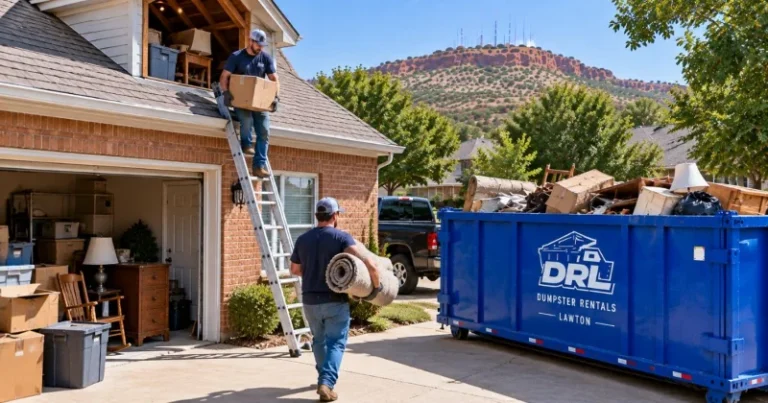
Before any sorting begins, it helps to physically pull everything out of the garage rather than trying to sort in place. This may seem counterintuitive when the space is already cluttered, but seeing everything laid out at once gives you a much clearer picture of the total volume. As part of your garage cleanout process, this makes it easier to categorize items and decide what should stay, be donated, sold, or disposed of.
This step also tends to reveal how much has actually accumulated, since items stacked and stored efficiently in a garage take up far less visible space than they will once everything is out and needs to be dealt with individually. Many people are surprised at how much volume even a moderately cluttered garage actually contains once it’s fully emptied.
The Sort Phase: Three Practical Categories
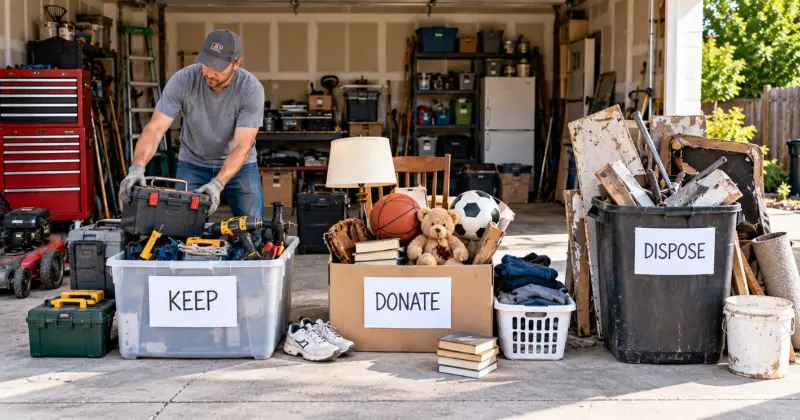
A simple three-way sort tends to work better than an elaborate system with too many categories to manage. Keep items go back into the garage, ideally with some thought toward better organization than before. Donate or sell items — tools in working condition, sports equipment that’s outgrown its use but still functional, furniture that’s simply no longer needed — go into a separate holding area. Everything else goes into a dispose pile headed for the dumpster.
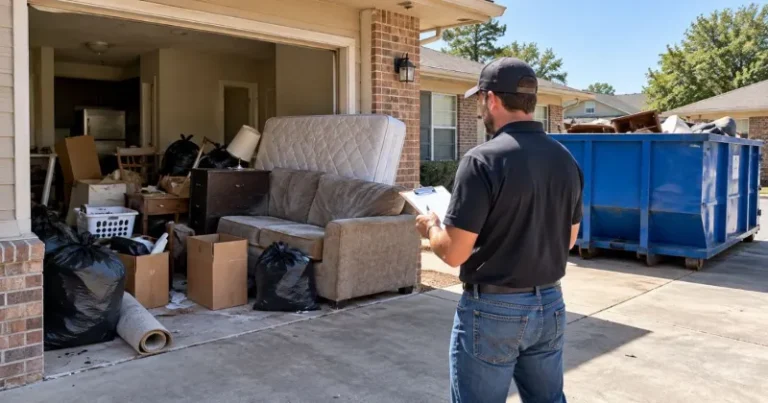
The dispose category tends to be larger than people initially expect, since garages accumulate genuinely broken items, expired chemicals, and things that seemed worth keeping at the time but have no realistic use going forward. Being honest during this phase — rather than defaulting to “keep” out of uncertainty — is what actually makes a garage cleanout effective rather than just a reshuffling of the same clutter.
Items That Need Special Handling
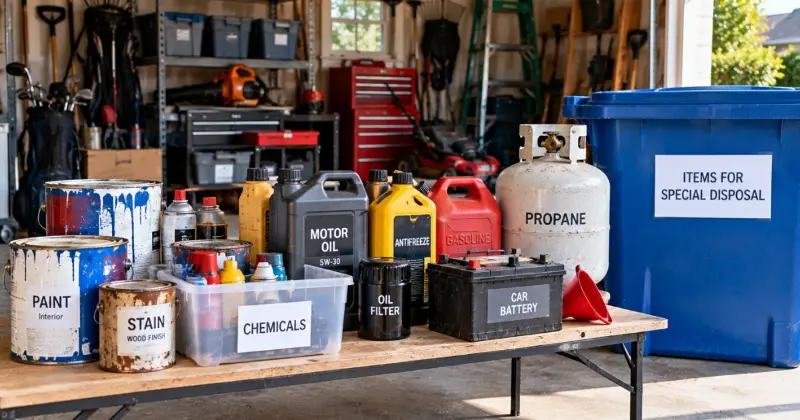
Garages are a common storage spot for items that can’t simply go into a standard dumpster. Paint cans are the most frequent example. Fully dried, empty paint cans may be accepted as regular waste in some areas, but liquid paint and other hazardous materials often require separate disposal. Check local requirements and your dumpster provider’s accepted-material list. Old batteries, motor oil, and other automotive fluids fall into similar categories and shouldn’t go directly into a roll-off container.
Propane tanks, even small ones from camping equipment or grills, also require separate disposal rather than standard dumpster placement. Checking through stored chemicals and fuel-related items specifically during the sort phase rather than discovering them while loading the dumpster helps keep the disposal process moving without unexpected stops.
For general guidance on household hazardous waste, see the EPA Household Hazardous Waste Guide.
Sizing a Dumpster for a Garage Cleanout
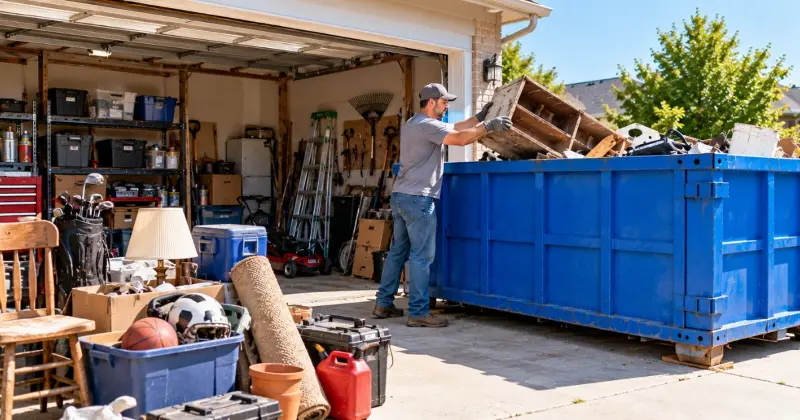
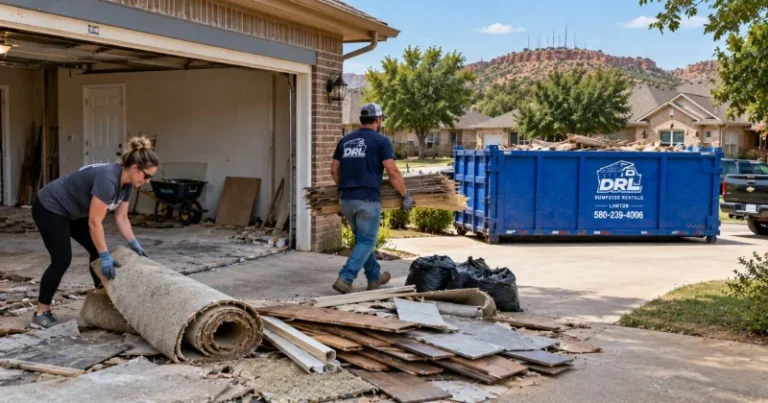
Most single-car garage cleanouts fit comfortably into a 10-yard container. For larger garages, two-car spaces with substantial accumulation, or a cleanout that includes an attached shed or storage area, a 15-yard container offers more breathing room. Choosing the right dumpster size is an important part of the garage cleanout process, especially when you’re dealing with years of accumulated items.
If the garage cleanout is happening alongside other household decluttering — a broader spring cleaning effort, for instance — a 20-yard container might make more sense to handle both projects with a single rental rather than needing separate containers for each phase.
Making the Donate Pile Actually Happen
One of the more common failure points in a garage cleanout is the donate pile that never actually makes it to a donation center — it sits in the driveway or garage for weeks until it eventually gets reabsorbed back into the clutter or, worse, ends up in the dumpster anyway once the deadline for pickup arrives. Scheduling a donation drop-off or pickup before the cleanout even starts, rather than treating it as an afterthought, helps ensure that pile actually leaves the property as intended.
Some local charitable organizations offer pickup service for larger items like furniture or working appliances, which can be worth arranging in advance so the donate pile has a clear, scheduled exit rather than lingering indefinitely.
Organizing What Stays Before You Refill the Space
Once the dispose and donate piles are cleared out, it’s worth taking a moment before putting the “keep” items back to think through a better organization system than whatever led to the clutter in the first place. Wall-mounted storage, labeled bins, and designated zones for different categories — tools, seasonal items, sports equipment — make a real difference in preventing the same slow accumulation from happening again over the next few years.
This step doesn’t need to happen immediately, but doing it while the garage is already empty and the momentum from the cleanout is still there tends to be far easier than trying to reorganize later once everything has been put back in its old spots out of convenience.
Common Reasons a Garage Cleanout Process Stalls Out
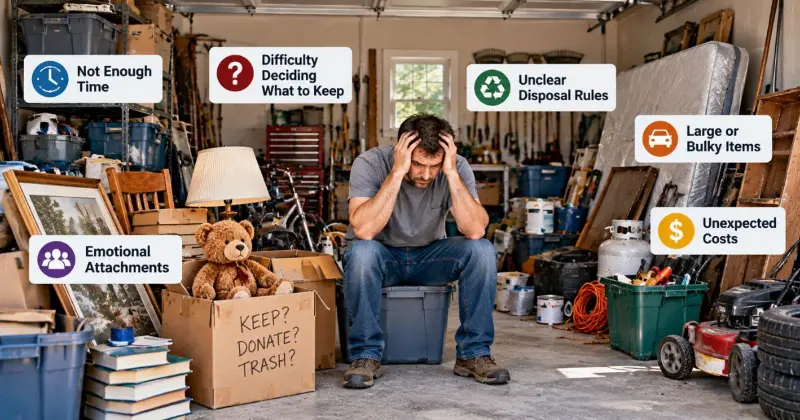
Garage cleanouts have a well-earned reputation for starting strong and losing momentum partway through, usually once the easy decisions are made and what’s left requires more thought — sentimental items, things that might have value but aren’t worth the effort to sell, or projects that were started and never finished. Setting a realistic time limit for decision-making on any single item, and defaulting to disposal when genuinely uncertain, helps avoid the project stretching out indefinitely.
Having a dumpster already on-site tends to counteract this stalling effect somewhat, since the physical presence of the container creates a natural sense of momentum and a visible deadline that a vague personal intention to “deal with it eventually” doesn’t provide.
Frequently Asked Questions
What if I find hazardous materials I didn’t expect during the cleanout?
Set them aside separately from the general dispose pile. Items like old chemicals, batteries, or fuel need separate disposal through appropriate hazardous waste channels rather than going into a standard dumpster, and mentioning what was found when scheduling delivery can help clarify what the container will and won’t accept.
How do I estimate dumpster size before I’ve actually sorted anything?
A rough guideline based on garage size works reasonably well as a starting point — single-car garages typically fit a 10-yard container, two-car spaces or garages with significant accumulation often need a 15-yard. If uncertainty remains after considering garage size, describing the general level of clutter during a quote request usually helps refine the recommendation.
Is it worth renting a dumpster for a single-car garage, or should I just make multiple trips?
This depends on total volume, but a fully cluttered single-car garage often generates more debris than expected, frequently exceeding what a couple of personal vehicle trips could reasonably handle. A 10-yard dumpster is generally an efficient option once the garage is more than lightly cluttered. If you’re weighing personal vehicle trips against a rental, our DIY junk removal cost comparison breaks down the real numbers.
Finishing What You Start
A garage cleanout tends to be one of those projects that’s easy to start and harder to finish, especially once the initial motivation fades partway through. Having a dumpster on-site for the full rental period — rather than trying to compress everything into a single day — gives room to work through the sort, donate, and dispose phases at a sustainable pace without the project stalling out halfway done.
For a closer look at sizing options, see the dumpster sizes guide, the cost factors page to understand what affects the final price for a project like this, or our driveway prep checklist if the container will be sitting on your driveway during the cleanout.