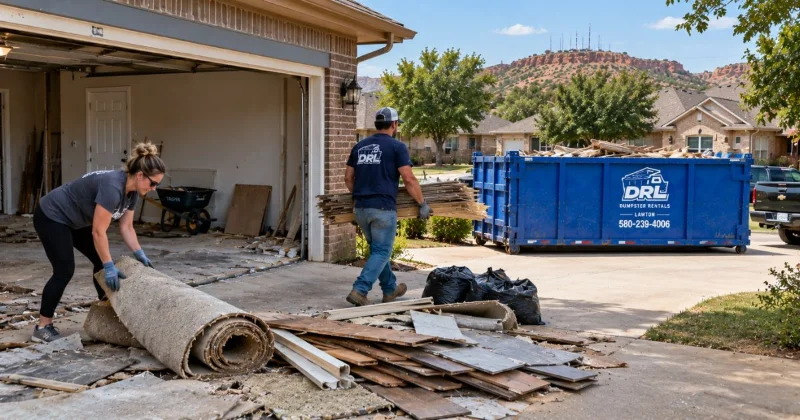
Flooring Removal Debris: A Disposal and Sizing Guide
How Flooring Removal Debris Affects Dumpster Weight
Not all flooring comes out of a house the same way. Flooring removal debris ranges from light, bulky carpet padding to dense tile and stone that can fill a dumpster’s weight allowance long before it looks full. Knowing which type of flooring is coming out matters more for choosing the right dumpster size than knowing the square footage alone.
Quick Answer: Carpet and laminate removal is typically light and volume-driven, while tile and stone flooring is weight-driven and can fill a dumpster’s weight limit with a relatively small area. Mentioning the flooring type and approximate square footage gives a much more accurate size recommendation than square footage alone.
Carpet and Padding
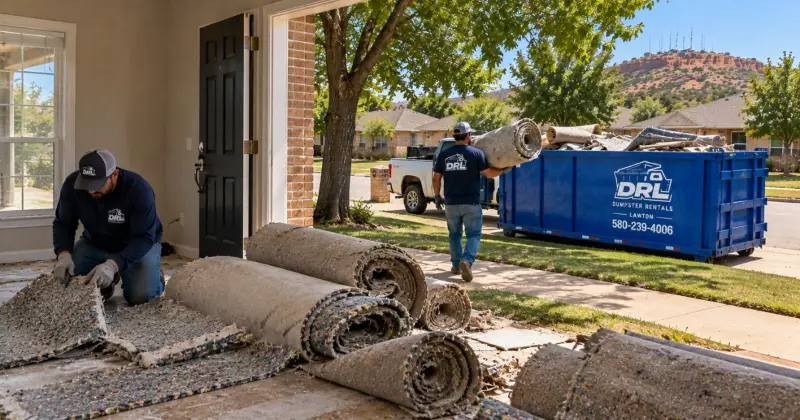
Carpet and its underlying padding are among the lightest flooring materials to remove, though they take up real space once rolled up, especially across a large area. A whole-house carpet removal generates a lot of bulky rolls that fill visual space in a dumpster well before adding meaningful weight, similar to how yard waste behaves.
Tile and Stone Flooring
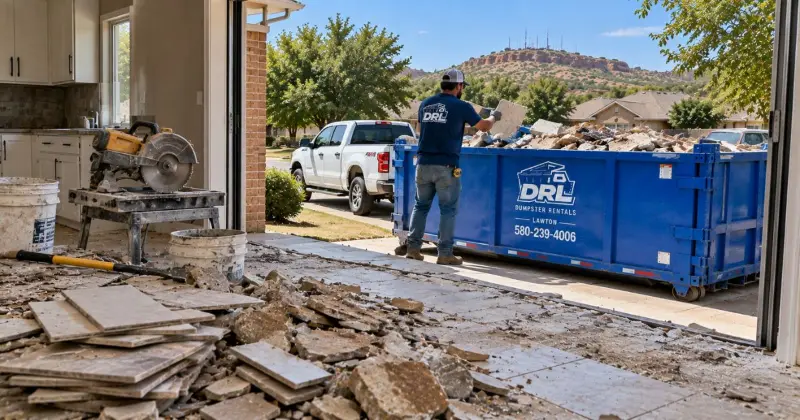
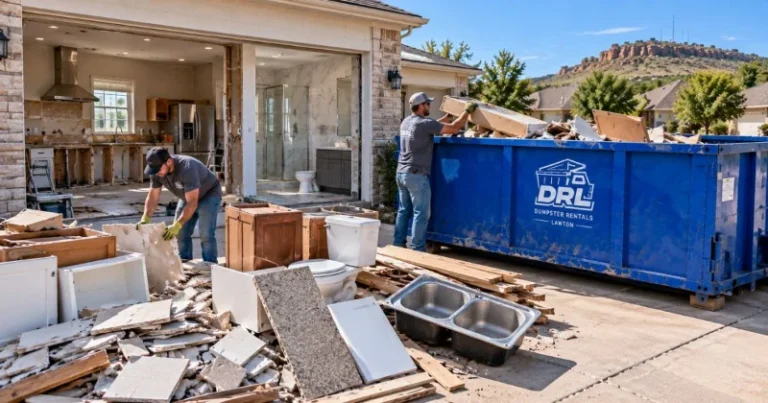
Tile is a completely different story. Ceramic, porcelain, and natural stone flooring, along with the mortar or backer board underneath, is dense enough that even a moderate square footage can add substantial weight. This is the same weight-versus-volume issue that comes up with concrete removal. see our concrete debris disposal guide for a closer look at how dense materials fill a weight allowance faster than lighter debris of the same volume.
A homeowner removing tile from a single bathroom might not think much about weight, but tile from an entire home’s flooring can add up to a genuinely heavy load even though the visual pile doesn’t look dramatic.
Hardwood and Laminate
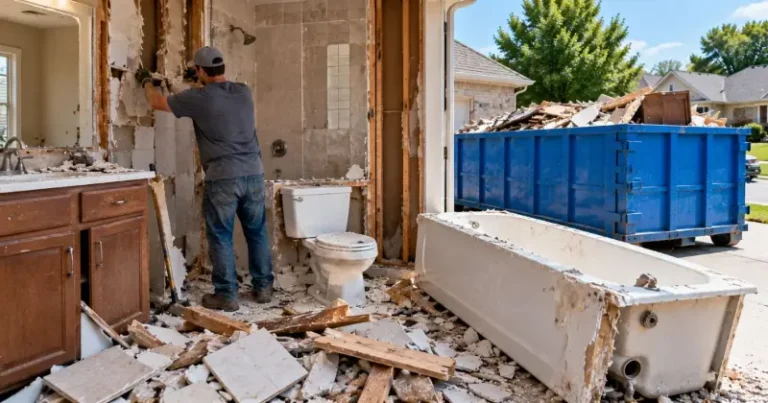
Solid hardwood flooring sits somewhere between carpet and tile in terms of weight, denser than carpet but nowhere near as heavy as tile per square foot. If the project is specifically a bathroom, our bathroom renovation debris guide covers tile weight in that context. Laminate flooring is generally lighter than solid hardwood, since it’s typically a thin wear layer over composite backing rather than solid wood throughout.
Older Vinyl Tile and What to Check First
Homes with original flooring from several decades ago sometimes have vinyl floor tile, particularly older nine-inch square tiles, that may contain asbestos. This isn’t something to identify by looking at it, and it shouldn’t be assumed either way. The EPA’s asbestos guidance recommends having suspect flooring material tested before it’s disturbed, particularly before sanding, cutting, or aggressive removal that could release fibers into the air.
For flooring removal that doesn’t involve this type of older vinyl tile, this isn’t a concern that needs to slow down the project it’s specifically relevant to older homes with original flooring that hasn’t already been replaced at some point.
Water-Damaged Flooring After a Leak or Storm
Flooring removal in this area is sometimes prompted by water damage rather than a planned renovation a plumbing leak, a roof leak following storm damage, or flooding from heavy rain finding its way in. Water-damaged flooring, particularly carpet and padding that’s absorbed moisture, should generally be removed promptly rather than left in place, since it can start developing mold within a day or two under the right conditions.
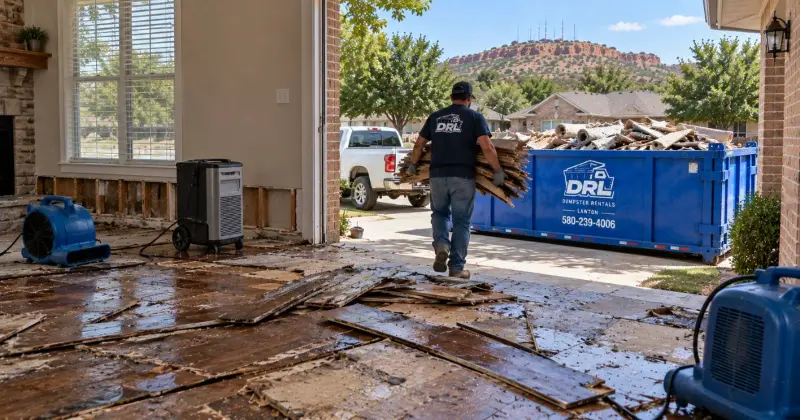
Water-damaged carpet and padding are usually heavier than dry material of the same size, simply because they’re still holding moisture, which is worth mentioning when requesting a dumpster for this kind of project rather than assuming standard dry-carpet weight estimates apply. Subfloor underneath water-damaged flooring should also be checked before new flooring goes down, since damaged subfloor material needs to be addressed separately from the surface flooring itself.
Subfloor Considerations During Flooring Removal
Removing the surface flooring sometimes reveals subfloor problems that weren’t visible before soft spots, water staining, or old adhesive residue from a previous flooring installation. Whether the subfloor itself needs to be replaced is a separate decision from the flooring removal, but it affects the total project debris if plywood or particle board subfloor panels also need to come out.
Old adhesive or mastic left behind from a previous flooring installation, particularly under older vinyl flooring, is generally fine to leave in place if new flooring is going down directly over it, but it adds a small amount of additional debris if it’s being scraped off as part of subfloor prep.
Choosing a Dumpster Size
A single room of carpet or laminate removal generally fits a 10-yard container without approaching any weight concerns. Whole-house flooring projects, or any project involving significant tile or stone, often call for a 15 or 20-yard dumpster not necessarily because of volume, but because of how much flooring removal debris weight tile and stone can add per square foot.
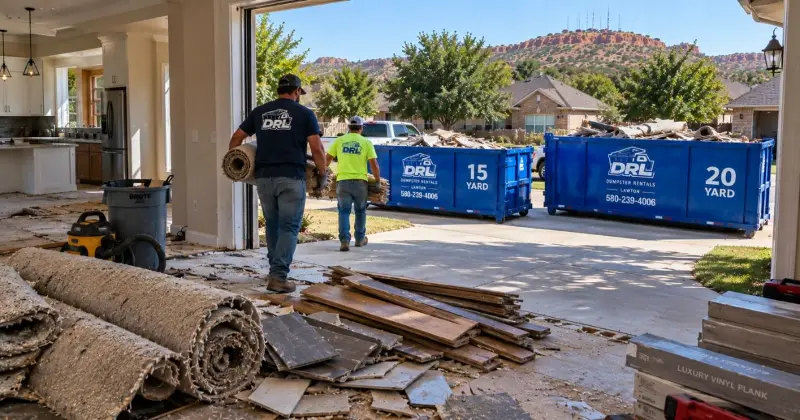
Describing the mix of flooring types being removed, rather than just the total square footage, helps a provider recommend a size and weight allowance that actually fits the project.
Frequently Asked Questions
What size dumpster do I need for flooring removal?
A single room of carpet or laminate typically fits a 10-yard container. Whole-house projects, or anything involving significant tile or stone, often need a 15 or 20-yard dumpster because of weight rather than volume.
Is tile heavier than other flooring types?
Yes, tile and stone flooring are significantly denser than carpet, laminate, or even solid hardwood, so they can fill a dumpster’s weight allowance with a relatively small area compared to lighter flooring materials.
Can old vinyl floor tile contain asbestos?
Some older vinyl floor tile, particularly nine-inch square tiles from several decades ago, was found to contain asbestos. If there’s reason to suspect this in an older home, having the material tested before removal is the safer approach.
Can I mix different flooring types in the same dumpster?
Generally yes, carpet, tile, hardwood, and laminate can typically go into the same container. The main consideration is making sure the combined weight, particularly from any tile or stone, stays within the container’s allowance.
Planning Flooring Removal Debris the Right Way
Since flooring removal behaves so differently depending on material, describing the specific flooring types being removed not just total square footage leads to a more accurate size and weight recommendation. For renovation projects involving flooring alongside other work, see our kitchen and bathroom remodel waste guide.