Driveway Dumpster Delivery: Smart Prep Checklist
How to Prepare for Driveway Dumpster Delivery
Scheduling a driveway dumpster delivery is usually simple, but a few minutes of prep can save you from delays, awkward placement, or unnecessary wear on the driveway itself. Before delivery day, clear the area, check for overhead obstacles, and let your provider know about anything unusual on the property.
Quick Answer: Before your dumpster arrives, clear the driveway, check overhead clearance, protect vulnerable surfaces, and give the delivery truck enough room to approach and place the container. If driveway placement isn’t possible, ask your provider about alternative locations and whether street placement needs a permit.
Clearing the Driveway and Notifying Your Household
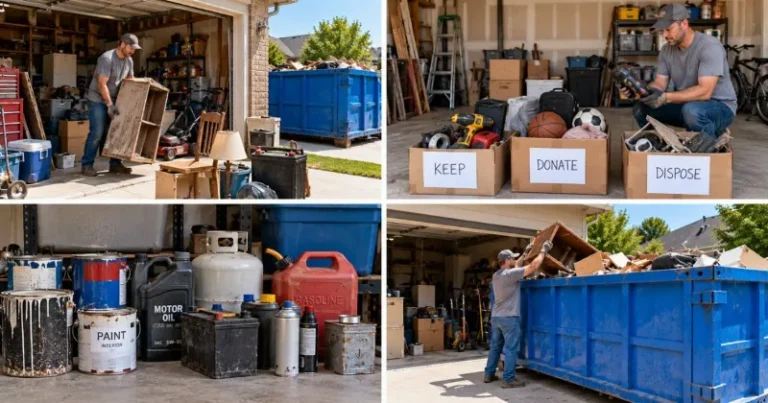
Start by creating a completely open space where the dumpster will sit. Move vehicles, tools, toys, trash bins, and potted plants out of the way — and don’t stop at just the exact spot. Roll-off trucks need room to approach and position the container, so a clear path leading into the driveway matters just as much as the final placement area.
If you share the driveway with a roommate, family member, or another unit, let them know delivery is scheduled. A car that needs to be moved after the truck has already arrived is one of the most common causes of delay.
Quick pre-delivery checklist:
- Move vehicles away from the placement area and the approach path
- Remove tools, bins, toys, and potted plants from the driveway
- Check for low branches or other overhead obstructions
- Make sure gates are unlocked if the driver needs access
- Keep kids and pets away from the delivery area
- Tell anyone sharing the property about the scheduled delivery
Choosing the Right Placement Spot
Driveway Dumpster Delivery is easier when you choose a placement spot that makes loading convenient and gives the truck enough room to work. A good spot:
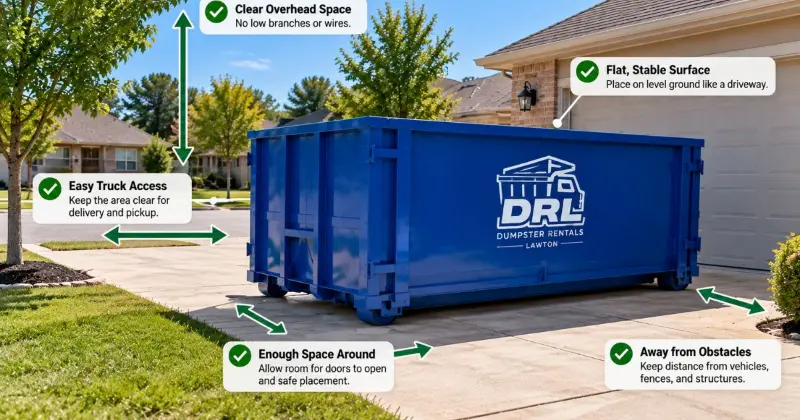
- Gives you easy access for loading debris
- Doesn’t block the garage or a shared exit
- Leaves room for people to walk safely around it
- Gives the delivery truck a clear approach
- Avoids landscaping you want to keep
- Doesn’t interfere with gates or shared access points
Wider driveways usually give you a few options. Narrow driveways often have only one workable spot, so it’s worth walking the space yourself before delivery day. If most of your debris is coming from the garage, placing the container closer to that end can save a lot of trips carrying heavy loads.
What Kind of Debris You’re Loading Matters for Placement
Not all debris puts the same pressure on a driveway. Heavier materials concrete, brick, and other masonry debris, old roofing shingles, or dirt and sod add significant weight to a loaded container, and that weight sits directly on whatever surface is underneath it. If your project involves any of these, it’s worth mentioning to your provider up front, since it may affect both the container size you need and how much protection the driveway should have underneath it.
Lighter household or renovation debris generally puts less strain on the surface, though a full container of anything is still heavy. When in doubt, describing your project to the provider before booking helps them recommend the right size — see our dumpster size guide for a general sense of what different projects typically need.
Protecting Your Driveway Surface
A loaded dumpster puts real weight on whatever it’s sitting on. Older asphalt, cracked concrete, or a driveway that already shows wear is more vulnerable to marks or added stress, especially with heavier debris loads.
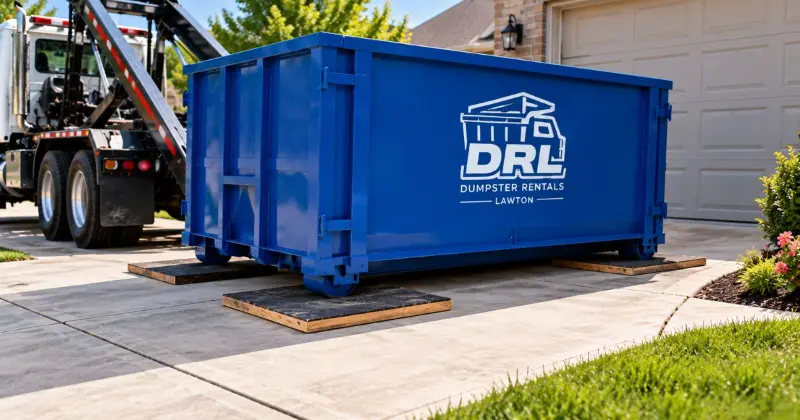
Protective boards placed under the dumpster’s contact points help spread that weight out. Ask your provider what protection method they use, particularly if your driveway is older or already damaged. It also helps to point out existing cracks or problem areas before delivery, and taking a few photos beforehand gives you a record of the driveway’s condition going in. For homeowners with older or more delicate surfaces, resources like this guide on protecting driveways from heavy objects cover additional protection options beyond plywood boards.
Check Overhead Clearance
Look up before delivery day. Low tree branches, power lines, signs, and roof overhangs can all get in the way of a roll-off truck while it’s positioning the container, since the truck needs vertical clearance as it lowers the dumpster into place.
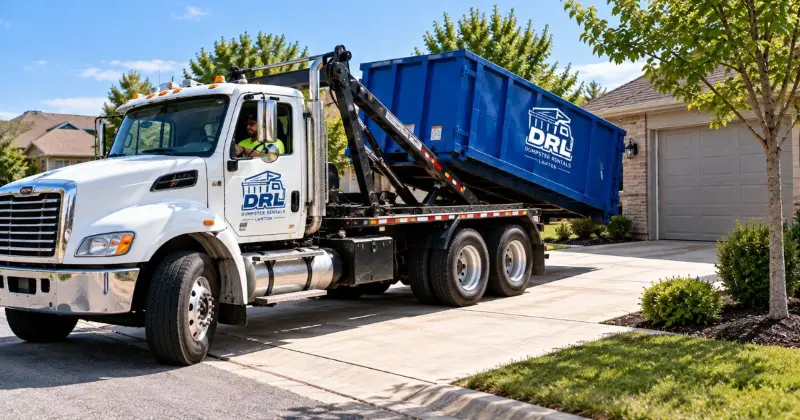
A driveway that looks plenty big from ground level can still be a problem if something overhead is in the way. If you’re not sure whether your property has enough clearance, describe it to your provider before scheduling delivery.
Communicating Access Instructions Ahead of Delivery
Some properties just need more information passed along than others. If you have a gate, shared access, or a layout that isn’t obvious, give the provider those details ahead of time — especially if you won’t be home when the truck arrives.
Useful details to pass along:
- Gate codes
- Which entrance to use
- Your preferred placement spot
- Any narrow access points
- Shared driveway arrangements
- Landscaping or irrigation lines near the placement area
The more the driver knows before arriving, the less time gets spent figuring things out on-site.
Truck Access, Delivery, and Pickup
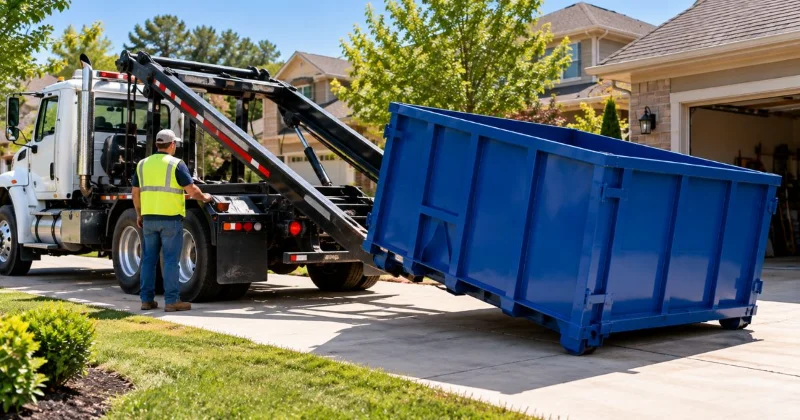
A roll-off truck needs more room than the dumpster’s footprint alone suggests. It has to approach the property, get into position, and use its lifting equipment to place the container — and tight driveways, narrow streets, parked cars, or overhead obstacles can all slow that process down. That’s why driveway dumpster delivery tends to go smoothest when both the placement spot and the truck’s approach path are completely clear ahead of time.
The same access is needed again at pickup. Keep the area around the container clear for the whole rental period — don’t let vehicles, tools, or leftover materials pile up in front of it, which tends to happen near the end of a project when the driveway gets crowded. Before pickup day, do a quick check that the truck can reach the dumpster without working around anything new.
Seasonal Considerations for Driveway Placement in Lawton
Lawton’s weather can affect driveway conditions. During the hottest stretches of summer, asphalt can soften slightly, making it more vulnerable to impressions from a heavy container sitting in one spot for several days. That doesn’t mean summer deliveries should be avoided — it just makes driveway protection more worth doing, especially on older asphalt.
Concrete doesn’t soften the same way, but existing cracks or surface damage are still worth flagging before placement. If you’re unsure about your driveway’s condition heading into summer, it’s worth asking your provider about protective options.
Working Around Landscaping and Irrigation
Flower beds, shrubs, or irrigation lines near the driveway add another wrinkle. Underground irrigation lines especially aren’t always visible, particularly around newer landscaping, so point them out before delivery rather than after.
Keeping the dumpster fully on the driveway rather than partly on landscaping is usually the simplest way to avoid problems. If your only available spot is close to something delicate, it’s worth talking through the placement with your provider first.
What If the Dumpster Can’t Go in the Driveway?
Not every property has a driveway that works for dumpster placement — a short driveway, narrow access, parked equipment, or limited off-street space can all rule it out. Depending on the property, alternatives might include a side yard, another part of the lot, or in some cases the street, though street placement may require a permit depending on local rules.
If you think driveway placement might not work for your property, raise it with your provider before delivery day rather than waiting for the truck to show up.
Driveway Dumpster Delivery in Lawton
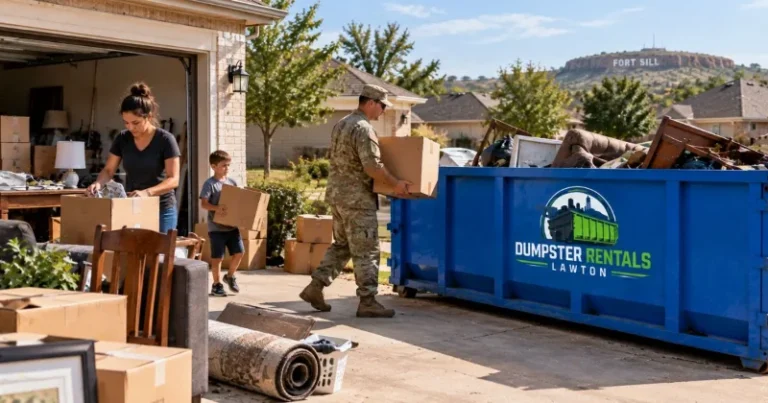
For homeowners and property managers in Lawton, planning for Driveway Dumpster Delivery before the truck arrives can make the whole rental easier. Consider the driveway surface, truck access, overhead clearance, landscaping, and any shared-property rules before scheduling delivery. If the dumpster needs to go somewhere other than your driveway, check whether you’ll need a permit. Our permit guide covers what to check, and our cost factors guide covers what else affects your rental price.
Frequently Asked Questions
Will a dumpster damage my driveway?
Significant damage isn’t typical, but a heavy container can leave marks on some surfaces, particularly older or already-damaged asphalt. Protective boards or another approved method can help reduce that risk.
How much space does a dumpster need for delivery?
More than just the container’s own footprint. The truck needs a clear approach path plus enough overhead clearance to lower the dumpster into place.
Can I move the dumpster after it’s delivered?
No. Roll-off dumpsters are extremely heavy and shouldn’t be moved manually. If placement needs to change, contact your provider and ask about repositioning.
What if my driveway is too small?
Tell your provider before delivery. They can talk through whether another private spot or street placement makes sense, and whether anything else applies.
Should I move my car before delivery?
Yes — clear vehicles and other obstacles from both the placement spot and the truck’s approach path before your scheduled delivery window.
Making Delivery Day Simple
A smooth driveway dumpster delivery starts before the truck ever shows up. Clear the area, check for overhead obstacles, protect the surface if needed, and pass along any access details in advance. Handle those a few days ahead, and delivery — and pickup later — tends to go a lot more smoothly for everyone involved.