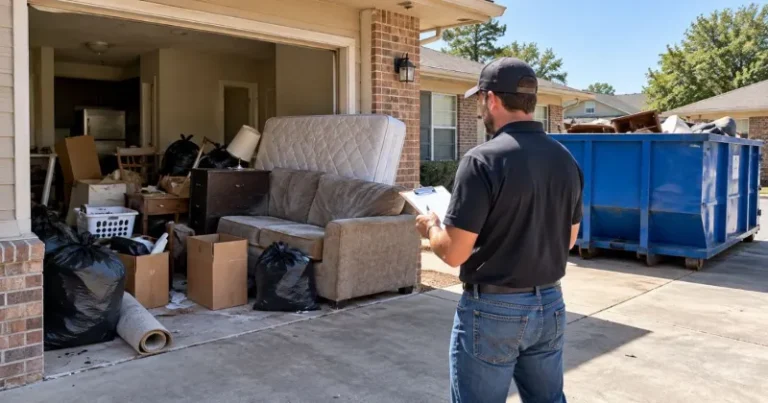
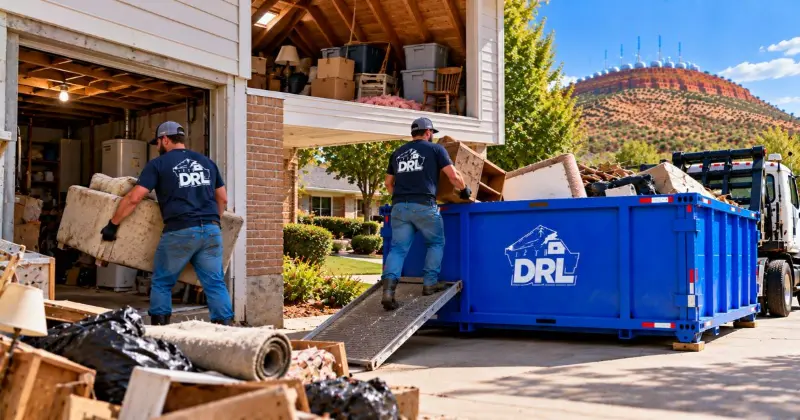
Basement and Attic Cleanouts in Lawton: Where to Start
Basements and attics are easy places to postpone cleaning. Boxes get stacked, old furniture gets pushed into corners, and seasonal belongings can stay untouched for years.
When you finally decide to clear the space, the biggest challenge is usually knowing where to begin.
A practical approach is to start with safety and access, then sort belongings into clear categories before deciding what needs to be removed. Once you know how much debris you actually have, you can choose a dumpster size that fits the project.
For homeowners planning basement and attic cleanouts in Lawton, this guide explains how to organize the work, what to watch for, and how to plan debris removal.
Why Basement and Attic Cleanouts Become Necessary
These spaces often become long-term storage areas because they are separate from the rooms used every day.
An attic might contain:
- Holiday decorations
- Old clothing
- Boxes from previous moves
- Children’s belongings
- Seasonal equipment
- Unused household items
A basement may contain:
- Old furniture
- Shelving
- Cardboard boxes
- Books and toys
- Household equipment
- Old flooring
- Remodeling debris
The problem is that these items are often added without removing anything.
Eventually, the space becomes difficult to walk through or use for its original purpose.
The first step is not throwing everything away. It is creating enough room to work safely.
How to Clean Out an Attic
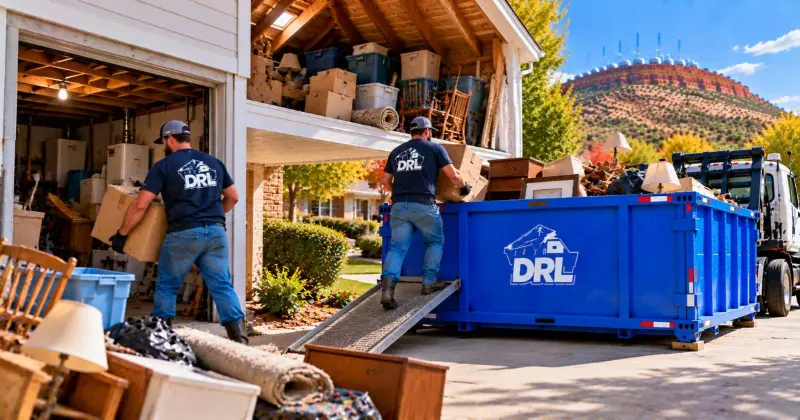
An attic cleanout is easier when you work in small sections instead of trying to empty the entire space at once. Planning basement and attic cleanouts together can also help you decide what should be removed and what should stay.
Start near the entrance and create a clear path. Then work toward the back of the attic one area at a time.
Check the Walking Surface
Do not assume every visible part of an attic floor is designed for normal walking.
Some areas may have insulation or structural components that should not be stepped on. Poor lighting can also make it difficult to see where it is safe to place your feet.
If you find older insulation that you cannot identify, do not disturb it simply to get the cleanout finished.
The EPA specifically warns homeowners not to disturb vermiculite insulation because it may contain asbestos. If this type of insulation needs to be disturbed, professional guidance is appropriate.
Sort Before Carrying Everything Down
Create separate areas for:
- Keep
- Donate
- Recycle
- Dispose
This prevents you from carrying every item downstairs only to decide later that half of it should have stayed out of the house.
Work through one section completely before moving to the next.
How to Clean Out a Basement
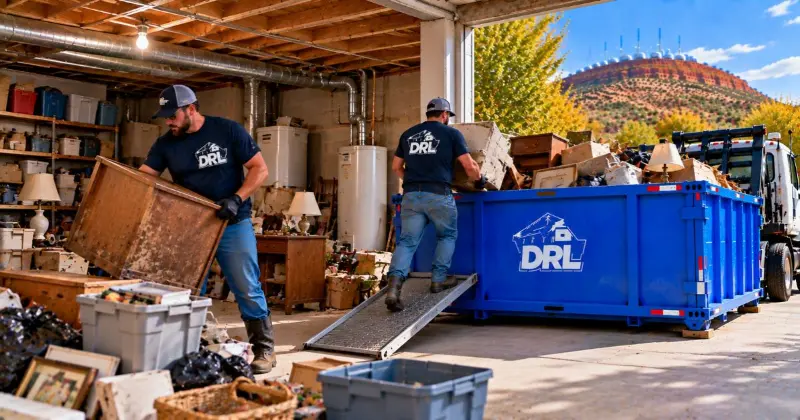
Basement cleanouts usually start differently because access and moisture can affect the work. When handling basement and attic cleanouts, start with the areas that are easiest and safest to access.
Before moving heavy belongings, check the condition of the space.
Look for:
- Damp areas
- Water stains
- Musty odors
- Mold
- Damaged cardboard
- Wet flooring
- Standing water
If there is active water damage or extensive mold, deal with the underlying problem before treating the basement as an ordinary cleanout.
Once the space is safe, create a clear path from the storage area to the stairs or exterior entrance.
Then work through one section at a time.
What Should You Not Store in a Basement?
Not every household item is suitable for long-term basement storage.
Moisture and humidity can damage:
- Important documents
- Photographs
- Electronics
- Certain fabrics
- Wooden belongings
- Items that can be damaged by damp conditions
Household chemicals also deserve special attention.
Paint, chemicals, batteries, pesticides, and other potentially hazardous materials should not automatically be placed into a standard dumpster. Check the disposal requirements before loading questionable items.
Your basement cleanout should also leave important access areas clear. If the space includes a storm shelter or emergency access area, do not allow boxes and furniture to block the route.
A Simple Sorting System That Actually Works
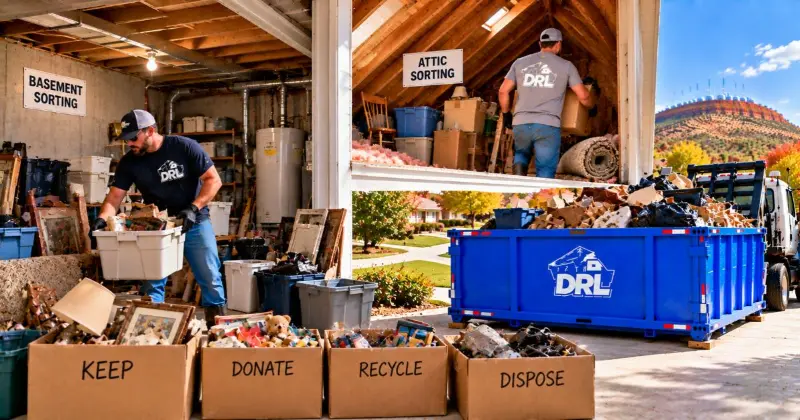
Large cleanouts become harder when every item requires a long debate.
Use five basic categories:
Keep: Items you still use or genuinely want.
Sell: Items that have enough value to justify selling them.
Donate: Useful items that someone else could use.
Recycle: Materials that have an appropriate recycling option.
Dispose: Items that have no practical reuse option and are accepted for dumpster disposal.
The goal is not to throw away everything.
The goal is to make a clear decision about each item so that you do not simply move the same clutter from one storage area to another.
What Is the 5-5-5 Rule for Cleaning?
The 5-5-5 rule is a simple decluttering method that can make a large project feel more manageable.
One commonly used version is:
- Choose 5 items to throw away
- Choose 5 items to donate
- Put 5 items back where they belong
That gives you a small 15-item task instead of thinking about an entire basement or attic at once.
It can be useful when you feel stuck at the beginning of a cleanout.
It is not a formal cleaning standard, so you do not need to follow it exactly. The main idea is to break a large decluttering project into smaller decisions.
What Can Go Into a Dumpster?
Many ordinary household cleanout materials can go into a dumpster, depending on the provider’s accepted-material rules.
Common cleanout debris can include:
- Old furniture
- Cardboard boxes
- Household clutter
- Broken shelving
- Carpet
- General non-hazardous debris
- Old decorations
- Storage items
Some materials need separate handling.
Examples can include:
- Paint
- Batteries
- Chemicals
- Propane tanks
- Certain electronics
- Medical waste
- Other hazardous materials
If you are unsure about a particular item, check before putting it into the container.
For a detailed list, see our What Can Go in a Dumpster in Lawton guide.
If your cleanup involves renovation or building debris, see our construction site cleanup guide for more information about managing construction debris.
How Much Does It Cost to Have a Basement Cleaned Out?
There is no single price for every basement cleanout.
The cost depends on what kind of help you need and how much material has to be removed.
A homeowner who sorts and loads everything themselves may mainly need to budget for the dumpster. A full-service junk-removal company may charge for labor, loading, transportation, and disposal.
Other factors can include:
- Total debris volume
- Dumpster size
- Heavy materials
- Number of loads
- Special disposal requirements
- Labor
- Basement access
For that reason, it is better to estimate the actual amount of debris before trying to compare cleanout costs.
Do not assume that a larger basement automatically means a larger dumpster. A small basement packed with furniture and boxes can produce more debris than a larger space that is mostly empty.
Who Does Basement Cleanouts?
There are three common ways to handle a basement cleanout.
Do It Yourself
DIY works well when the amount of material is manageable and you have enough time and help.
Hire a Junk Removal Company
This option can make sense when you want someone else to do the lifting, loading, hauling, and disposal.
Rent a Dumpster
A dumpster can be useful when you want to sort and load the debris yourself.
This option is especially practical when the project takes several days and you do not want to rush the entire cleanout into one pickup.
The right choice depends on the amount of debris, available help, access, and how quickly you want the space cleared.
Choosing the Right Dumpster Size
Dumpster size should be based on the amount and type of debris rather than the name of the room.
The right dumpster size can make basement and attic cleanouts easier to manage.
A general planning range could look like this:
| Cleanout | Possible dumpster size |
|---|---|
| Small attic cleanout | 10-yard |
| Larger attic cleanout | 10–15-yard |
| Small basement cleanout | 10–15-yard |
| Moderate basement cleanout | 15–20-yard |
| Large basement with furniture | 20-yard or larger |
These are planning ranges, not guarantees.
Furniture, shelving, mattresses, carpet, and large storage containers can consume space quickly.
Heavy materials such as concrete, brick, tile, and soil also require weight planning rather than looking only at available container space.
For a full breakdown, see our Dumpster Sizes in Lawton guide.
Basement Access Can Change the Work
A basement with an exterior walkout can be much easier to clean than one that can only be reached through an interior staircase.
If everything has to come up a narrow staircase, bulky furniture may take much longer to remove.
Before the dumpster arrives, think about where the debris will be staged.
A temporary staging area near the basement stairs can make the process more organized. It also keeps the dumpster-loading area from becoming cluttered with items that are still being sorted.
The same principle applies to an attic. Create a staging point near the attic access so items do not have to be carried through the entire house before you decide where they belong.
Planning a Dumpster Placement in Lawton
Once you know what you are removing, think about where the dumpster will go.
For a typical residential cleanout, a driveway is often the most practical location if there is enough room for delivery and access.
Before delivery, check:
- Available driveway space
- Overhead clearance
- Distance from the house
- Access around parked vehicles
- Where debris will be carried
- Whether the container could block normal household access
Good placement can make basement and attic cleanouts easier by keeping the debris route practical and the work area organized.
If the property has unusual access or a tight driveway, mention this when requesting the dumpster.
A little planning before delivery can make the cleanout much easier.
When a Cleanout Needs Extra Care
Some attic and basement projects should not be treated like ordinary household decluttering.
Stop and get appropriate professional guidance if you encounter:
- Suspected asbestos-containing material
- Vermiculite insulation
- Significant mold
- Structural damage
- Serious water damage
- Unknown chemicals
- Electrical hazards
For example, older attic insulation can require special attention. If you cannot identify the material, avoid disturbing it until you know what you are dealing with. For vermiculite insulation information, see the EPA guidance.
How to Keep the Space From Filling Up Again
The easiest time to organize a basement or attic is immediately after the cleanout, while the space is empty.
Instead of putting everything back wherever there is room, create simple storage zones.
For example:
- Holiday decorations in one area
- Tools in another
- Seasonal equipment together
- Important belongings in labeled containers
- Frequently used items near the easiest access point
Keep walkways clear.
If the basement includes an emergency shelter or important access route, make that area a permanent no-storage zone.
A clean space is much easier to maintain when everything has a defined place.
Frequently Asked Questions
How much does it cost to have a basement cleaned out?
It depends on the amount of debris and whether you need a dumpster, labor, hauling, or a full-service cleanout. DIY dumpster rental and full-service junk removal have different pricing structures.
What is the best way to clean out my attic?
Start with safety and access. Create a clear path, work in sections, sort belongings into keep, donate, recycle, and dispose groups, then remove the unwanted material.
Who does basement cleanouts?
Homeowners can handle smaller projects themselves, hire a junk-removal company for full-service removal, or rent a dumpster and load it themselves.
What is the best way to clean out my basement?
Check for moisture and safety problems first. Then create a clear path, work section by section, sort belongings, and remove unwanted materials as each area is completed.
What should you not store in a basement?
Avoid storing items that can easily be damaged by moisture or humidity. Important documents, photographs, electronics, and certain household chemicals need particular care.
What is the 5-5-5 rule for cleaning?
The 5-5-5 method is a decluttering approach that commonly involves choosing five items to discard, five to donate, and five to return to their proper place. It is a simple way to break a larger project into smaller tasks.
What dumpster size is best for a basement cleanout?
It depends on the amount and type of debris. A small project may fit a 10-yard container, while a moderate or heavily packed basement may require a 15- or 20-yard dumpster.
Can I clean out my attic and basement with one dumpster?
Yes, if the combined debris fits within the container and the materials are accepted. Estimate the total volume from both areas before choosing the size.
Reclaim Your Storage Space
A basement or attic can become useful again once years of accumulated belongings are sorted and removed.
Start small. Create a safe path, separate items into clear categories, and deal with questionable materials before loading them into a dumpster.
Then estimate the amount of debris and choose a container based on the actual project rather than the size of the room.
For homeowners planning basement and attic cleanouts in Lawton, a properly sized dumpster can provide a practical way to collect permitted household debris while the cleanout is completed at your own pace.
If you are between two dumpster sizes, describe the type and amount of material you expect to remove when requesting a quote.