Seasonal Storage Cleanout: 7 Easy Tips for Winter
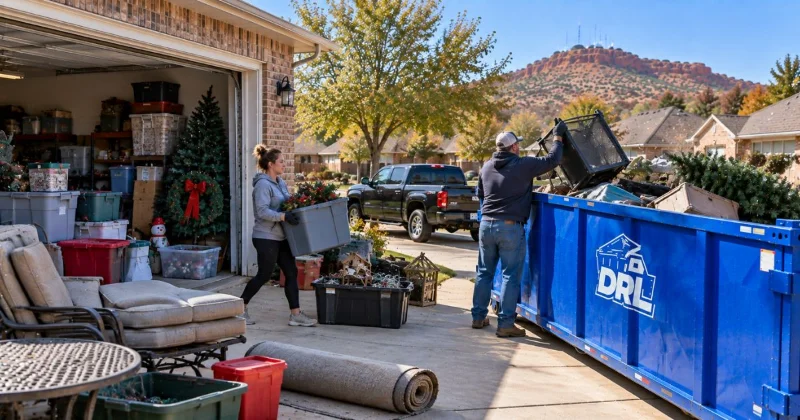
Before winter arrives, many Lawton homeowners start clearing out garages, sheds, storage areas, and seasonal household items. Summer equipment, broken items, old furniture, and general clutter can take up valuable space before winter gear goes back into storage.
A seasonal storage cleanout gives you a chance to sort those items before cold weather arrives and can make both winter storage and next spring’s cleanup easier.
Quick Answer
A seasonal storage cleanout helps clear garages, sheds, and storage areas before winter. Start by sorting items into keep, donate, recycle, and dispose piles, then choose a dumpster based on the amount and type of debris. Combining the cleanout with fall yard work can also make one dumpster rental more useful.
7 Smart Ways to Prepare for Winter
1. Start With a Simple Sorting Plan
Don’t begin by throwing everything into a dumpster.
Create four basic groups:
- Keep
- Donate
- Recycle
- Dispose
This makes the cleanup easier and gives you a chance to save usable items before they become part of the waste pile.
For example, an old lawn chair with minor damage might be worth donating or repairing, while a broken plastic storage bin may simply need disposal.
Starting with a sorting system also helps you estimate how much actual dumpster debris you’ll have.
2. Check the Garage, Shed, and Storage Areas
A seasonal cleanout shouldn’t stop at the main garage.
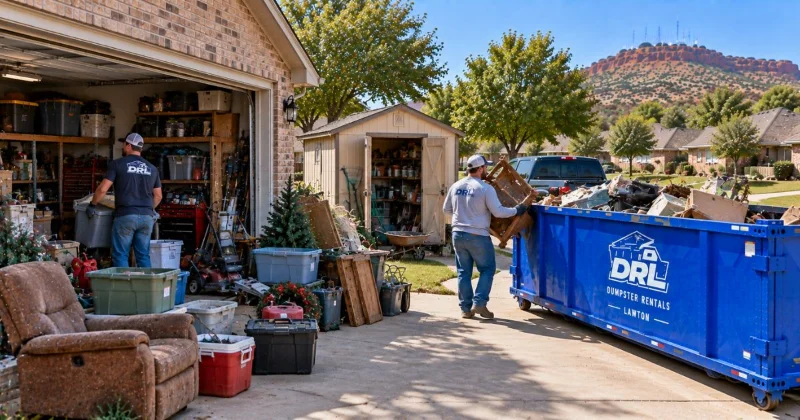
Check other places where items may have accumulated during the warmer months, including:
- Garages
- Garden sheds
- Outdoor storage areas
- Basement storage
- Closets
- Shelving areas
- Patio storage
Look for items that are broken, no longer used, outgrown, or unlikely to be needed again.
This is also a good time to see whether your current storage system still works. If shelves are overloaded or boxes are taking up floor space, reorganizing before winter can make the area easier to use.
3. Remove Summer Items You No Longer Need
Seasonal transitions often reveal items that haven’t been used all year.
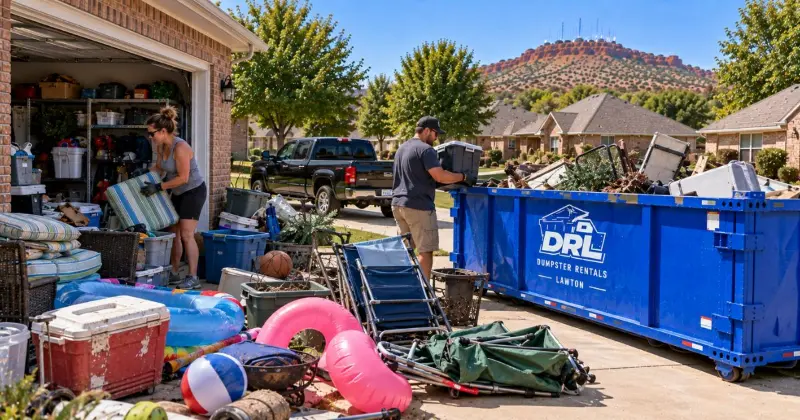
This may include broken outdoor furniture, worn storage containers, damaged lawn equipment, old decorations, and other items that have reached the end of their useful life.
Don’t automatically dispose of everything just because it’s seasonal.
Ask:
- Did I use this during the past year?
- Will I realistically use it next year?
- Is it worth storing?
- Can someone else use it?
- Is it broken beyond reasonable repair?
This simple process can reduce unnecessary storage and help keep the dumpster focused on items that genuinely need disposal.
4. Look for Hidden Clutter Before Winter Storage
Winter items can make a storage area feel crowded quickly.
Before bringing winter equipment and seasonal belongings back into regular use, remove the clutter that’s already occupying the available space.
Check behind shelves, underneath stored furniture, inside cabinets, and in boxes that haven’t been opened for months.
You may find old household items, damaged equipment, empty containers, or other debris that can be removed during the same cleanup.
Taking care of this before winter storage goes back into place is usually easier than trying to reorganize an already crowded space later.
5. Choose the Right Dumpster Size
The amount and type of debris should determine the dumpster size.
A smaller seasonal cleanout involving a garage, shed, or limited storage area may fit comfortably in a 10-yard container.
A larger property or a cleanup that includes substantial decluttering may require a 15-yard container or another size depending on the total debris.
Don’t choose based only on how full the storage area looks. A seasonal storage cleanout can include bulky furniture, boxes, outdoor equipment, and other items that take up more dumpster space than expected.
Consider:
- Furniture
- Boxes
- Broken equipment
- Yard debris
- Household clutter
- Construction or renovation debris
- Heavy materials
If you’re unsure, describe the project and debris to the rental provider before choosing a size.
For more sizing information, see our dumpster sizes guide.
6. Combine the Cleanout With Other Fall Projects
Fall cleanup often involves more than storage.
You may also be working on:
- Garage organization
- Yard cleanup
- Small home repairs
- Furniture removal
- Decluttering
- Preparing a rental property
- Minor renovation work
If several projects are happening around the same time, combining compatible debris into one dumpster rental can be more efficient than arranging separate deliveries.
Before combining materials, make sure everything is accepted by the rental provider.
7. Prepare Your Storage Area for Winter
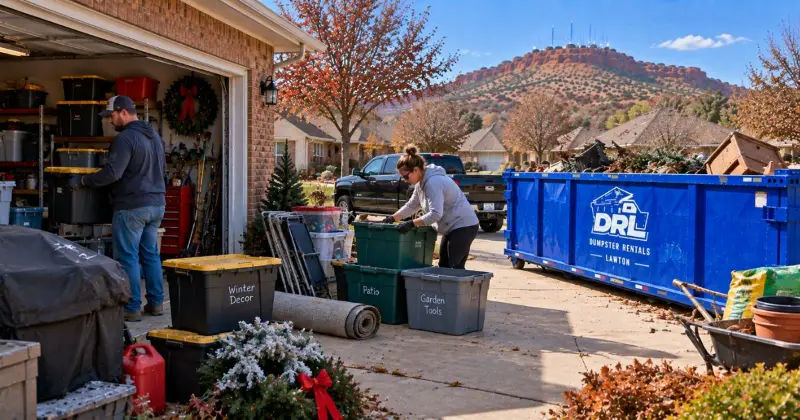
Once unwanted items are removed, use the remaining space more efficiently.
Place frequently used winter items where they are easy to reach. Store less frequently used belongings farther back or higher on shelves where appropriate.
You can also label boxes and group similar items together.
The goal isn’t simply to remove clutter. It’s to finish the project with a storage area that is easier to use throughout the winter.
Seasonal Storage Cleanouts in Lawton, OK
For homeowners in Lawton, a pre-winter cleanout can be a practical time to clear garages, sheds, outdoor storage areas, and seasonal household items.
If you’re combining storage cleanup with fall yard work or another home project, estimate the total debris from both projects before choosing a dumpster size.
If you’re unsure about the container size, debris type, or placement location, explain the full project to the rental provider before delivery.
What Should You Throw Away During a Seasonal Cleanout?
The answer depends on the condition and usefulness of each item.
Common disposal items can include:
- Broken furniture
- Damaged storage bins
- Worn outdoor items
- Unusable household clutter
- Broken shelving
- Old boxes
- Damaged decorations
- Other non-hazardous household debris
Don’t automatically put chemicals, paint, batteries, pesticides, or other potentially hazardous materials into a regular dumpster. Check the rental provider’s prohibited-material list and use the appropriate disposal method for those items.
How Much Does a Seasonal Storage Cleanout Fill?
There isn’t one fixed answer because storage areas can contain very different types and amounts of material.
A small shed cleanout may produce only a limited amount of debris, while clearing a garage with furniture, shelving, boxes, and old equipment can create a much larger load.
The best approach is to estimate the total material after sorting everything into keep, donate, recycle, and dispose piles.
Remember that weight matters too. Concrete, dirt, roofing, brick, and other dense materials can reach a dumpster’s weight allowance faster than lightweight household clutter.
Pre-Winter Cleanout Checklist
Before starting your cleanup, work through this list:
- Sort items into keep, donate, recycle, and dispose
- Check the garage
- Check sheds and outdoor storage
- Review boxes and shelves
- Remove broken seasonal items
- Set aside items that can be donated
- Estimate the total disposal volume
- Check for heavy debris
- Check prohibited materials
- Choose the appropriate dumpster size
- Plan the dumpster placement area
- Combine compatible fall projects when practical
This checklist keeps the project focused and makes it easier to estimate what actually needs to go into the dumpster.
Frequently Asked Questions
What is the best time for a pre-winter cleanout?
Early to mid-fall is often a practical time because you can clear storage areas before winter items become necessary. The exact timing depends on your project and schedule.
What should I remove from my garage before winter?
Start with broken, unused, damaged, or unwanted items. Then review stored boxes, furniture, equipment, and seasonal belongings to determine what is worth keeping.
What dumpster size is good for a seasonal storage cleanout?
A smaller cleanout may fit in a 10-yard container, while a larger garage or property-wide decluttering project may require a 15-yard container or more. The right size depends on the total amount and type of debris.
Can I combine fall yard cleanup with a storage cleanout?
Often, yes, if the materials are accepted by the rental provider and the combined amount fits the selected container. Combining projects can make one dumpster rental more useful.
Should I donate usable items instead of throwing them away?
If an item is still usable and you no longer need it, donating it can be a better option than disposing of it. Sort those items before loading the dumpster.
Can I put paint, batteries, or chemicals in a dumpster?
Don’t assume these materials are accepted. Check the provider’s prohibited-material list and use the appropriate disposal option for household hazardous waste.
How do I know if I need a larger dumpster?
Look at the total amount of debris after you’ve finished sorting. If you’re between two sizes, describe the project and materials to the rental provider before booking.
Preparing for a Smoother Winter
A good seasonal storage cleanout does more than create extra space. It helps remove unwanted items before winter storage becomes crowded and gives you a cleaner starting point for next year’s projects.
Start by sorting what you want to keep, donate, recycle, and dispose of. Then estimate the amount and type of debris before choosing a dumpster.
If you’re also planning fall yard work or another cleanup project, combining compatible work can make better use of the same container.
For help choosing the right container, see our dumpster sizes guide.