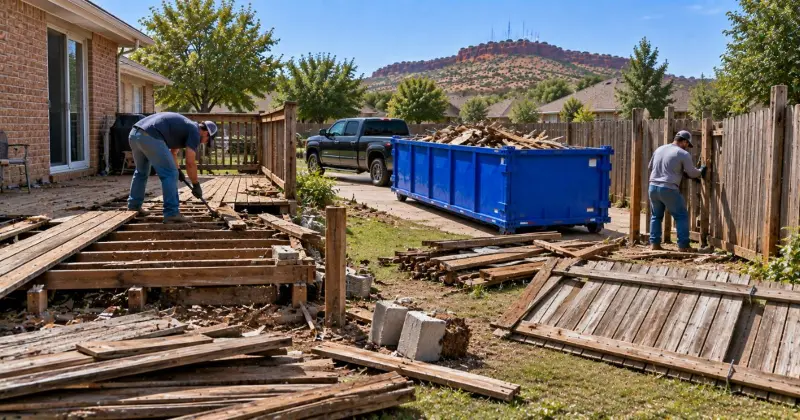
Deck and Fence Removal: Dumpster Size and Disposal Tips
Removing an old deck or fence can create a surprisingly large amount of debris. Wood boards, fence panels, posts, hardware, composite materials, and concrete footings can all become part of the cleanup.
Before starting deck and fence removal, figure out what materials you have, how much debris the project will create, and whether any heavy materials such as concrete are involved.
Quick Answer
Deck and fence removal can produce wood, composite materials, hardware, posts, and concrete from footings. Sort the debris before loading, check which materials your dumpster provider accepts, and consider both volume and weight when choosing a container. A larger dumpster may be needed when a deck and substantial fencing are removed together.
7 Smart Disposal Tips for Deck and Fence Removal
1. Plan the Removal Before Renting a Dumpster
Before ordering a dumpster, look at the entire structure you’re planning to remove.
A deck may include:
- Deck boards
- Support beams
- Joists
- Railings
- Stairs
- Posts
- Fasteners and hardware
- Concrete footings
A fence can include:
- Fence panels
- Posts
- Rails
- Gates
- Hardware
- Concrete around posts
Knowing what will actually come out of the project gives you a better starting point for estimating dumpster size.
2. Separate Wood, Composite, and Other Materials
Not every deck or fence is made from the same material.
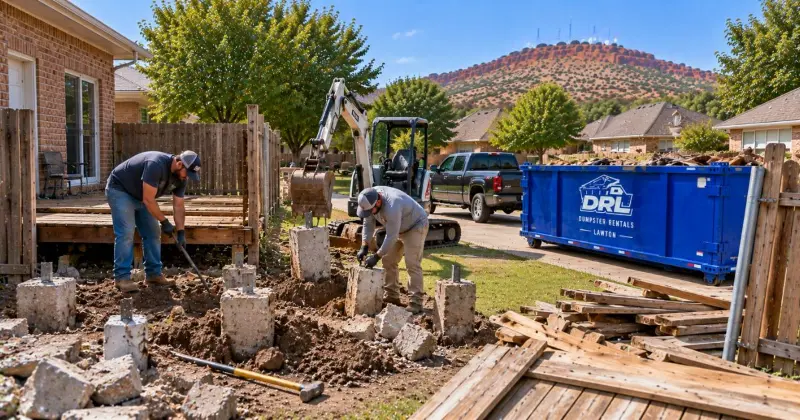
Traditional wood decking and fencing can produce a large volume of boards and structural lumber. Composite decking can behave differently because its density and dimensions may affect how efficiently the material fills a container.
Separate obvious materials when practical, especially if your provider has specific requirements for different waste types.
Also remove loose hardware when doing so is practical and safe.
3. Check Treated Wood Requirements
Older decks and fences may contain treated lumber.
EPA guidance says certain treated wood encountered by homeowners can generally go through ordinary municipal solid-waste disposal, but state and local governments may have their own requirements. EPA also says treated wood should not be burned.
For that reason, don’t assume every provider accepts every type of treated lumber.
Before loading a dumpster, tell the provider what type of wood you’re removing and confirm that it is accepted.
4. Plan for Concrete Fence Posts and Footings
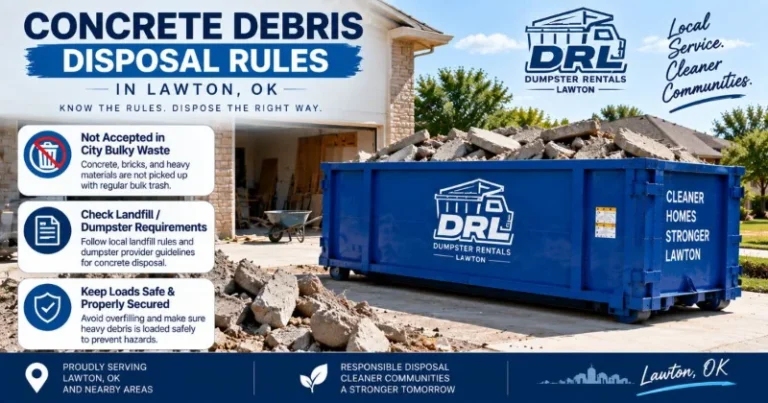
Concrete can change the project significantly.
A fence may look like a simple wood-removal job until the posts and concrete footings are pulled out of the ground.
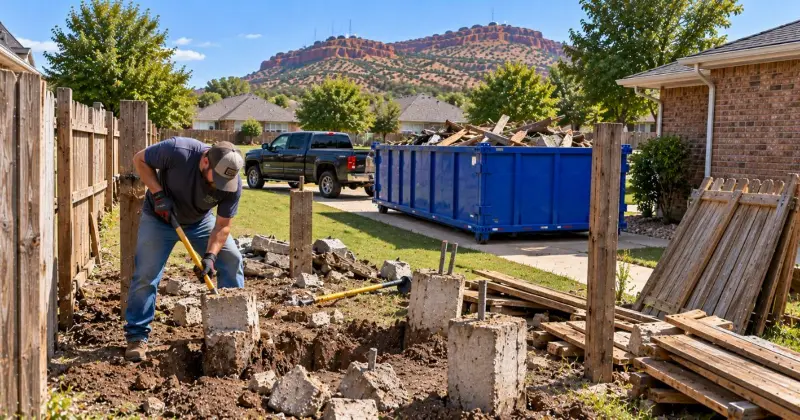
Concrete is much heavier than wood, so even a relatively small amount can affect the weight of the load.
If your project includes concrete footings, tell the dumpster provider before booking.
If you’re removing only the wooden portion and leaving the concrete in place, your dumpster requirements may be different.
5. Estimate the Total Debris Volume
Don’t estimate the dumpster size from the visible structure alone.
Once a deck or fence is dismantled, boards and panels are separated and stacked differently from how they appeared when installed.
Consider:
- Number of deck boards
- Deck size
- Number of fence panels
- Fence length
- Number of posts
- Railings and stairs
- Composite versus wood materials
- Concrete footings
- Additional cleanup debris
If you’re removing both a deck and a fence, estimate the debris from both projects together. When planning Deck and Fence Removal, estimate the debris from both projects together so you can choose a dumpster based on the total volume and weight.
6. Choose the Right Dumpster Size
The right size depends on the amount and type of material.
A residential deck removal may fit in a 15-yard container, while a larger deck, long fence line, or combined deck-and-fence project may require a 20-yard container or larger.
These are starting points rather than fixed rules because the actual debris volume can vary significantly.
Heavy concrete also needs separate consideration because a dumpster can reach its weight allowance before it looks completely full.
If you’re unsure, give the rental provider the deck dimensions, fence length, material type, and whether concrete footings are being removed.
7. Check Accepted Materials Before Loading
Don’t wait until pickup day to find out that something in your load isn’t accepted.
Ask about:
- Pressure-treated wood
- Composite decking
- Concrete
- Metal hardware
- Paint or coatings
- Chemicals
- Other unusual materials
The City of Lawton lists fencing materials up to 6 × 8 feet and lumber up to 6 feet among its bulky-waste materials, while construction/remodeling debris has separate disposal rules. That is a municipal collection option, however, and does not automatically mean every private dumpster provider has identical rules.
For a private dumpster rental, always confirm the provider’s own accepted-material list.
Deck and Fence Projects in Lawton, OK
For homeowners in Lawton, removing an old deck or fence can create more debris than a normal household cleanup.
The City of Lawton’s public waste information lists fencing materials and lumber among certain bulky-waste materials, with size limits, while other construction and remodeling materials have different rules.
If you’re using a private roll-off dumpster, don’t rely on municipal bulky-waste rules alone. Confirm the private provider’s material restrictions before loading the container.
What Happens to the Old Fence Posts?
Fence posts can create two different disposal issues.
If the posts are removed without the concrete footing, they’re generally part of the wood or fencing debris.
If concrete comes out with the posts, the load becomes much heavier.
That difference can affect the dumpster size and weight allowance you need.
For a long fence removal, count the approximate number of posts and determine whether the concrete footings will also be removed before choosing a container.
What About Old Deck Boards?
Old deck boards can be bulky even when they’re not particularly heavy.
Break down the structure into manageable pieces where appropriate and follow your provider’s loading requirements.
Keep the material inside the dumpster rather than allowing boards to extend above the container.
If the deck contains treated lumber, confirm acceptance with the provider before loading it.
Can You Combine Deck and Fence Removal?
Yes, combining projects can make sense when both jobs are happening at the same time.
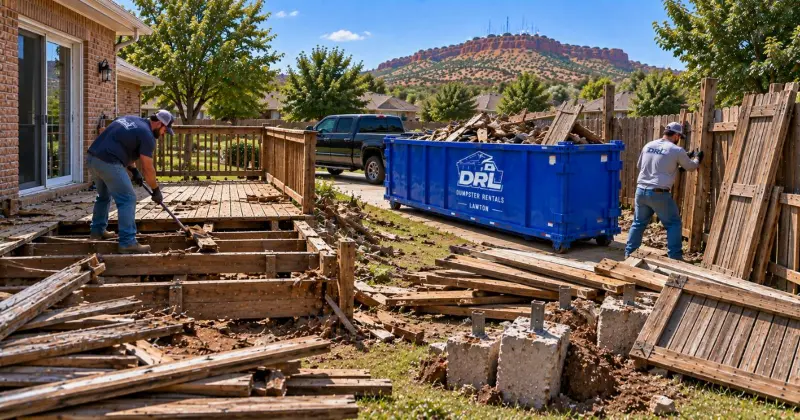
For example, a homeowner might remove:
- An old backyard deck
- A damaged privacy fence
- A small shed
- Related outdoor clutter
Combining compatible debris into one dumpster can reduce the need for separate deliveries.
Just make sure the combined load stays within the container’s capacity and weight limits.
Frequently Asked Questions
What dumpster size is good for deck removal?
A typical residential deck removal may fit a 15-yard container, while larger decks or projects that include additional structures may require a 20-yard container or larger. The actual size depends on the deck dimensions and materials.
What dumpster size do I need for fence removal?
Fence removal can range from a smaller container for a short section to a 20-yard container for a long property perimeter. Fence length, panel size, posts, and concrete footings all affect the estimate.
Can pressure-treated wood go into a dumpster?
It depends on the provider and the specific material. EPA guidance says certain treated wood can generally enter ordinary municipal solid-waste disposal, but local and state requirements can differ. Confirm acceptance with your dumpster provider before loading.
Does concrete change the dumpster size I need?
Yes. Concrete is much heavier than wood, so even a smaller amount can have a major effect on the load’s weight.
Can I put fence posts with concrete attached into a dumpster?
Don’t assume they are accepted as ordinary wood debris. Tell the provider that the posts contain concrete and ask about their specific requirements.
Can I combine a deck and fence removal in one dumpster?
Usually, if the combined debris fits within the container’s volume and weight limits and all materials are accepted by the provider.
Should I remove nails and hardware from old decking?
Remove loose or easily accessible hardware when practical, but don’t spend excessive time dismantling every piece. Follow safe demolition practices and the provider’s loading instructions.
Planning a Deck or Fence Removal Project
A successful Deck and Fence Removal project starts with knowing what you’re actually throwing away.
Estimate the amount of wood and composite material, identify whether treated lumber is involved, and determine whether concrete footings will be removed. Then choose a dumpster based on both volume and weight.
If you’re combining the removal with another cleanup project, include that debris in your estimate before booking.
For more information about how weight can affect your dumpster costs, see what affects dumpster rental cost