Deck Removal Debris: What a Teardown Leaves Behind
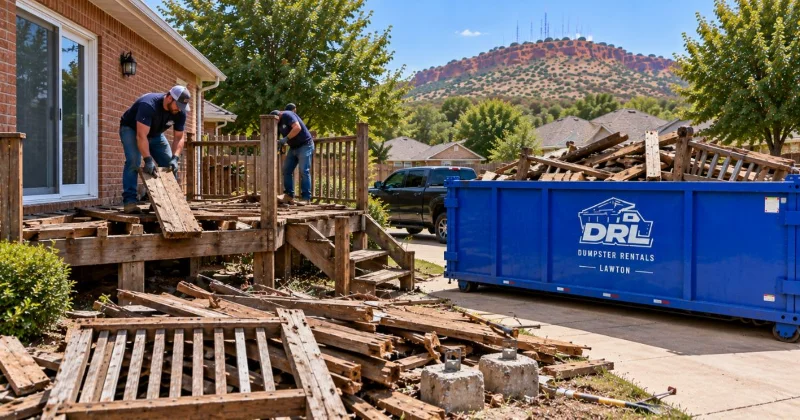
An old deck rarely comes apart as cleanly as it went together. Deck removal debris typically includes treated lumber boards, framing, railings, and whatever fasteners and hardware held it all together, plus concrete footings in many cases. Sizing a dumpster for this kind of project depends heavily on the deck’s size and how it was built.
Quick Answer: A standard residential deck teardown usually fits a 10 or 15-yard dumpster. Pressure-treated lumber makes up most of the volume, and concrete footings, if present, are the main factor that can push a project toward a larger container or a separate weight consideration.
What Comes Out of a Typical Deck Teardown
Most residential decks are built with pressure-treated lumber for the structural framing, with decking boards on top that may be the same treated wood or a composite material. Railings, stairs, and any built-in benches or planters add more volume, along with the nails, screws, and joist hardware that held everything together.
Composite decking, if present, behaves differently than wood once removed it doesn’t splinter the same way and tends to be denser, which is worth mentioning if a significant portion of the deck removal debris is composite rather than natural wood. The amount of deck removal debris also depends on whether the project includes stairs, railings, built-in features, or only the main decking and frame.
Pressure-Treated Lumber and Disposal
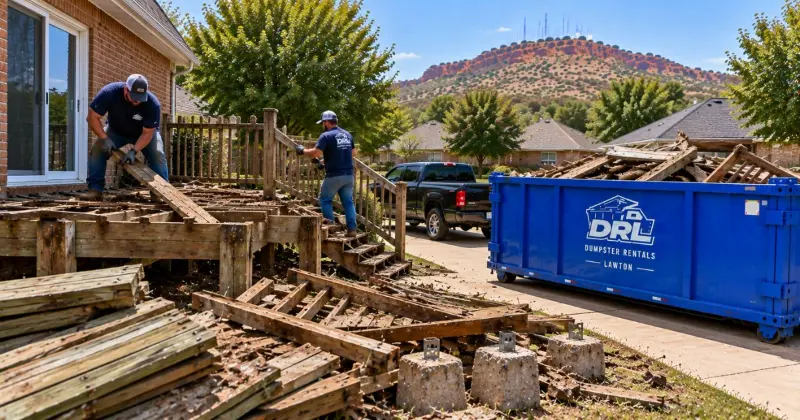
Pressure-treated lumber is generally acceptable in a standard construction dumpster, though it shouldn’t be burned, since older treatment chemicals in particular were not designed to be safely combusted. For a standard roll-off disposal project, this isn’t usually a special handling issue — it mainly matters if someone is considering burning old deck boards instead of hauling them away, which isn’t a safe disposal method regardless of the wood’s age or treatment type. The EPA’s guidance on treated wood explains the history and disposal considerations for older CCA-treated wood.
Concrete Footings Under the Deck
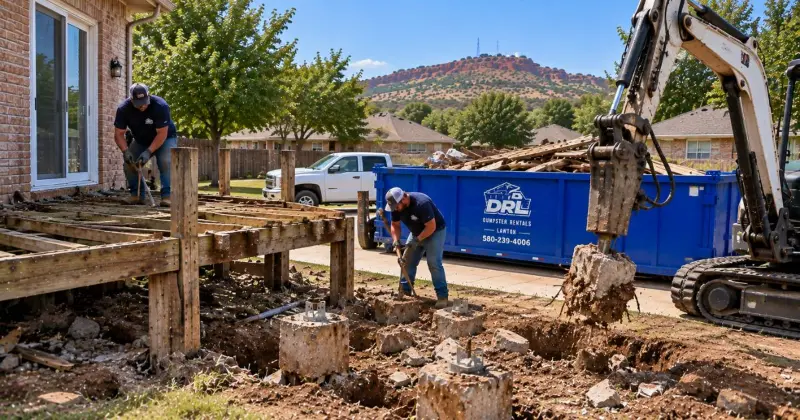
Many decks sit on concrete footings or piers below the frost line, and removing these adds real weight to the project if they’re being dug up and disposed of rather than left in place. A deck that’s simply being removed above ground, with footings left buried, generates far less weight than one where the footings are also being excavated. If footing removal is part of the plan, our concrete debris disposal guide covers how that material is typically handled and weighed.
Sizing a Dumpster for Deck Removal
A small to medium deck, roughly under 300 square feet, can often fit in a 10-yard container, depending on the decking material and how much of the structure is being removed. Larger decks, multi-level designs, or projects that include footing excavation often call for a 15-yard dumpster instead, mainly to account for the additional weight rather than sheer volume.
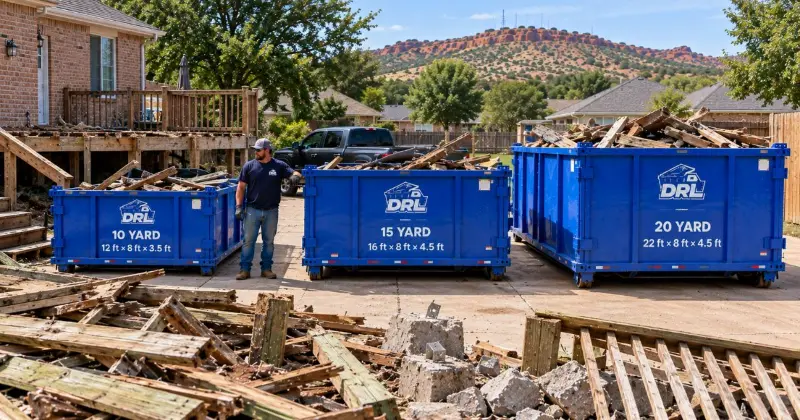
Mentioning the deck’s approximate square footage, whether footings are being removed, and whether the decking is wood or composite gives a much more accurate size recommendation than estimating from the deck’s footprint alone.
How Oklahoma Weather Affects Old Decks
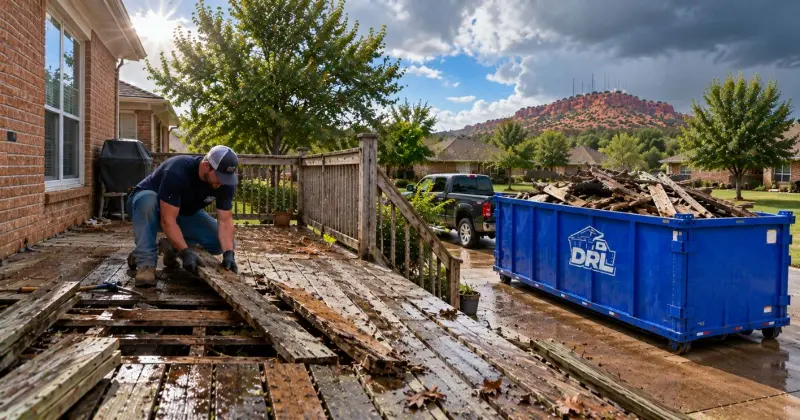
Lawton’s combination of intense summer sun, occasional ice, and swings between very dry and very wet stretches is hard on outdoor lumber. Deck boards that spend years cycling through this kind of weather often show cupping, splitting, or soft spots well before a deck actually reaches the end of its structural life, which is one reason a deck removal project can turn up more deteriorated wood than the owner expected from looking at it while standing on it. Wood that’s gone soft or spongy in spots is often easier to pull apart by hand than a healthy deck would be, which can actually make demolition faster, even if it’s a sign the removal was overdue.
Deck Removal Dumpster Rental in Lawton, OK
For homeowners in Lawton removing an old deck, dumpster sizing usually depends on the deck’s square footage, construction material, and whether the concrete footings are being removed. A wood deck can create a bulky load even when the material isn’t extremely heavy, while composite decking and concrete footings can add more weight. If you’re replacing only the decking boards and keeping the existing frame, the amount of debris will be much smaller than a complete deck teardown.
Full Removal vs. Replacing Only the Decking
Not every deck project means tearing the whole structure down. Sometimes the frame underneath joists, beams, and posts is still structurally sound even though the decking boards on top have deteriorated, and only the surface boards need to come off and be replaced. This produces meaningfully less debris than a full teardown, since the frame stays in place.
Deciding which situation applies usually means checking the frame for rot, insect damage, or soft spots before assuming a full removal is necessary. A deck that looks worn on the surface but has a solid frame underneath can often be resurfaced rather than completely rebuilt, which changes both the scope of the project and the size of dumpster actually needed. Removing only the decking produces much less deck removal debris than taking out the entire deck structure, which can make a significant difference when choosing a dumpster.
What to Do With Reusable Decking Material
Deck boards in decent condition, along with railings, hardware, and sometimes structural lumber, occasionally have reuse value for a smaller project like a garden bed frame, a shed repair, or firewood if the wood wasn’t treated with chemicals unsafe to burn. Sorting out anything reasonably intact before the rest goes into the dumpster can reduce the total volume that needs to be hauled away, the same way separating reusable material helps on other renovation projects.
Permits for Deck Removal
Permit requirements can depend on the scope of the work and what is planned after the deck is removed. If the removal is part of a replacement or other construction project, check with the City of Lawton’s building permit office before work begins to confirm which requirements apply. If the deck removal is part of a larger project that includes new construction replacing it with a different structure, for example checking with the City of Lawton’s building permit office before work begins is worth doing to confirm what applies to the new build.
Frequently Asked Questions
What size dumpster do I need to remove a deck?
A typical amount of deck removal debris fits a 10-yard container for a small to medium deck. Larger decks, or projects that include digging up concrete footings, often need a 15-yard dumpster to handle the added weight.
Can pressure-treated wood go in a regular dumpster?
Yes, pressure-treated lumber is generally accepted in a standard roll-off container. It should never be burned, since older treatment chemicals in particular aren’t safe to combust. See our guide to what can go in a dumpster in Lawton for a full list of accepted items.
Does composite decking weigh more than wood?
Composite decking tends to be denser than natural wood decking boards, so a deck built with composite material may add somewhat more weight to the load than an equivalent wood deck.
Do I need to remove the concrete footings when tearing down a deck?
Not always. Footings can often be left in place, particularly if nothing new is being built in the same footprint. Removing them adds concrete debris and weight to the project, so it’s worth deciding this before requesting a dumpster.
Getting the Sizing Right
Most deck removal debris is manageable with a standard-sized container once the footing question is settled. Describing the deck’s size, material, and whether footings are being excavated helps ensure the recommended dumpster actually fits the project. For related yard work happening at the same time, see our yard waste disposal guide.