Decluttering Before a Long-Distance Move: 7 Smart Tips
A long-distance move is a good time to decide what is actually worth taking with you. Moving bulky furniture, broken items, and years of unused belongings can take up valuable truck space and add to the amount you have to transport.
Before packing everything, sort through your home, garage, shed, and storage areas. Items you no longer want can be sold, donated, recycled, or disposed of.
Decluttering before a long-distance move can also make the final cleanup easier when you have a large amount of unwanted household debris.
Quick Answer
Before a long-distance move, sort your belongings into keep, sell, donate, recycle, and dispose groups. Start several weeks ahead, focus on bulky items first, and estimate the disposal pile before choosing a dumpster. A 15-yard container may work for a moderate cleanout, while a larger home or more aggressive decluttering project may require a 20-yard container or larger.
7 Easy Tips for Decluttering Before a Long-Distance Move
1. Start Several Weeks Before Moving Day
Don’t leave the entire cleanout until the last few days.
Starting early gives you time to make decisions without trying to pack, clean, and dispose of unwanted items at the same time.
Begin with areas where unused belongings tend to accumulate:
Work through one area at a time. Once an area is finished, move to the next.
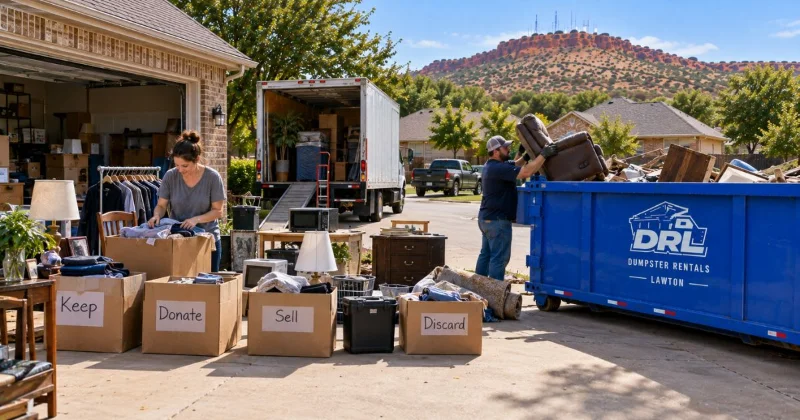
2. Sort Everything Into Five Groups
A simple sorting system makes the process much easier.
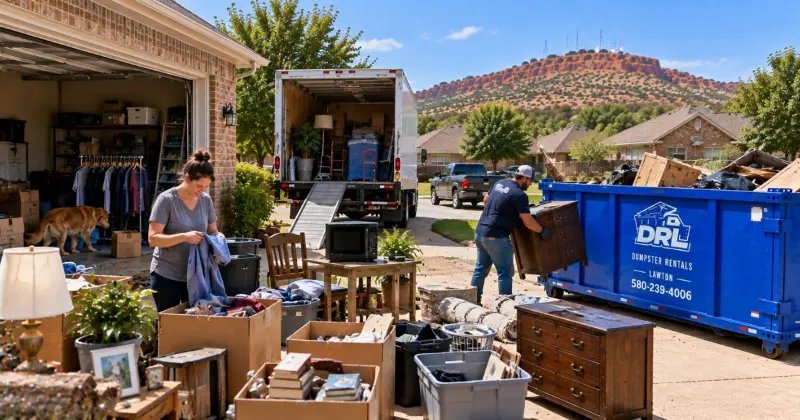
Create five groups:
- Keep
- Sell
- Donate
- Recycle
- Dispose
The goal isn’t to throw away everything you don’t want.
If a piece of furniture is still useful, someone else may be able to use it. Items with resale value can also help offset some moving expenses.
The dumpster should be reserved for items that genuinely need disposal.
3. Look at Bulky Items First
Large items can take up significant space in a moving truck.
Before packing them, ask whether they’re worth transporting to your new home.
Look at:
- Old furniture
- Broken shelving
- Damaged cabinets
- Worn-out mattresses
- Unwanted outdoor furniture
- Broken storage containers
- Large household items
For each item, consider its condition, usefulness, replacement cost, and size.
An inexpensive piece of bulky furniture may not be worth transporting a long distance if it is already worn out.
4. Clean Out the Garage and Storage Areas
Don’t focus only on bedrooms and living spaces.
Garages, sheds, and storage areas often contain items that haven’t been used for years.
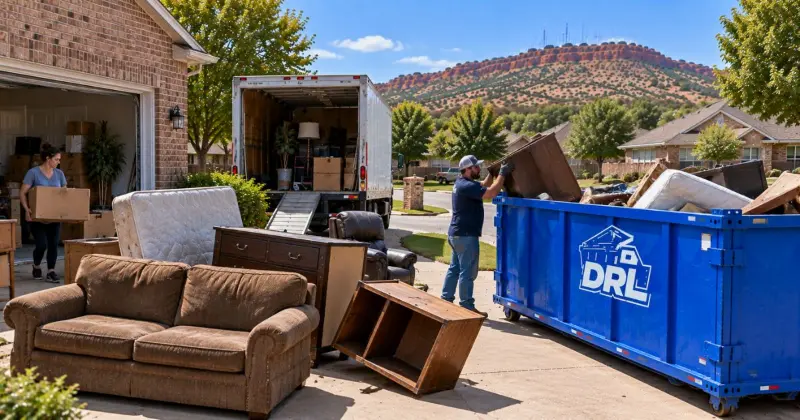
Look for broken tools, damaged outdoor equipment, old boxes, unused furniture, and other unwanted items.
This is also where you may discover materials that require special disposal.
Don’t put paint, chemicals, batteries, pesticides, or other potentially hazardous materials into a dumpster without checking the provider’s rules. You can also review the EPA’s guidance on household hazardous waste.
5. Decide What Is Cheaper to Move or Replace
For large or low-value belongings, compare the cost of transporting them with the cost of replacing them after the move.
For example, imagine you have an old bookshelf worth $40 to $50. If it takes considerable truck space and is already damaged, transporting it hundreds or thousands of miles may not make sense.
This doesn’t mean every inexpensive item should be thrown away.
Consider:
Condition + usefulness + size + replacement cost + transportation cost
That gives you a better basis for the decision.
6. Estimate the Dumpster Size After Sorting
Don’t rent a dumpster based on the amount of stuff you started with.
First finish sorting.
Then look at the dispose pile.
A moderate household decluttering project may fit in a 15-yard dumpster. A larger home cleanout involving furniture, garage debris, storage items, and other household clutter may require a 20-yard dumpster or larger.
The right size depends on the actual amount and type of debris.
If you’re unsure, give the rental provider details about the items you’re disposing of before choosing a container.
For more help, see our dumpster sizes guide.
7. Schedule the Dumpster Around Your Packing
Timing matters.
If the dumpster arrives too early, you may pay for rental time before you’re ready to use it. If it arrives too late, unwanted items may pile up while you’re trying to finish packing.
For many pre-move cleanouts, having the dumpster available during the final one to two weeks can be practical.
This gives you somewhere to put items as you finish each room.
If you’re planning a large cleanout, contact the rental provider early enough to discuss availability and the rental period.
Decluttering Before a Long-Distance Move in Lawton
For Lawton homeowners preparing for a move, a pre-move cleanout can include much more than unwanted furniture.
You may also have:
- Garage clutter
- Shed contents
- Old boxes
- Broken outdoor items
- Unwanted household goods
- Small amounts of renovation debris
- Yard-related debris
Estimate all of these materials before ordering a dumpster.
If you’re also cleaning out a garage, shed, or rental property, include those areas in your total estimate rather than treating them as separate projects.
Dumpster Rental for Moving Cleanouts in Lawton, OK
For Lawton homeowners preparing for a long-distance move, a dumpster can make the final cleanout easier when unwanted furniture, storage items, garage clutter, and other household debris need to leave the property before moving day. The right container depends on how much you plan to dispose of after sorting. A 15-yard dumpster may work for a moderate cleanout, while a larger home or combined garage, shed, and household cleanout may require a 20-yard container or larger.
What Should You Dispose of Before Moving?
Common items that may end up in the disposal pile include:
- Broken furniture
- Damaged shelving
- Worn-out household items
- Old boxes
- Broken storage containers
- Damaged decorations
- Unusable outdoor furniture
- Other accepted household debris
Before loading anything, check the dumpster provider’s accepted and prohibited-material list.
Don’t assume chemicals, paint, batteries, pesticides, or other potentially hazardous products are accepted.
How Much Debris Can a Move Create?
There isn’t one fixed amount.
A person moving from a small apartment may have only a small disposal pile. A family moving from a larger house after many years may have furniture, garage clutter, storage items, and other unwanted belongings.
The best estimate comes after sorting.
Create your dispose pile first, then estimate how much space those items will occupy.
Also remember that bulky furniture takes up more dumpster space than its weight might suggest. Decluttering Before a Long-Distance Move works best when you estimate the actual disposal pile after sorting rather than judging the amount of debris from the size of the home alone.
Should You Sell, Donate, or Throw It Away?
Use the condition of the item to decide.
Sell it if it has enough value to make the effort worthwhile.
Donate it if it’s still useful but you no longer need it.
Recycle it when the material can be handled through an appropriate recycling program.
Dispose of it when it’s broken, damaged, unusable, or otherwise no longer worth keeping.
This approach can reduce the amount of material going into the dumpster while helping you focus your rental on genuine waste.
Pre-Move Dumpster Checklist
Before booking, check:
- How much furniture are you disposing of?
- Are you cleaning the garage?
- Are you cleaning a shed or storage area?
- How many boxes and household items are being discarded?
- Are there heavy materials?
- Are any materials restricted?
- How much space will the disposal pile need?
- Where will the dumpster be placed?
- How many rental days do you need?
- Are you combining the cleanout with another project?
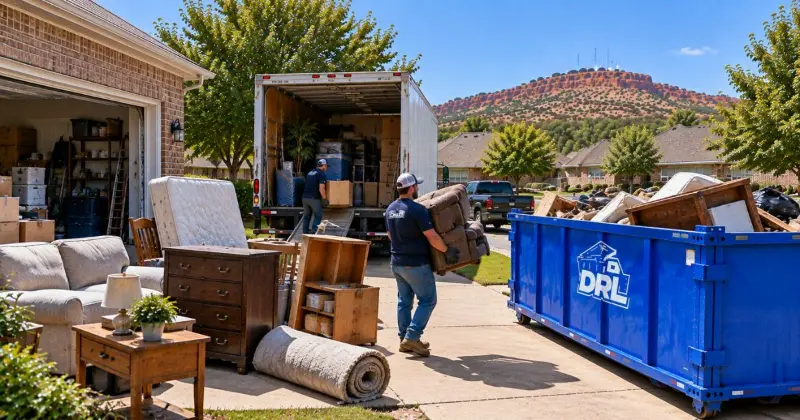
Having these answers makes it easier to choose an appropriate container. This checklist can make Decluttering Before a Long-Distance Move more organized by helping you estimate the debris before booking the dumpster.
Frequently Asked Questions
How early should I start decluttering before a long-distance move?
Start several weeks before moving day if possible. This gives you time to sort, sell, donate, recycle, and dispose of unwanted belongings without rushing.
Is it cheaper to move old furniture or replace it?
It depends on the item’s value, condition, size, and transportation cost. For bulky, low-value furniture, replacement may make more sense than paying to transport it long distance.
What dumpster size is good for a moving cleanout?
A moderate cleanout may fit a 15-yard dumpster, while a larger whole-house decluttering project may need a 20-yard container or larger.
Should I donate items before renting a dumpster?
Yes. Separate usable items before loading the dumpster. Donating or selling them can reduce the amount of material you need to dispose of.
Can I clean out my garage before a long-distance move?
Yes. Garage cleanouts are often a useful part of pre-move decluttering because garages can contain bulky items that take up valuable moving space.
When should I rent a dumpster before moving?
For many projects, the final one to two weeks can be a practical time. The exact timing depends on how much you’re removing and how long your cleanup will take.
Can I put everything I don’t want into the dumpster?
No. Dumpster providers can restrict certain materials. Check the accepted and prohibited-material list before loading anything you’re unsure about.
What if I have more debris than expected?
Contact the rental provider as soon as you realize the original container may not be enough. They can explain whether a larger container, additional pickup, or another option is available.
Making Your Move Lighter
Decluttering before a long-distance move gives you a chance to reduce unnecessary belongings before they become part of the moving load.
Start early. Sort items into keep, sell, donate, recycle, and dispose groups. Focus on bulky items and storage areas first, then estimate the disposal pile before selecting a dumpster.
If you’re also cleaning out a garage, shed, or another part of the property, include that debris in your estimate.
For help choosing the right container, see our dumpster sizes guide.