
Why the 20 Yard Dumpster Is Lawton’s Most Popular Size
If you’re not sure which size to book, there’s a good reason a 20 yard dumpster is usually the default recommendation. It’s big enough to handle a genuine renovation a kitchen remodel, a full roofing tear-off, a whole-house cleanout without the footprint or cost of the largest sizes reserved for construction sites.
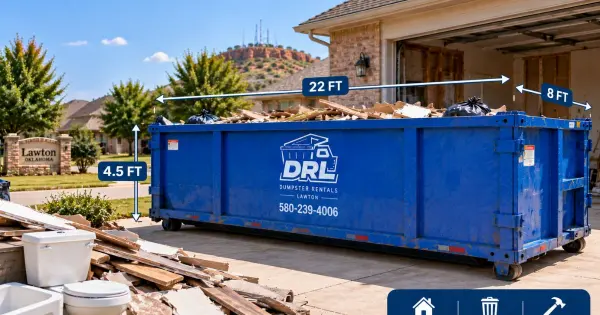
Quick answer: A 20 yard dumpster holds roughly seven pickup truck loads and is the standard choice for kitchen remodels, single-layer roofing tear-offs, whole-house cleanouts, and moving or downsizing projects. It’s the most commonly rented size for exactly this reason it covers the widest range of common residential projects without forcing you to guess between two smaller options.
How Much This Container Actually Holds
At roughly 20 feet long, a 20-yard container holds about seven full pickup truck loads of debris. That’s enough room for a genuine renovation project not just a single room, but the kind of work that touches cabinetry, flooring, drywall, and fixtures all at once.
Despite the jump in capacity from a 15-yard, a 20-yard still generally fits in a standard residential driveway, which is part of why it’s such a common recommendation it scales up the capacity without scaling up the placement problems that come with the largest sizes.
Best Uses for This Size
- Kitchen remodels, including cabinetry, countertops, and flooring
- Bathroom remodels combined with flooring replacement
- Single-layer roofing tear-offs on an average-size home
- Whole-house cleanouts, including estate cleanouts
- Moving or downsizing projects with a full household’s worth of unwanted items
- Larger residential cleanouts spanning multiple rooms plus a garage
- Landlords handling a full rental property turnover
Why 20-Yard Is the Default for These Projects
Kitchen remodels, roofing jobs, and whole-house cleanouts all share a common trait: they’re big enough to overwhelm a 15-yard but usually don’t need the full scale of a 30-yard construction container. A 20-yard sits at the point where most single-project residential work not a multi-phase renovation or new construction — comfortably fits, which is exactly why it’s the size most providers recommend by default when a customer describes a typical remodel or cleanout.
What Fits in This Container
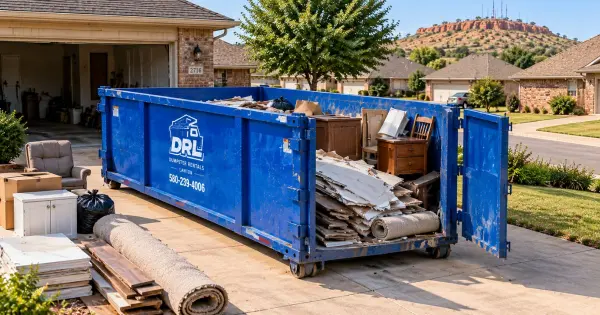
Kitchen cabinetry, countertops, appliances, flooring, drywall, and general renovation debris all fit comfortably. A full roof’s worth of asphalt shingles from a single-layer tear-off on an average-size home typically fits as well, though weight becomes the limiting factor before volume does. Whole-house cleanout debris furniture, boxes, general household clutter across every room is one of the most common uses for this size.
What May Not Fit or May Reach the Weight Limit First
Multiple layers of roofing shingles, a full concrete driveway removal, or a project combining several heavy materials at once can hit a 20-yard’s weight allowance before the container looks anywhere near full. Our roofing debris weight guide and concrete debris disposal guide cover why dense materials behave so differently from typical renovation debris.
Weight Considerations for This Size
A 20-yard’s weight allowance is meaningfully higher than a 15-yard’s, though the exact figure varies by provider and is worth confirming when you book. As a general industry guide, weight allowances for this size commonly fall somewhere in the range of two to four tons, though this can vary by location and provider.
For a standard kitchen or bathroom remodel with typical drywall, cabinetry, and flooring debris, weight rarely becomes an issue at this size. It’s specifically dense materials tile in large quantities, concrete, roofing shingles that change the calculation.
Real Project Examples
| Project | Typically Fits a 20-Yard? |
|---|---|
| Full kitchen remodel | Yes |
| Bathroom remodel + flooring | Yes |
| Single-layer roofing tear-off | Yes |
| Whole-house cleanout | Usually yes |
| Moving/downsizing full household | Usually yes |
| Multi-layer roofing tear-off | Often too heavy — consider 30-yard |
| New home construction debris | No — too small |
| Full concrete driveway removal | Often too heavy — consider 30-yard |
20 Yard dumpster vs. 15-Yard dumpster
If your project is contained to one room or one system — a single bathroom, one section of flooring — a 15-yard container may be enough and more cost-effective. Once the project spans multiple rooms or involves full-scale demolition rather than a single-space update, the 20-yard becomes the more reliable choice.
20-Yard vs. 30-Yard
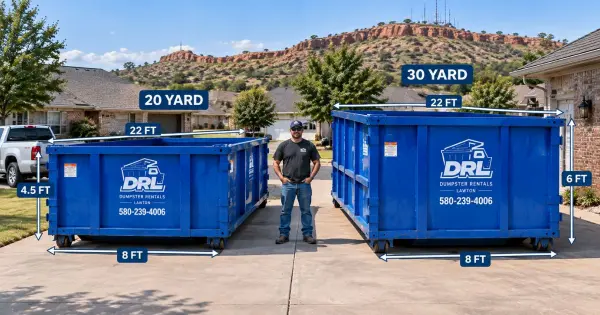
A 30-yard container, at roughly 22 feet long with taller sides, is built for genuinely large projects — home additions, multi-layer roofing, full estate cleanouts with real volume. If your project involves new construction, an addition, or a renovation touching most of the home at once, a 30-yard option is usually the better starting point rather than risking an undersized container.
When a 20-Yard Is Too Small
A 20-yard becomes the wrong choice for home additions, new construction, multi-layer roofing on a larger home, full concrete demolition, or a whole-house cleanout on a property that’s been accumulating for many years without a prior cleanout. Combining several major projects at once a kitchen remodel and a roofing job scheduled together, for instance also tends to outgrow a single 20-yard container.
Loading and Placement Tips for This Size
Because a 20-yard is larger, giving the delivery truck a clear, direct approach path matters more than it would with a smaller container — our driveway dumpster delivery guide covers what to check before delivery day. When loading, distributing weight evenly across the container rather than piling everything at one end helps keep the load stable and makes better use of the available space — OSHA’s guidance on materials handling and storage covers general safe-loading practices worth keeping in mind.
Cost Factors for This Size
As the most commonly rented size, 20-yard pricing tends to be well-established, but the final cost still depends on your specific project, rental duration, and the type of debris involved. Our cost factors guide covers what typically drives pricing, and our pricing guide covers what to expect before requesting a quote. Because this size is used for such a wide range of projects, describing your specific work kitchen remodel versus whole-house cleanout, for example helps ensure your quote reflects the actual debris involved.
Common Mistakes at This Size
The most frequent mistake is underestimating a kitchen remodel specifically. Cabinetry looks compact when it’s installed, but once it’s pulled off the walls along with countertops, backsplash tile, and old flooring, the actual volume is often more than homeowners picture beforehand. A remodel that seemed like it might fit a 15-yard frequently turns out to need the full 20-yard once demolition is actually underway.
The second common mistake is treating roofing weight the same as renovation debris weight. A 20-yard that comfortably handles a kitchen remodel’s worth of cabinetry and drywall can reach its weight limit with a much smaller volume of roofing shingles, simply because the materials behave so differently. Mentioning upfront that a project involves roofing, rather than assuming standard renovation rules apply, helps avoid an unexpected overage fee.
Combining Multiple Smaller Projects Into One 20-Yard Rental
Homeowners tackling several smaller projects at once — a bathroom update alongside a garage cleanout, or new flooring paired with clearing out a spare room — often find that combining everything into a single 20-yard rental is more efficient than renting a smaller container for each piece separately. This works well as long as the combined volume and weight stay within what the container can handle, which is worth discussing with your provider if you’re planning to tackle multiple projects during the same rental period.
Rental Duration for Larger Residential Projects
Projects at this scale — a kitchen remodel, a whole-house cleanout — often take longer than a weekend, and standard rental periods vary by provider. Confirming how many days are included in a standard rental, and what the policy is for extending if the project runs longer, is worth doing before booking rather than discovering the details partway through.
For renovation projects specifically, keeping the dumpster on-site through both demolition and the disposal of any materials replaced during installation — old fixtures, packaging from new appliances — tends to be more practical than scheduling a short rental window around demolition alone.
Moving and Downsizing With This Size
For a full household move or downsizing project, a 20-yard is often the right size once items worth donating, selling, or keeping have been sorted out separately. The remaining disposal volume — furniture beyond repair, years of accumulated boxes, items nobody wants — typically fits this size comfortably for an average-size home. Larger, long-occupied homes or a downsizing project combined with an estate cleanout may need to size up to a 30-yard instead.
A 20 Yard Dumpster for Lawton Homeowners and Contractors
This size shows up constantly across Lawton renovation work, from kitchen updates in older homes near the city center to roofing jobs that come up after severe weather season. Contractors working residential remodels frequently default to a 20-yard as their standard container, and it’s also a common choice for landlords managing a rental property turnover near Fort Sill, where a full unit needs to be cleared between tenants.
Frequently Asked Questions
Is a 20 yard dumpster enough for a kitchen remodel?
Yes, for most standard kitchen remodels a 20-yard comfortably handles cabinetry, countertops, flooring, and drywall debris together.
Can this size handle a full roof tear-off?
Usually yes for a single-layer tear-off on an average-size home. Multiple layers of shingles add enough weight that a 30-yard is often the safer choice.
Why is the 20-yard the most commonly recommended size?
It covers the widest range of typical residential projects — remodels, roofing, whole-house cleanouts — without the footprint or cost of the largest construction-oriented sizes, which is why it’s the default recommendation for most homeowners.
What size do I need for a whole-house cleanout?
Usually a 20-yard, though a property with many years of accumulated items or an estate cleanout with significant volume may need a 30-yard instead.
Will this size fit in my driveway?
Generally yes, for a standard residential driveway. Narrower or shorter driveways are worth checking against the container’s length before booking.
Can I combine a kitchen remodel and a garage cleanout in one container?
Often yes, as long as the combined volume fits comfortably. If both projects are substantial on their own, discussing the full scope with your provider before booking helps confirm one container will be enough.
Why do 20 yard dumpsters from different companies look like different sizes?
Container manufacturers build a “20-yard” dumpster to different length, width, and height combinations that still add up to 20 cubic yards length × width × height ÷ 27 is the formula. A shorter, wider container and a longer, lower one can both legitimately be called a 20-yard even though they don’t look alike side by side, so it’s worth asking your specific provider for their actual dimensions rather than assuming every 20-yard looks the same.
Ready to Book a 20 Yard Dumpster?
If your project fits the profile above, a 20-yard dumpster is likely your best fit — it’s the most commonly rented size for exactly this reason. Compare it against other sizes in our full dumpster sizes guide, or contact us and describe your project for a specific recommendation.