
30 Yard Dumpsters for Additions, Demolition, and Major Renovations
Once a project moves past a single remodel and into genuine construction territory an addition, a multi-room gut renovation, a full estate cleanout a 30 yard dumpster is usually where the sizing conversation lands. This is a step beyond typical homeowner renovation work and into projects that generate real construction-scale volume.
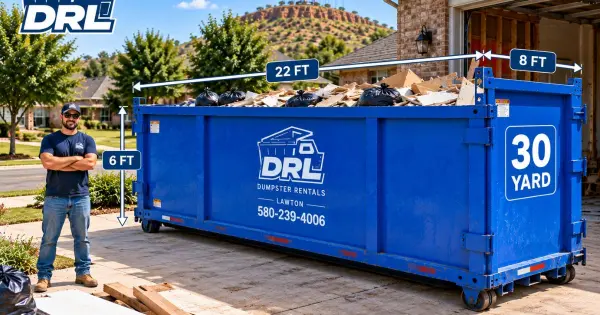
Quick answer: A 30 yard dumpster holds roughly ten pickup truck loads and is built for home additions, multi-room demolition, larger roofing jobs, new construction debris, and estate cleanouts with real volume. Its taller sides make it a better fit for bulky construction material than a 20-yard, though it needs more placement space to accommodate.
Capacity and Build of This Container
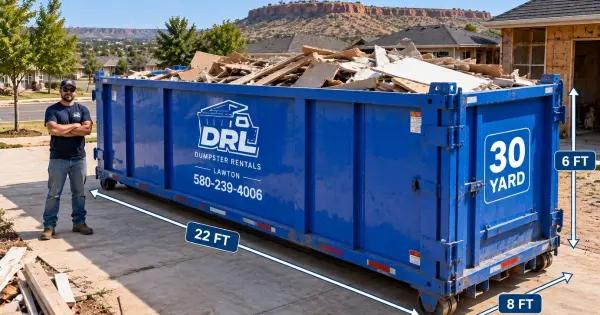
At roughly 22 feet long, a 30 yard container also has noticeably taller sides than a 20-yard, which matters more than the length alone. Taller walls mean the container can hold bulkier, more awkwardly shaped construction material framing lumber, larger sections of drywall, bigger furniture pieces from an estate cleanout without material sticking above the rim.
That extra height also means the container needs more vertical clearance during delivery, and its larger footprint requires a longer, clearer approach path than a 20-yard. This is worth confirming for properties with tighter driveways or overhead obstacles.
Best Uses for This Size
- Home additions and room-by-room expansion projects
- Multi-room demolition ahead of a major renovation
- Estate cleanouts with genuine volume — a long-occupied family home
- Multi-layer roofing tear-offs or roofing on a larger home
- New construction debris — framing scrap, packaging, offcuts
- Larger construction debris from a contractor-managed project
- Large property cleanouts spanning a house plus outbuildings
What Fits in This Container
Framing lumber, drywall in bulk, cabinetry and fixtures from a multi-room renovation, roofing material from a larger or multi-layer tear-off, and general construction debris all fit well given the container’s added height and volume. Estate cleanout debris furniture, decades of accumulated belongings, larger household items is another common and appropriate use for this size.
What May Not Fit — or May Reach the Weight Limit
Even at this size, dense material like concrete, brick, or large amounts of dirt can reach the weight allowance well before the container looks full — a 30-yard’s added volume doesn’t change how weight-driven these materials are. Full foundation or slab removal, in particular, is worth discussing separately with your provider, since it often calls for a different weight allowance than standard construction debris. The EPA’s guidance on construction and demolition materials outlines general best practices for managing this type of debris.
Weight Considerations for This Container
Weight allowances for a 30 yard dumpster are higher than a 20-yard’s, though exact figures vary by provider and are worth confirming at booking. As a general industry guide, allowances for this size commonly fall in the range of four to six tons, though this varies. For projects mixing lighter construction debris with something dense — concrete footings alongside framing lumber, for example — describing both material types upfront leads to a more accurate size and weight recommendation.
Real Project Examples
| Project | Typically Fits a 30-Yard? |
|---|---|
| Home addition (framing debris) | Yes |
| Multi-room gut renovation | Yes |
| Estate cleanout, long-occupied home | Yes |
| Multi-layer roofing tear-off | Usually yes |
| New construction framing scrap | Usually yes |
| Single kitchen or bathroom remodel | Often too large — consider 20-yard |
| Full foundation/slab demolition | Weight-limited — confirm with provider |
| Major commercial demolition | Often needs 40-yard instead |
30-Yard vs. 20-Yard
A 20-yard container covers most single-project residential work one kitchen, one bathroom, one roof. The 30-yard becomes the better choice once a project spans multiple rooms or systems at once, involves new construction, or generates genuinely bulkier debris than a standard remodel. If you’re only tackling one defined project, the 20-yard is usually the more cost-effective option; if you’re combining several, or building something new, the 30-yard avoids running short partway through.
30 Yard dumpster vs. 40-Yard dumpster
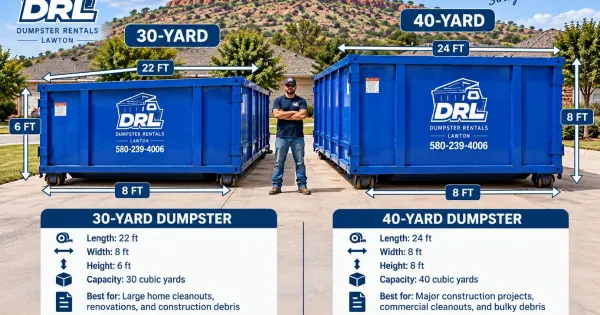
A 40-yard container is reserved for the largest residential and commercial projects full demolition, major commercial cleanouts, large-scale new construction. If your project is a significant renovation or addition but not a full teardown or a commercial-scale job, the 30-yard is almost always the right stopping point. See our our 40-yard guide for where that line typically falls.
When a 30-Yard Is the Better Choice
Choose a 30-yard when your project involves construction rather than just renovation — an addition, new framing, a genuine multi-room demolition — or when an estate cleanout has enough accumulated volume that a 20-yard would clearly run short. It’s also the right call for larger roofing projects where multiple layers or a bigger roof footprint push the weight and volume beyond what a 20-yard reasonably handles.
Placement and Delivery for This Size
Given the larger footprint and taller sides, confirming driveway length, overhead clearance, and truck approach path matters more with this size than with smaller containers our driveway dumpster delivery guide covers what to check before delivery day. For construction sites specifically, coordinating placement with other equipment and material deliveries on-site helps avoid the dumpster blocking access needed for the rest of the project.
What Drives Pricing at This Scale
Pricing at this size depends heavily on the type of debris, rental duration, and project scope, more so than with smaller containers where projects tend to be more uniform. A construction project generating mostly lightweight framing debris prices differently than an estate cleanout with heavy furniture, or a roofing job with dense shingle waste. Our cost factors guide and pricing guide cover what typically affects a quote at this scale.
Common Mistakes When Sizing a 30-Yard Project
The most common mistake at this scale is underestimating how much a demolition phase generates compared to the finished renovation. Multi-room demolition produces a surprising amount of drywall dust, old insulation, and framing scrap that doesn’t show up in a rough mental estimate based on square footage alone. When the scope is uncertain, leaving some extra capacity can reduce the risk of running out of room during demolition.
A second common mistake is mixing dense material into a load planned around lighter construction debris without flagging it. A 30-yard sized for framing lumber and drywall can reach its weight limit unexpectedly fast if a significant amount of concrete, tile, or roofing material gets added to the same load without adjusting the weight allowance in advance.
DIY Demolition vs. Hiring a Crew for Larger Projects
Projects at the scale a 30-yard typically serves home additions, multi-room demolition usually involve enough structural work that a licensed contractor is handling at least part of the job, which also means the contractor is often the one coordinating dumpster delivery and scheduling. For homeowners tackling demolition themselves ahead of a contractor’s installation work, communicating the disposal timeline clearly avoids confusion about who’s responsible for scheduling delivery and pickup.
Anything touching structural elements, electrical, or plumbing at this scale is worth leaving to licensed professionals regardless of how much of the surface-level demolition is DIY.
Rental Duration for Construction Timelines
Projects generating enough debris for a 30-yard dumpster often run over multiple weeks rather than a single weekend, and standard rental periods vary significantly by provider at this scale. Confirming the included rental duration, the policy for extensions, and whether a swap for an additional container is available mid-project all matter more here than with smaller, shorter-duration rentals.
For phased construction projects — demolition first, then framing, then finishing work — discussing whether one long rental or multiple shorter rentals makes more sense for the project’s actual timeline is worth doing before the first container arrives.
When a Project Needs More Than One Container
Even at 30 yards, some projects genuinely exceed a single container’s capacity — a full home addition combined with interior renovation, or an estate cleanout paired with clearing out a garage, shed, and yard debris all at once. Rather than trying to force everything into one oversized order, swapping a full container for an empty one partway through the project is often the more practical approach, particularly for projects running over several weeks.
Discussing the full scope of a project upfront, including phases that will happen later in the timeline, helps a provider plan for swaps rather than treating each container as a separate, uncoordinated booking.
30 Yard Dumpsters for Lawton and Comanche County Construction
This size shows up regularly on contractor job sites across Lawton and the wider Comanche County area — home additions in newer developments, multi-room renovations on older properties, and estate cleanouts as long-occupied family homes change hands. For properties near Fort Sill undergoing larger renovation work, the 30-yard’s added capacity also reduces how often a container needs to be swapped mid-project, which matters when access and scheduling are already tight.
Frequently Asked Questions
Is a 30 yard dumpster overkill for a single-room renovation?
Usually yes. A single kitchen or bathroom remodel typically fits a 20-yard more cost-effectively. The 30-yard is better suited to projects spanning multiple rooms or involving new construction.
Can this size handle a home addition?
Yes, a 30-yard dumpster can be a good fit for home additions, particularly for framing debris and general construction waste.
Do I need a permit to place a 30 yard dumpster on my property?
Placement on your own driveway generally doesn’t require a permit, but placement in the street may, depending on local rules. Our permit guide covers what to check.
What size fits a full estate cleanout?
A 30-yard is often the right size for a long-occupied family home with significant accumulated belongings. A smaller or more recently decluttered property may only need a 20-yard.
How much driveway space does this container need?
More than a 20-yard, both for the container itself and for the delivery truck’s approach path. Checking your driveway’s length and any overhead obstacles before booking is worth doing at this size.
Can I swap this container for a new one mid-project?
Yes, this is common for longer construction projects. Discussing the likely need for a swap when you first book helps your provider plan for it rather than arranging it last minute.
Does this size cost significantly more than a 20-yard?
Pricing varies by provider and project. Compare the total cost of a 30-yard rental with the cost of using a smaller container and potentially needing a second delivery. It may be more cost-effective than renting a second 20-yard container if your project genuinely needs the extra room.
Ready to Book a 30-Yard Dumpster?
If your project involves construction, an addition, or a major cleanout with real volume, a 30-yard dumpster is likely the right starting point. Compare it against other sizes in our full dumpster sizes guide, or contact us to describe your project and confirm the right fit.