
When You Actually Need a 40 Yard Dumpster
A 40 yard dumpster is the largest standard container size, and it’s genuinely only the right call for a fairly specific set of projects: full demolition, major commercial cleanouts, and construction jobs generating large volumes of bulky debris. It’s not simply “the biggest option” to default to when unsure for most residential projects, even large ones, a 40-yard is more container than the job actually needs.
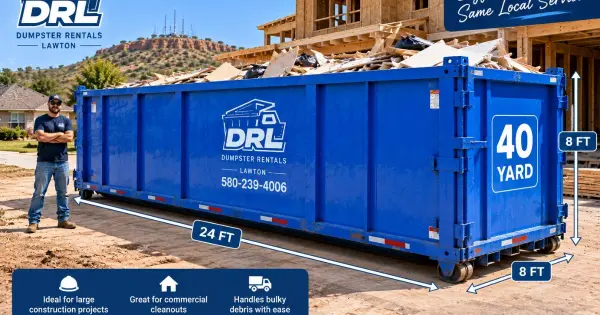
Quick answer: A 40 yard dumpster holds roughly twelve to sixteen pickup truck loads and is built for full building demolition, large commercial cleanouts, and major new construction debris. Its main advantage is volume for bulky, lightweight material it does not automatically mean a higher weight allowance for dense debris, which is worth understanding before booking this size.
Capacity of This Container
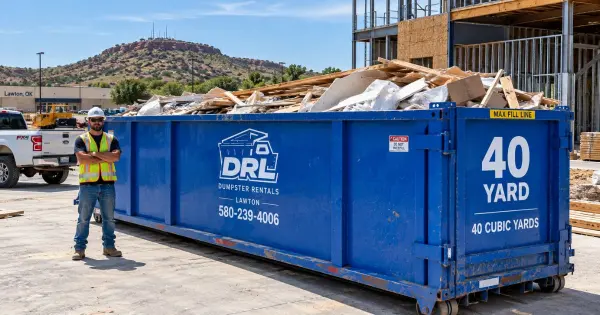
The 40-yard is the largest standard size and has the tallest sides available in a typical roll-off lineup, which makes it well suited to bulky material that takes up a lot of space without necessarily weighing a lot framing lumber, drywall in large volume, packaging from major construction projects, and general demolition debris.
This is the key thing to understand about this size: it’s a volume solution first. For projects involving mostly dense material concrete, brick, dirt a 40-yard often isn’t the right answer even though it’s the biggest container available, since weight becomes the limiting factor long before the volume does.
Best Uses for This Size
- Full building demolition — a house, garage, or commercial structure
- Large commercial cleanouts — office buildings, retail spaces
- Major new construction debris — framing, packaging, offcuts at scale
- Large-scale renovation projects touching most or all of a structure
- Major property cleanouts — a large estate combined with outbuildings
- Large amounts of genuinely bulky, lightweight debris
Why Volume and Weight Must Be Considered Separately
This is the single most important concept for choosing a 40-yard correctly. Every dumpster size has both a volume limit (how much space it holds) and a weight limit (how much it can legally and safely carry), and these two limits are reached by completely different types of debris.
Bulky, lightweight material framing lumber, drywall, insulation, packaging tends to fill a container’s visual space long before it approaches the weight limit. Dense material concrete, brick, roofing shingles, dirt does the opposite: it reaches the weight limit while the container still looks far from full. A 40-yard’s advantage is almost entirely on the volume side. If your project is weight-driven rather than volume-driven, a smaller container with an appropriate weight allowance, or splitting the load across two containers, is often the more practical and cost-effective choice.
What Fits in This Container
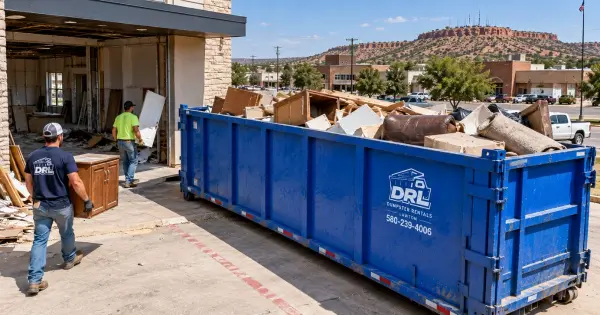
Full demolition debris from a wood-frame structure, large volumes of drywall and framing, commercial cleanout material like furniture and fixtures at scale, and general new construction waste all fit well, taking advantage of the container’s large volume without necessarily testing its weight limit.
What May Not Fit or Isn’t a Good Fit for This Size
Concrete slab or foundation demolition, large amounts of dirt or fill material, brick, and other dense debris are generally poor fits for a 40-yard specifically because they’ll reach the weight allowance with a fraction of the container’s volume used. For these materials, a shorter-sided container designed for heavy debris, or multiple smaller loads, is usually the more sensible and cost-effective approach see our concrete debris disposal guide for more on how weight-driven materials are typically handled, and the EPA’s guidance on construction and demolition materials for general best practices at this scale.
Weight Considerations for This Volume
Weight allowances at this size vary more than any other container size some providers set the limit as low as one to four tons for a 40-yard, while others allow up to eight or ten tons, depending on region and equipment. This is a wider range than smaller sizes typically see, which makes confirming the exact allowance with your provider especially important at this size. What matters more than the specific number is understanding that this allowance is designed around bulky, lower-density demolition and construction debris not dense material at volume. Confirming the specific weight allowance and what type of debris it’s calculated for is worth doing before booking a 40-yard for any project involving mixed material types.
Real Project Examples
| Project | Typically Fits a 40-Yard? |
|---|---|
| Full house demolition (wood frame) | Yes |
| Commercial office or retail cleanout | Yes |
| Major new construction framing debris | Yes |
| Large estate cleanout with outbuildings | Usually yes |
| Single home addition | Often too large — consider 30-yard |
| Concrete foundation removal | Weight-limited — usually not the right fit |
| Full-property dirt/fill removal | Weight-limited — usually not the right fit |
40-Yard vs. 30-Yard
A 30-yard option handles the vast majority of large residential construction projects — additions, multi-room renovations, sizable estate cleanouts. The 40-yard becomes necessary specifically when a project crosses into full demolition or commercial-scale cleanout territory, where the sheer volume of bulky debris genuinely exceeds what a 30-yard can hold, not just when a project feels “big.”
When a 40 Yard Is Appropriate
Choose a 40-yard when the project is genuinely at demolition or commercial scale tearing down an entire structure, clearing out a commercial building, or managing a new construction project generating a large, sustained volume of lightweight debris. It’s the right size when the limiting factor is clearly going to be running out of room, not running into a weight limit.
When a Smaller Dumpster Is Actually Better
If your project involves mostly dense material, or if it’s a single renovation rather than full demolition, a smaller container is very often the smarter and cheaper choice, even if a 40-yard seems like the “safe” oversized option. Booking a 40-yard for a project that’s actually weight-driven means paying for volume you’ll never use while still potentially hitting the weight limit early. Describing your project’s actual material mix — not just its overall scale — is the most reliable way to land on the right size rather than defaulting to the largest option out of caution.
Placement Requirements for This Size
As the largest standard size, a 40-yard needs significant placement space and a clear, direct approach path for the delivery truck — more than any smaller container. For residential properties, this often means the dumpster needs to sit on the street rather than the driveway, which may require a right-of-way permit depending on local rules; our permit guide covers what to check. For commercial and construction sites, coordinating placement with other equipment, material deliveries, and site access is worth planning before the container arrives rather than after.
Cost Factors at This Scale
Pricing at this scale depends heavily on debris type, rental duration, and project scope. A full demolition project can price very differently from a commercial office cleanout, even when both use the same container size. Compare the total cost of a 40-yard rental with the cost of using smaller containers and potentially needing multiple deliveries or swaps. If your project genuinely needs the extra volume, one 40-yard container may be more practical than coordinating several smaller containers. Our cost factors guide and pricing guide cover the main factors to consider.
Common Mistakes at This Scale
The most common mistake is choosing this size purely based on a project feeling large, without actually breaking down what type of debris is involved. A property owner clearing a house full of belongings before demolition, for example, might reasonably need a 40-yard for the bulky household volume, but the demolition debris itself — especially if it includes a concrete foundation — may need a completely separate, weight-appropriate container rather than being combined into the same load.
A second mistake is assuming a single 40-yard will handle an entire multi-phase demolition and construction project from start to finish. Full projects often generate debris in stages — demolition first, then construction waste later — and planning for container swaps between phases usually works out better than trying to keep one container on-site for the entire timeline.
Coordinating This Size on an Active Job Site
On a construction or demolition site, the dumpster is one of several things competing for space alongside equipment, material staging, and vehicle access. Placing it somewhere that stays accessible throughout the project — not just convenient on day one — avoids the container becoming an obstacle once other work is underway.
For sites with multiple contractors or trades involved, confirming who’s responsible for keeping the area around the dumpster clear, and who calls for pickup or a swap, avoids the kind of confusion that can stall a project when no one takes ownership of that particular logistics detail.
Rental Duration for Large-Scale Projects
Full demolition and major commercial cleanout projects often run well beyond a standard weekly rental window, and terms at this scale vary considerably by provider. Discussing the realistic project timeline upfront — including likely delays that come with larger jobs — helps set expectations for rental duration rather than assuming a standard short-term rate automatically applies to a multi-week project.
40 Yard Dumpsters for Major Lawton Projects
This size comes up for the largest projects across Lawton and Comanche County full demolition ahead of new construction, commercial property turnovers, and major renovation work on larger properties. Our commercial dumpster rental and construction dumpster rental pages cover more on how this size fits into larger commercial and construction work specifically.
Frequently Asked Questions
Is a 40 yard dumpster always the best choice for a big project?
No. It’s the best choice for large, bulky, low-density debris like demolition or framing waste. For dense material or a single large renovation, a 30-yard or even a 20-yard is often more appropriate and cost-effective.
Can this size hold concrete or dirt?
Technically some, but it’s rarely the right size for these materials, since weight limits are reached with a small fraction of the container’s volume. A dedicated heavy-debris container is usually the better fit.
Does this container need to sit in the street?
Often, depending on driveway length and access. Street placement may require a permit, which is worth confirming before delivery.
What’s the difference between a 40-yard and multiple 20-yard containers?
A single 40-yard means one delivery and one pickup rather than coordinating multiple swaps, which is often more efficient for a sustained, ongoing project like full demolition. For a project with distinct phases, multiple smaller containers can sometimes work out more cost-effectively.
Is this size suitable for a residential renovation?
Only for the largest residential projects, like a full demolition or a major addition generating significant volume. Most residential renovations, even sizable ones, are better served by a 30-yard.
Ready to Book a 40 Yard Dumpster?
If your project is a genuine full demolition, commercial cleanout, or major construction job, a 40 yard dumpster is likely the right fit. If you’re not sure whether your project is truly volume-driven or weight-driven, compare it against our our 30-yard guide or our full dumpster sizes guide, or contact us to describe your project directly.