Barn Demolition Debris Guide for Rural Lawton
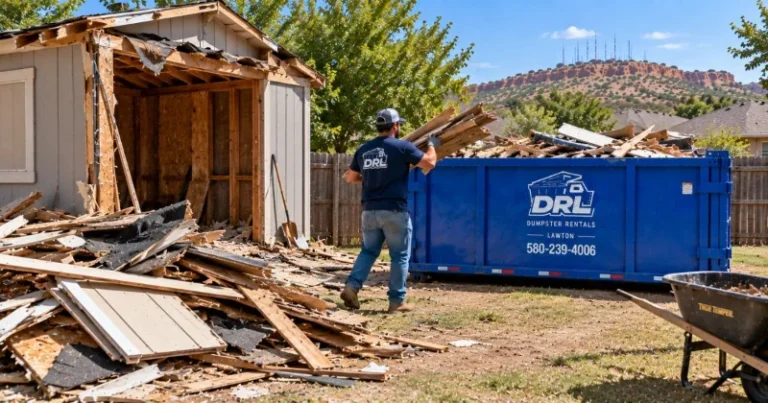
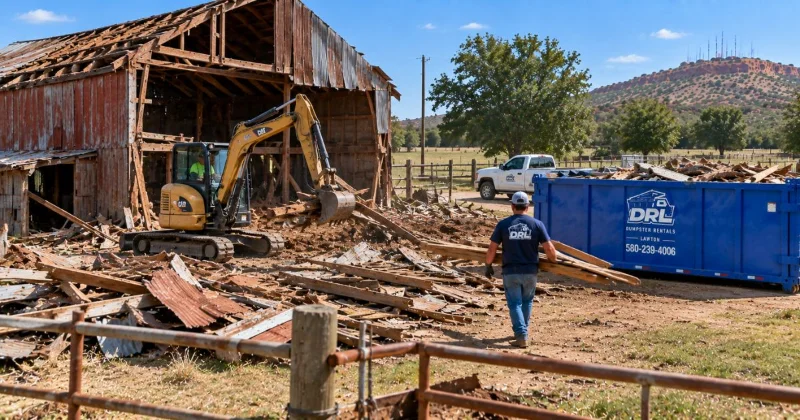
An old barn or outbuilding coming down is a bigger project than most backyard demolition work, and the debris it produces reflects that. Barn demolition debris typically involves more volume, heavier materials, and a wider mix of structural components than a shed teardown, which changes how the project needs to be planned from the start.
Quick answer: Barn and outbuilding demolition usually calls for a 30 or 40-yard dumpster, depending on the structure’s size and whether it has a concrete floor or foundation. Older barns sometimes include materials that need extra caution before demolition begins, particularly older cement-based roofing.
How Barn Demolition Differs From a Shed Teardown
A backyard shed is typically a simple, single-room structure with modest framing. A barn or larger outbuilding is a different scale of project entirely — heavier structural beams, larger roof spans, multiple bays or stalls in some cases, and often decades of accumulated use that adds its own debris on top of the structure itself. Our shed demolition debris guide covers the smaller-scale version of this project if that’s a closer match for what you’re tearing down.
Barns built with heavier timber framing, particularly older post-and-beam construction, also break apart differently than a shed’s simpler stick framing, and the individual pieces are often too large and heavy to handle the same way.
What Typically Comes Out of an Old Barn
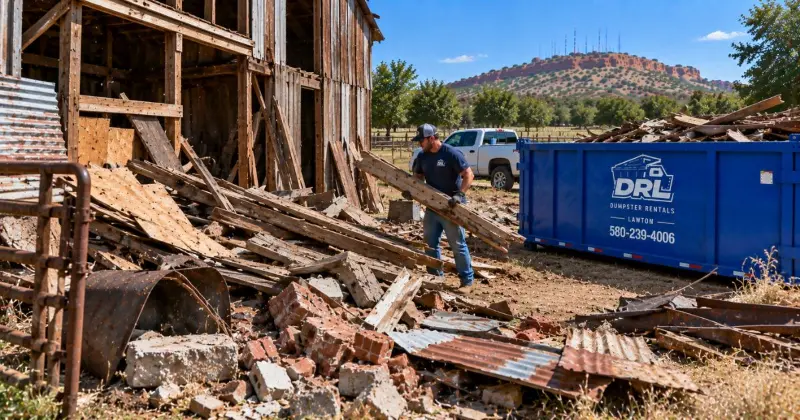
- Wood framing and structural beams, often larger and heavier than residential framing lumber
- Metal or corrugated roofing panels
- Siding material, which varies widely depending on the barn’s age and construction
- Old stall dividers, fencing, or livestock-related fixtures, if the building was used for animals
- A concrete slab or partial foundation, in some but not all outbuildings
Barn demolition debris can vary significantly depending on the structure’s age, materials, and previous use. Describing these materials when requesting a dumpster helps determine the appropriate container size and weight allowance.
Older Roofing and Siding Materials Worth Checking First
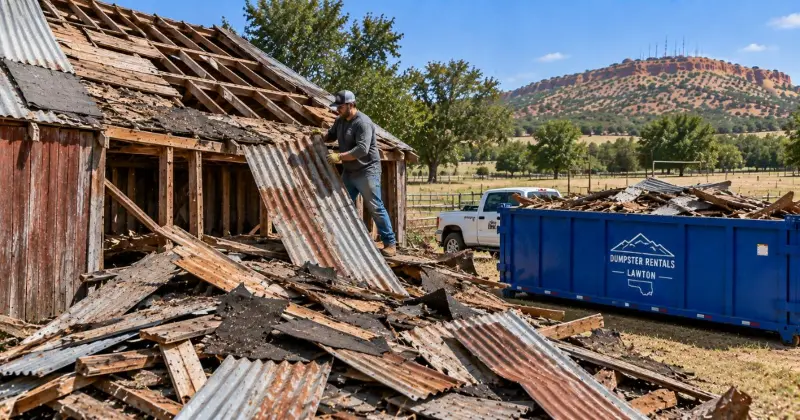
Barns and outbuildings built several decades ago sometimes used corrugated cement-based roofing or siding panels, a material historically manufactured with asbestos before safer alternatives became standard. You should not assume a panel is asbestos-containing based on appearance alone, and suspected material should not be cut, broken, sanded, or otherwise disturbed until it has been properly evaluated. The EPA’s asbestos guidance recommends having suspect building material tested before demolition work begins if there’s any reason to think it might be present. When barn demolition debris includes older cement-based panels, the material should be evaluated before demolition begins.
For a barn with newer metal roofing or standard wood siding, this isn’t a concern that needs to hold up the project it specifically applies to older cement-based panel materials common in agricultural buildings from an earlier era.
Weight Considerations for a Barn Teardown
Barn demolition debris can become heavy quickly, especially when the project includes large timber framing, metal roofing, concrete, or masonry. If the structure includes a concrete floor or foundation, the concrete can reach a dumpster’s weight limit long before the container is physically full. Our concrete debris disposal guide explains how this type of material is typically handled and weighed.
Mentioning whether a concrete floor is part of the demolition, separate from the wood-and-metal structure above it, helps ensure the weight allowance actually matches what the project will generate.
How to Estimate Dumpster Volume for a Barn Demolition
Estimating dumpster volume for a barn demolition is harder than estimating a typical room cleanout because the structure itself can vary so much. A small single-room outbuilding may produce a manageable amount of framing and siding, while a larger barn can generate several times that amount.
As a general starting point, a small outbuilding with limited framing may fit a 30-yard dumpster. A larger barn with multiple sections, heavier framing, or substantial roofing debris may require a 40-yard container. If the demolition includes a large concrete slab, foundation, or other dense material, volume is only part of the calculation because the weight limit can be reached before the container is full.
The most useful details to provide when sizing a dumpster are the building’s approximate length and width, the type of framing, roofing and siding materials, and whether concrete or masonry will be removed. Those details give the rental provider a better basis for recommending one container, a larger size, or a planned swap.
Choosing a Dumpster Size for Barn Demolition
The amount of barn demolition debris from a small outbuilding without a concrete floor often fits a 30-yard dumpster comfortably. Larger barns, multi-bay structures, or demolitions involving substantial roofing and structural debris may require a 40-yard dumpster instead. If the project includes a large concrete slab or foundation, discuss the material and expected weight with the dumpster provider before delivery.
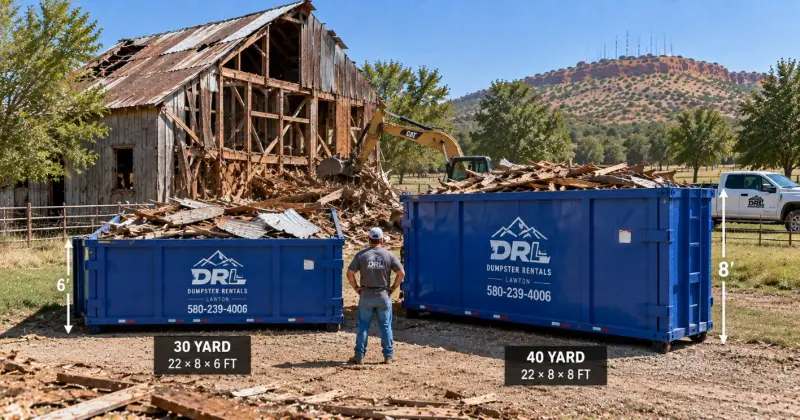
For genuinely large agricultural structures, more than one container or a mid-project swap is sometimes the more practical approach rather than trying to fit everything into a single load.
Permits and Placement for Rural Properties
Demolition permit requirements can vary depending on the property’s location, including whether it falls within Lawton city limits or a surrounding rural area of Comanche County. Our permit guide covers what generally applies, though it’s worth confirming directly for a property outside city limits, since rural addresses aren’t always subject to the same requirements as an in-town lot.
Placement is usually more flexible on larger rural properties than on a standard residential lot, though a long or unpaved driveway is worth mentioning when scheduling delivery so the truck has a clear, confirmed path in.
Frequently Asked Questions
What size dumpster do I need to tear down a barn?
A small outbuilding without a concrete floor often fits a 30-yard dumpster. Larger barns or structures with a concrete slab frequently need a 40-yard dumpster for the added volume and weight.
Can old barn roofing contain asbestos?
Some older cement-based corrugated roofing and siding panels used on agricultural buildings were manufactured with asbestos. If there’s reason to suspect this on an older structure, having the material tested before demolition is the safer approach.
Do I need a permit to demolish a barn outside Lawton city limits?
Permit requirements depend on the property’s exact location and the type of demolition involved. A rural property outside Lawton city limits may have different requirements from an in-town property, so confirm the applicable rules for the specific address before demolition begins.
Can multiple dumpsters be used for one barn demolition project?
Yes, for larger agricultural structures, swapping a full container for an empty one or using more than one dumpster is a common and practical approach rather than trying to fit everything into a single load.
Planning a Barn Demolition Project
Barn demolition debris varies more than most residential projects because barns differ in size, age, construction, and materials. Describing the structure’s approximate size, materials, and whether a concrete floor or foundation is involved gives a better basis for choosing the right dumpster.
Planning a barn or outbuilding demolition in Lawton or the surrounding area? Tell us the approximate building size, the materials being removed, and whether concrete is part of the demolition. We can help you determine whether a 30-yard, 40-yard, or multiple-container setup makes sense for the project. Get a Free Quote